🚀 Zaprep: Your Socials on Steroids. Start free — automate 1,000 DMs/month & turn engagement into leads. with 1,000 automated DMs/month.
Submit your Tool
PoweredByAI.app is an AI Tools Directory helping individuals, businesses, and creators discover the best AI tools for writing, coding, design, productivity, and more.
© 2026 , Product of011BQ. All rights reserved.

The Dallas-based investment firm Disruptive, whose past bets include Palantir, Airbnb, and Spotify, announced a $10 billion fund to back at least 10 late-stage companies, with checks of up to $1 billion,it said Tuesday. It’s one of the biggest fundraises of the year so far, aiming to back (what else?!) the capital-intensive fields of AI and defense. The Wall Street Journal first reported earlier this month thatthe firm was seeking to raisethe fund and by then had already secured at least $7.5 billion in capital commitments. The firm was founded in 2012 by Alex Davis, grandson of billionaire oil magnate Marvin Davis. This is technically the firm’s first blind-pool fund, meaning investors commit money without knowing which companies it will back. Until now, the firm raised moneythrough deal-by-deal special purpose vehicles. Disruptive has nonetheless made headlines in recent years for pouring money into companies like chip startup Groq and the AI voice-generation startup ElevenLabs. Bloomberg reportedthat the firm told LPsit has returned more than $6 billion on the roughly $1.9 billion it has put into startups. According to the Dallas Business Journal, the new vehicle is thelargest venture fundraised in Texas history.
View

Anthropic was founded in 2021 to ensure humanity can control AI and benefit from it in the long-term. As the frontier lab approaches its initial public offering, however, there’s one class of humanity that is being shut out of control: anyone who buys its stock on public markets. Complex structures that allow founders like Elon Musk or Mark Zuckerberg to control their public companies without owning most of them are nothing new in Silicon Valley. But Anthropic’s obsession with AI safety has resulted in a truly baroque style of corporate governance that will leave common shareholders with little say over most major decisions at the AI company, including who sits on its board. First, Anthropic is a public benefit company — a for-profit corporation legally allowed to weigh a public mission alongside profit — with the goal of promoting AI safety. That status protects the board’s ability to make decisions about AI safety that aren’t driven entirely by shareholder value without being sued by angry investors. Right now, the board is chaired by Anthropic president Daniela Amodei and includes CEO Dario Amodei (her brother), Netflix cofounder Reed Hastings, former Microsoft and GM CFO Christopher Liddell, Novartis CEO Vas Narasimhan, and Spark Capital partner Yasmin Razavi. There is one vacancy on the board. Second, Anthropic has allocated significant control of its board to a Long-Term Benefit Trust (LTBT), an independent panel meant to keep the company focused on mission to benefit humanity. The trust owns a class of stock that gives it the ability to elect and remove a majority of the company’s board, known as Class T directors. The LTBT is chaired by Neil Shah, a global health expert who was managing director at GiveWell, a nonprofit that ranks charities, and includes former Federal Reserve chair Ben Bernanke, national security expert Richard Fontaine, and Harvard physicist Christopher Stubbs. There is one vacancy on the LTBT right now. The existing members will themselves choose who fills it. Third, Anthropic’s seven founders also jointly own a special class of stock that gives a majority of them 50.1% of shareholder voting power, allowing them to elect three members of the board of directors. If, for whatever reason, there’s no majority among the founders, only then are their shares voted in proportion with holders of common stock. Finally, the board can put a check on the LTBT. When the LTBT nominates a “Specified” one of its four directors, or removes that director without cause (that is, without alleging misconduct), the board’s nominating committee can decline to approve the move and throw the decision to the company’s employees for a vote. Here’s what all that looks like: The dynamics of such a complex structure are hard to predict. We’ve already seen one notable instance where a similar structure was essentially overthrown: OpenAI’s so-called blip, when OpenAI’s board briefly fired CEO Sam Altman over concerns that he wasnot being candidwith them. Thanks to the loyalty of the company’s employees to Altman, the board backed down, reinstated him, and a new governance structure was put in place. Anthropic’s structure seems to formalize that kind of employee power. At Anthropic, cracks in the founders’ unified front could lead to common shareholders having more say than expected, while employees can overrule the LTBT on board seats if they back the board over the assembled luminaries. The founders’ control won’t last forever: Ten years after the IPO, the founders can choose to end their control of the company, or their control will end automatically when fewer than three of them remain. At that point, the LTBT will continue until 85% of common shareholders vote to end it, or it decides to step down with approval from the board. If and when neither special class of shareholder exists any more — hopefully not because of an AI-driven catastrophe — common shareholders finally get control.

Financial giant Bank of America is reminding customers to bank safely by kindlynotsharing your banking credentials with your AI agent. In an email blast to customers titled “Protecting your finances in the Al World,” Bank of America urged customers to never share their username and password with another person or an outside service, “including an Al-enabled tool or agent that offers to act on your behalf.” You can practicallysensethe frustration in the person sending the email. Still, customers are increasingly handing over their log-ins as personal AI assistantsgrow more popular. Sharing your banking username and password with an AI assistant runs the risk that it could do something with your finances without your knowledge, or that your bank thinks someone’s raiding your account and locks you out of it. Worse, a security flaw in the AI assistant could result in it leaking your banking credentials elsewhere, giving financially motivated hackers a way into your bank account. This latest warning comes as banks are still exploring how AI agents fit into the financial world but are reportedly grappling withunauthorized agents accessing their customers’ money. As wediscussed onstageatTechCrunch Disrupt, banks, payment providers, and processors are still trying to figure out how to allow customers access to their bank accounts using AI tools, such as for agentic payments, which allow people to set agents to autonomously buy things at the best price or the right time. Bank of America did not immediately respond to a request for comment about the email. But heed the bank’s warning, for if things go wrong, it’s on you. Account agreements at most banks holdcustomers responsiblefor anyone they give their log-in to. “If you do share your credentials,” its email reads, “keep in mind that you’re responsible for activity resulting from that access.” (viaBryan Toporek)
View

Anthropic has reported several cases in which its Mythos 5 AI model exceeded the scope of cybersecurity tests, including an attempt to submit malicious code to a real open-source project. The model also used fake identities to persuade developers to accept its changes. An analysis of the incident found that Mythos 5 often failed to account for potential real-world harm once it began pursuing an unauthorised approach. Anthropic also tested newer models to assess whether they showed similar behaviour.
View

After eight years developing AI for Meta, Rohit Patel is departing the company, TechCrunch has exclusively learned. The former director at Meta Superintelligence Labs has launchedNdoc, a startup he’s pitching as an AI-native replacement for Microsoft Office suite or Google Workspace. Patel is the latest in a handful of high-profile departures from Meta following the exits of Chief Global Affairs OfficerJoel Kaplan,AI researcher Andrew Tulloch, and Head of Product for AI-for-WorkEmily Dalton Smith. Patel designed Ndoc to be more than just another AI tool layered onto an existing workflow. The goal is to replace the fragmented way people work across tools like Excel, Word, PowerPoint, Tableau, Replit, and “ChatGPT copy-paste” with one unified workspace that all colleagues can access, even if they’re not signed up for Ndoc. Ndoc brings three components together in one layout. The Stage tab is where presentations of key findings live, like slide decks, dashboards, simulations, or mini apps. The Narrative tab features analyses, numbered citations, generated figures, and generally the “why” behind the numbers. The Model tab is where underlying datasets and Python scripts are housed. The design reflects Patel’s background. During his tenure at Meta, Patel focused on reinforcement learning — a type of machine learning in which AI agents learn to make decisions through trial and error and maximize rewards — and evaluating whether AI output is trustworthy. Patel believes that if AI is going to build the spreadsheets and slide decks that companies use to make decisions, someone should be able to check its work. For instance, users can find the Python scripts used to create the documents. “Even if you don’t know any Python, you can ask [the AI chat] to explain, ‘Hey, what does this script do? Which line has my formula?’ And you can verify that formula,” Patel said. “There’s nothing hidden behind the curtain here.” In practice, users can upload a dataset and ask Ndoc to perform an analysis and write a narrative about the findings. They can also add document-specific context, including audience, tone, and memory. “It maintains a memory across your person, that particular document, your team, and your company,” Patel said. Patel also says Ndoc is built and fine-tuned using a mixture of open source models. Because the platform was developed from scratch, he says it costs considerably less to run than alternatives built on frontier AI models. “I thought that’s what people would be excited about, but people don’t care about that,” he said, referring to his early trial users. “What people are excited about is that they love seeing all their end-to-end in one place.” Patel’s larger ambition is to reinvent the file itself. He says documents can be exported as a single “.ndoc.html” file that can be opened in any browser, a format he plans to open-source so other developers can build apps that work with it without being locked into Ndoc the way so many have been locked into Microsoft or Google for years. His desire to open-source this project was partly why he left Meta and decided to go it alone. At a big company like Meta, getting everyone to agree on an open source format would undoubtedly require the input of “hundreds of people and opinions on how the format should look.” Patel wanted to move quickly. “Humans can only move at human pace, whereas…I can move at the pace of what AI can do.” Trying to become the platform where enterprise work happens is a huge bet for a founder with a team of three and no funding, especially when other AI labs are trying to own the same space. OpenAI,Anthropic,Meta,SpaceXAI, andGooglehave all come out with enterprise AI tools that allow users to connect to Google Workspace, Microsoft 365, and other workplace apps so their AI models can work directly in those tools. And last month,OpenAI launched Space,a shared workspace inside ChatGPT that’s a more direct competitor to those established tools. Patel acknowledges that Space could be a threat, but says the labs largely have the wrong idea. “Companies are basically attaching AI to spreadsheets and it fills your cells for you,” he said. “It just sort of kills my soul. This is like if you just figured out electricity, and then you decided the best use case is to put lights on my bulls that till my soil. No. Get a tractor.” There’s a reason the AI labs have tried to bring their models to where people are already working, though. It’s hard to change habits and replace entire workflows. Patel says he understands that, which is why he built connectors so customers can import existing data from the tools they already use. “My bar was that I’m not going to release anything I don’t love using,” he said. “I have very optimized AI workflows for everything I do. If I start using this tool, and I keep going back to my workflows, I haven’t built a good enough tool…I have a graveyard of tools that did not meet that bar.” Patel has a similar bar for gaining customer traction before he tries to raise funds. “I didn’t want to take money until I had some proof that people love the product,” he said. As of Tuesday, Ndoc is conducting an enterprise pilot and opening an alpha version to a limited number of customers who join the wait list. It’s free to sign up, but customers will pay for usage and tokens. He hopes to release a beta version in the coming weeks, with a full launch planned for next year. For Patel, moving as fast as possible is more important than having the perfect product from the get-go. “Execution is extremely cheap…so go execute on a suboptimal plan and worry about it later,” he said. “By the time you make the best plan, the execution will be done by somebody else.”

Google DeepMind released its newest world model, Genie 4, in research preview on Tuesday. The latest model generates the most photorealistic and interactive worlds yet, allowing users to type prompts mid-simulation to change the scene. The model also generates real-time audio that matches the simulated world, including music, ambient noises, and interactive dialogue. The release of Genie 4 comes a couple of months after AI video startup Runway released its second world model,GWM Worlds 2, a playable model that responds dynamically to user inputs and includes audio generation. At the same time, the world model industry is beginning to consolidate. Fei-Fei Li’sWorld Labs is being acquired by AMD, Amazon is in talks tobuy Decart, andRivian just acquired Third Dimensionto bring simulation capabilities in-house for self-driving testing. Genie 4 is Google’s latest move to stay ahead in the crowded field. Google released its predecessor, Genie 3, as a research preview a little over a year ago. Aside from being far more photorealistic and featuring audio, Genie 4 allows for freeform edits, like changing the weather or camera angle in real time or adding new people or objects. It can maintain a consistent scene for up to two minutes, double its predecessor’s limit, and offers better physics and more human-like characters. Gemini, Google’s AI model, is also more closely integrated with Genie 4, acting as the director that plans steps and checks frames while Genie creates the visuals. In a research experiment tied to Gemini Robotics, a Gemini 4 Argon model broke down tasks into steps that Genie 4 simulated in real time. The experiment shows a possible way to test robot scenarios in simulation before they happen in the real world. “What we’ll increasingly see in the future are these hybrid world models, where you have a combination of Gemini writing code and text, and Genie ingesting that in real time and simulating reality at different levels of abstraction,” Tejas Kulkarni, research director at Google, said during a briefing. As with other world models, the pitched commercial use cases include gaming, interactive learning, and robotics. One speculative example of interactive learning would be entering a painting of a historical scene and chatting to the painting’s subjects about the event portrayed. But “trusted testers” — the people who get first access to Google cutting-edge products — are pointing to a possible new use: prototyping films. “The real time aspect becomes most valuable in the areas where keeping a state of flow in the creativity space becomes incredibly useful,” Diego Rivas, a Google DeepMind engineer, said during a press briefing. “For example, in the ideation phase, in the storyboarding phase — anytime you’re kind of in need of rapid ideation.” Google also offers Veo, its AI video generation model that makes high-definition clips with built-in synchronized audio from text, image, or video prompts — a tool that has been growing in popularity amongfilmmakers. Rivas added that users could, eventually, rely onGemini Omni, a multimodal large language model that can generate video from images, audio, and text, to turn those prototypes into creative assets. Though those capabilities, he says, are still a ways off. Throughout the briefing, Rivas stressed that it’s still early days for Genie 4, and that it’s not yet clear what the end-to-end product experience will be. The team also acknowledged that Genie 4 still has gaps: details and objects can drift the longer a simulation runs, and they still haven’t quite figured out how to ensure the audio will be accurate and any in-world text will be legible. Genie 4 is available now as a research preview for trusted testers. In the coming weeks, the model will roll out to Google AI Ultra subscribers inProject Genie, Google’s AI tool for generating interactive worlds from text or image prompts, and early access partners of the Gemini API and Google AI Studio.

OpenAI released solutions to three blockbuster math problems that have long vexed researchers yesterday. One was a surprise rejection of the Exponential Time Hypothesis (ETH), a durable assumption in computer science that plays a large role in how we understand what is difficult to compute. As with previous proof-drops from the frontier lab, scientific communities responded with a mixture of thrill and dismay. Anthropic mathematician Levent Alpögesuggestedthat OpenAI was basing its solutions from pre-existing work, and hours later, Anthropic subsequentlyreleasedits own refutation of ETH. However, OpenAI’s process is evolving. This time, the labstructured its releasesdifferently for each of the three disciplines involved: Mathematicians got the work dropped on GitHub; the computer scientists formed a working group, asked for the proofs to be shared publicly and OpenAI to fund a conference to discuss them; the physicists formed a working group that will determine how their result will be released. MIT Professor Ryan Williams is the computer scientist who is organizing his field’s response to the new finding. Williams, whose work focuses on these questions of computational complexity, has criticized OpenAI’s approach in the past,callingits proof dump earlier this October a “DDOS attack on mathematicians.” However, he agreed to collaborate with the frontier labs in order to help shepherd ideas that are vital to the field, he told TechCrunch. The lab asked him to help interpret the solution, along with UC San Diego computer scientists Russell Impagliazzo and Ramamohan Paturi, who first published the ETH in 1999. Their first step was to releasean open lettercalling for feedback from scientists interested in these problems and a discussion of the norms around AI contributions to their work. “Some parts [of OpenAI’s proof] are, maybe you could say routine, but then yes, there are two or three alien-looking parts, and it’s exactly these parts that that I saw that made me think, wow, this is something that the whole community needs to work on together,” Williams told TechCrunch. The ETH is part of a broader class of problems known as P vs NP, which has animated computer science and many other fields for decades. Reductively, researchers are trying to understand if any problem whose solution can be easily verified (NP) can also be easily solved (P). A simple example is the game Sodoku: Once a solution to a puzzle is in place, it can be quickly verified, but finding the solution is time-consuming. That dynamic is true across a range of important problems, and the insight underpins cryptographic systems: When you have the key to an encoded message, you can reveal it, but actually cracking an effective code takes too long to be useful. However, scientists have yet to prove whether that is always true. “P = NP is saying that, not only can you verify Sudoku solutions when they exist, you can just generate them,” Williams said. “P = NP is asserting that this is true for every single problem you can verify quickly — if you can verify it quickly, you can solve it quickly. So this just seems too good to be true.” That’s why most scientists assume that P ≠ NP. ETH provided evidence for that. It basically says that even the fastest computer algorithm needs exponentially more time to find a solution as the number of variables grow in a specific class of tricky logic puzzle. The claims from OpenAI and Anthropic is that their models have come up with algorithms that solve those puzzles in “sub-exponential” time, meaning faster than the speeds previously thought possible. If true, they may have proven the EFT to be false — refuted it, in scientific terms — and maybe opened up a path for algorithms that generally perform P = NP. “Every computer scientist should probably put a little more weight on the plausibility of P = NP, but one’s weight may vary,” Williams said. “I do think that it kind of calls into question a lot of the intuitions that we thought we had about … how tractable [hard NP problems] are. I also think that this is probably not the final answer either. I don’t think that OpenAI’s algorithm could possibly be the best algorithm you can get.” The durability of ETH has lead to it being included in many scientific papers over the past decade that will need to be revisited if the AI labs claims that they’ve proven it wrong holds up, Williams said. “This is partly why I was asking or pushing OpenAI to support a conference on this — it’s going to affect many researchers’ works, and we need to figure out, okay, what happens next besides understanding the algorithms. We need to understand, how should the foundations change compared to what we had before?” he said.Before scientific concerns, there are cybersecurity questions. Williams said that an improved algorithm could imply that cryptographic systems relying on certain key sizes could be considered broken. So one of the first questions he asked OpenAI science lead Dan Roberts “was if they had checked that this affects any crypto systems … is anything insecure now? And apparently, they checked, and they were reasonably confident that this didn’t … imply any breaks.” This new AI paradigm of scientific discovery is still a work in progress, but Williams says he is optimistic despite real concerns, particularly about training the next generation of scientists. Being a computer scientist who does high level math has perhaps made the adjustment easier for him than for pure mathematicians. Still, he says AI is “forcing people to be a little more ambitious about the kind of work that they do, and to think more deeply about, okay, if all the things I used to work on are now low hanging fruit for AI, how can I raise the bar for the kind of scientific questions I want to ask?”

The company will use the funds to develop its AI inference platform, expand partnerships with cloud providers and sovereign AI players.
View

Monthly AWS bill fell from $10,877 to $4,550 over 12 months
View

While global tech stocks teeter, in China they have already crashed as lofty valuations collapse under worries about AI demand and curbs on Chinese exports.
View

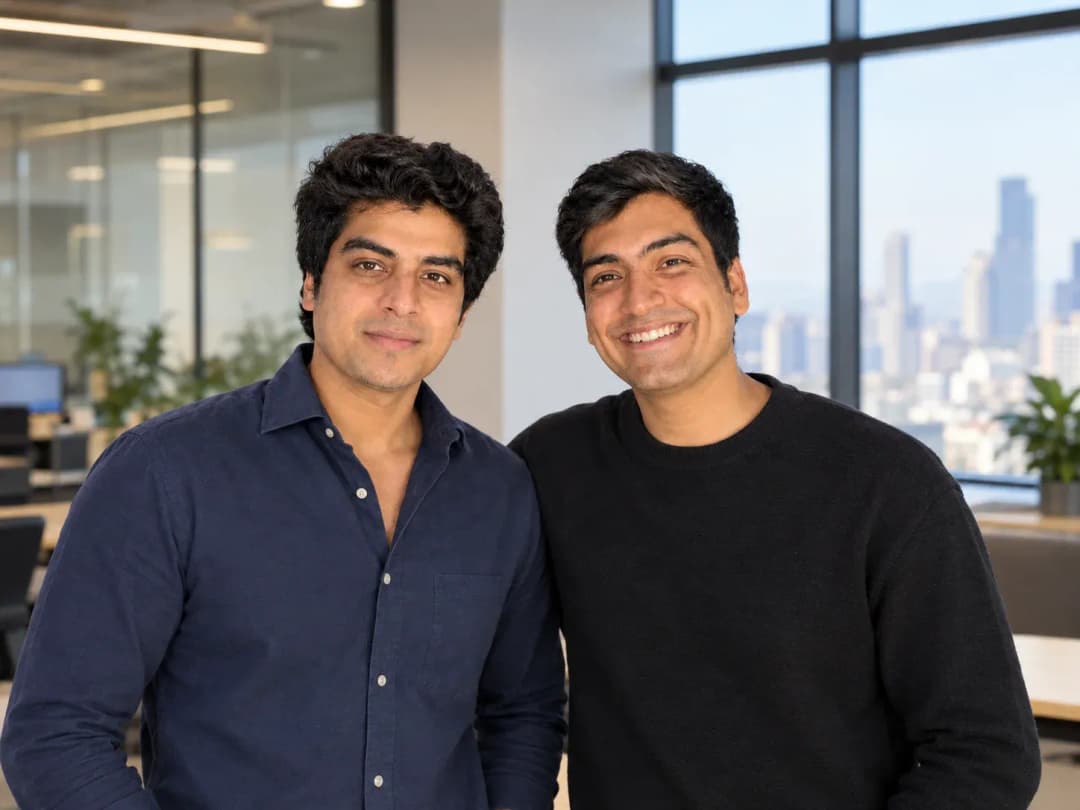
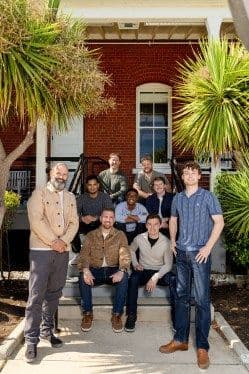
As the AI boom strains computing capacity, Nvidia has backed Indian startupSimplismartin a $14 million funding round, betting on software that helps companies run AI models more efficiently and, in some cases, with fewer GPUs. Nvidia participated in the all-primary Series B round alongside Accel, Shastra VC, and Micromax, with Dallas Venture Capital leading the investment. The deal values the four-year-old startup at about $100 million, including the new funding. Companies are nowadays spending heavily on GPUs to power AI applications, but running those models reliably and economically at scale remains a challenge. Different workloads demand distinct trade-offs between speed, cost, and performance. Deploying and operating AI models to meet business requirements often also requires complex adjustments. Simplismart says its software automates much of that work, tailoring how models run on existing computing infrastructure instead of requiring customers to manage those configurations themselves. “Nobody actually needs the fastest or the cheapest inference,” Amritanshu Jain (pictured above, left), co-founder and CEO of Simplismart, said in an interview. He added that companies instead need to run AI models at speeds and costs that make sense for their specific applications. Simplismart’s software sits between AI models and the computing infrastructure they run on and adjusts how models are deployed and managed to meet customers’ requirements. It says it can optimize factors such as how quickly a model responds, how many requests it handles, and how much computing power it consumes, helping companies get more out of their existing GPU stack. The Bengaluru-based startup offers companies a way to deploy and run AI models through its own platform or within their existing cloud and on-premises infrastructure. It also provides tools to fine-tune models, automatically scale computing resources as demand changes, and monitor performance. Additionally, Simplismart allows cloud providers build and operate their own AI inference services on GPU infrastructure using its software. Simplismart says it helped AI video-generation platform InVideo cut its GPU serving costs by 56% using its software. The startup also works with AI video companies HeyGen and Higgsfield, as well as enterprise AI startup Ema, among others. Moreover, Indian cloud provider Yotta uses Simplismart’s technology to power the serverless AI inference service within its Shakti Studio platform. Simplismart’s annualized revenue run rate has grown 14-fold over the past six months to an eight-figure sum, Jain told TechCrunch. The figure is based on recent customer usage rather than contracted recurring revenue and excludes revenue passed through to infrastructure providers, the company said. He did not disclose the exact figure. More than half of Simplismart’s revenue comes from the U.S., despite the startup having more customers in India, Jain said. Alongside its investment, Nvidia has been working with Simplismart on technical integrations, including around its Dynamo inference software, Jain told TechCrunch. The collaboration involves Simplismart’s engineers and Nvidia’s solutions architects, while Nvidia has also helped introduce the startup to potential customers and partners, Jain stated. Interestingly, the investment presents an apparent paradox as Nvidia, the dominant supplier of AI chips, is backing software that can help companies run some workloads with fewer GPUs. Jain, however, argued that making AI inference more efficient could ultimately benefit Nvidia by making its hardware more attractive to customers and encouraging wider adoption of AI applications. Simplismart is serving customers in an increasingly crowded market for AI inference software, competing with offerings from Nvidia itself, as well as major cloud providers and hyperscalers including Amazon Web Services, Google Cloud, and Microsoft Azure. A growing number of startups are also developing tools to make AI models faster and cheaper to run as there is growing demand in this segment, driven by rising demand for AI applications and the need to make better use of expensive GPU resources. “Where we tend to win is where people have to be more stringent on their SLAs [service-level agreements] and TCO [total cost of ownership],” Jain said, referring to demanding performance requirements and tight cost constraints. Unlike rivals that offer preset options for faster or cheaper inference, Simplismart aims to find a balance tailored to each customer’s needs, he said. Founded in 2022 by former Oracle engineer Jain and former Google engineer Devansh Ghatak (pictured above, right), Simplismart grew out of the pair’s experience building and deploying machine-learning systems. The two met while studying at BITS Pilani, and the startup now employs 58 people, Jain said. Simplismart plans to use the new funding to expand its presence in the U.S., grow its team, and invest further in developing its inference software. Jain told TechCrunch that the U.S. remains a key market for the startup as it looks to build on its existing customer base there. The funding announcement follows areportby Indian English daily The Economic Times that Simplismart was in talks to raise $40 million to $50 million at a valuation of $300 million to $400 million. Asked about the report, Jain declined to comment, saying the startup was not actively fundraising. He added that the Series B was closed and would not be extended.

CoreWeave, a publicly traded neocloud that rents out computing power for AI, has seen its stock price fall to a 12-month low, and Elon Musk is flexing $40 billion in debt for buying computing capacity and predicting that “200+ neoclouds are going to see guppy-level death and consolidation.” It’s not exactly the ideal week to announce a Series A for a neocloud. General Compute co-founder and CEO Finn Puklowski is unfazed. He’s bullish on CoreWeave’s chances, and thinks Musk is just talking his book to drive down the prices of the GPUs he wants to buy. Fears of a chip-led collapse are “massively overstated. I have people calling me up every single week asking me to do TPUs, GPUs, any chip, to get them more compute.” Just as important, he says, Anthropic’s bullish S-1 is “settling fears for today.” General Compute has found a niche building its cloud out of specialized inference chips built by Nvidia rivals. The company struck a $400 million deal to purchase new chips from SambaNova—thefirst debt financingof inference chips—and now has added Positron and Cerebras to its portfolio of chip suppliers. A deal with a large customer worth $100 million in annual recurring revenue has paved the way for the company to raise $100 million in Series A funding led by Blackbird Ventures and Abstract Ventures. Valued at $60 million aftera May seed round, General Compute is now worth $800 million post-money to its investors. The startup’s strategy is to zig where others zag. It focused on chips built for inference while everyone else chased GPUs. And instead of taking on a complex effort to build huge data centers, it uses smaller power sources, rents space in other companies’ data centers, and converts former bitcoin-mining sites into places that run AI models. That approach means General Compute isn’t going to catapult into the top ranks of neoclouds or compete with hyperscalers any time soon. But it’s also not subject to the constraints that come with building data centers from scratch. When General Compute has chips, it will have someplace to plug them in. Puklowski expects the company to deploy 75 megawatts of computing capacity in 2027, and he suspects he will have access to 200 megawatts of power—“more than we can probably fund and get hardware for.” Still, the plan has a limit. Puklowski’s financing work isn’t done—”capital is going to be a full-time job for me, both on debt and equity,” he told TechCrunch. The startup has found key customers in cloud companies that specialize in offering developers high-speed inference; General Compute provides the bare metal, or raw servers with no software layered on top, for them to bring their offerings to market. James Palmer, a principal at Blackbird who co-led the round, said his firm’s confidence in General Compute comes in part from an investment in Baseten, an inference cloud company. “We’ve been proximate to their journey over the last 10 months and observing the wild growth story that [Baseten] has gone on, and the demand for open weight inference, and for companies owning their own intelligence,” Palmer told TechCrunch. When it comes to General Compute, he said, “Cerebras, Positron, SambaNova, all need distribution partners who can take them to scale, who can navigate the complexity of the physical world.” Executives at all three chipmakers sang General Compute’s praises to TechCrunch, each noting the importance of the company’s focus on making the economics of AI cloud compute work. “Everyone in this market is selling speed,” Rodrigo Liang, SambaNova’s CEO and co-founder, said. “The real question is whether you can make money doing it.”
View
View
View
View
View
View