🚀 Zaprep: Your Socials on Steroids. Start free — automate 1,000 DMs/month & turn engagement into leads. with 1,000 automated DMs/month.
Submit your Tool
PoweredByAI.app is an AI Tools Directory helping individuals, businesses, and creators discover the best AI tools for writing, coding, design, productivity, and more.
© 2026 , Product of011BQ. All rights reserved.

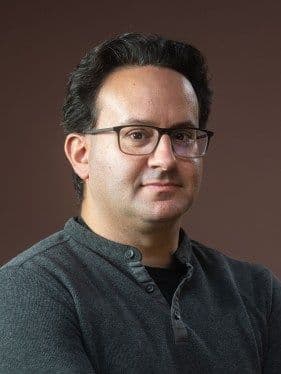
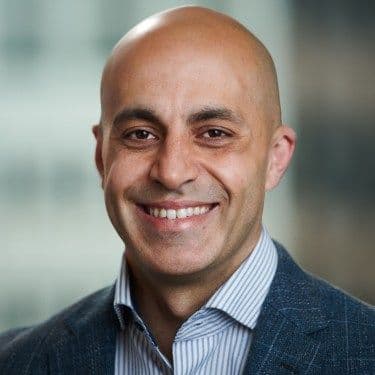
As Anthropic barrels toward an enormous IPO that could value it at$1.4 trillion,the company has disclosed a tidbit in its new S-1 filing about how many shares each of its seven co-founders plan to sell. Each will sell 3,378,378 shares. Anthropic has floated an unusually broad initial price range of $70 to $78 a share. At the midrange of $74, each founder would take in just shy of $250 million. At the low end, $70, each would have to settle for pocketing just over $236 million in cash; at the high end, $78, each would take in just under $264 million. However, in an IPO as eagerly anticipated as this one, companies can often price shares above the initial range. The S-1 is already hinting at high demand. Board member Reed Hastings has indicated he wants to buy $300 million worth of shares through his donor-advised fund. Board member Christopher Liddell also wants to buy $3 million worth of shares. The seven co-founders are Dario Amodei, CEO; Daniela Amodei, president and chair of the board; Tom Brown, chief compute officer; Jack Clark, head of public benefit; Jared Kaplan, chief science officer (pictured above); Sam McCandlish, chief architect; and Christopher Olah, interpretability research lead. After the sale, each of them will own about 3.2% of the total outstanding Class A shares, the S-1 says, or roughly 22% collectively. That’s not their share of the company overall. Class A is just one of Anthropic’s share classes, and other holders, including Amazon and Google, hold nonvoting Class N shares, so the founders’ stake in the company’s total equity will be considerably smaller. Even still, they, as a group, remain in control of the company. Each will also receive one share of Class F stock, which carries supervoting rights. Collectively, the founders will control 51.1% of the votes, but no single founder will hold significantly more shares or votes than the others. As is now industry lore, the seven left OpenAI to start Anthropic in 2021 after disagreements with OpenAI’s leadership over how AI should be built. Siblings Dario and Daniela Amodei, who held senior research and policy roles at OpenAI, were joined by five fellow OpenAI colleagues in forming a company that has said, very publicly and from the start, that it’s more focused on AI safety than its rivals, including the founders’ former employer.
View

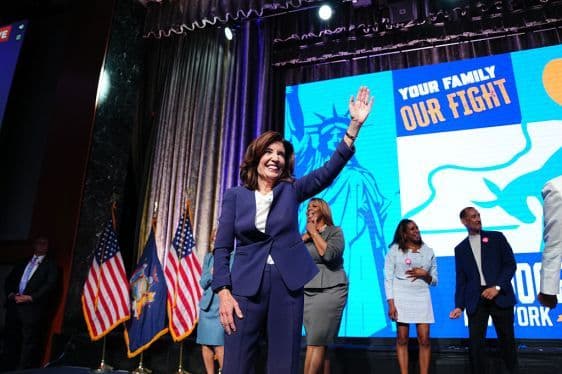
New York is gearing up to enforce one of the country’s most significant AI safety laws. The state opened a registration portal Tuesday, with which large frontier AI developers like Anthropic and OpenAI will be required to register by January 1, 2027. The RAISE Act, New York’s safety and transparency bill, kicks in at the start of the year. It mandates that large frontier developers — companies with more than $500 million in annual revenue — have to publish safety frameworks on their websites, report critical safety incidents within 72 hours, and issue public model transparency reports. The newly formed Office of Digital Innovation, Governance, Integrity, and Trust (DIGIT) will implement the RAISE Act and oversee large frontier AI labs. Penalties can be as high as $1 million for one violation and $3 million for subsequent violations. The state also can bring enforcement actions against companies that fail to register with the new portal, though a spokesperson declined to provide specifics. “Tech moguls tell us that their vision for AI is inevitable,” Governor Kathy Hochul said Tuesday during a press briefing. “They tell us get on board or get left behind… That any collateral damage is worth it as long as we win the race to the AI cliff.” On Tuesday, Hochul also launched the New York Center for AI Responsibility and Research based at State University of New York’s Binghamton University. The center will independently evaluate the safety, security, and operation of advanced AI systems and work with DIGIT to review companies’ safety frameworks. Hochul first announced the center in January with $55 million in donations and capital. “We’re building a national model for smart, sensible AI regulation, a model that puts communities above corporations and people above powerful technology,” Hochul said. The RAISE Act isn’t the only safety law New York has passed. Last year, the state began enforcinga law that requires AI companionoperators to regularly let users know they’re talking to a bot, and to make reasonable efforts to detect suicidal ideation and self-harm. In October, Hochul signed aseparate chatbot safety lawfor minors, restricting behaviors like deceptive human-like interactions, emotionally manipulative or sycophantic responses, and encouragement of behaviors like suicide or disordered eating. That law takes effect June 1, 2027. Other states have also passed similar AI safety and transparency bills to the RAISE Act. California’s SB 53, which took effect in January, mandates that frontier AI labs have in place and publish safety frameworks, enact whistleblower protections, and report critical safety incidents within 15 days. Illinois’ SB 315, which will go into effect at the start of 2027, has similar requirements, plus includes independent safety compliance audits.

OpenAI has acquired an AI travel agent called Odessia,according toOdessia’s founder, Francis Davidson. Davidson says in a post announcing the deal that he’s now working for OpenAI, helping the AI lab with the future of travel. Terms of the deal were not disclosed, but this looks like an acqui-hire. Davidson’s announcement focused largely on how he built his AI travel agent Odessia by directing teams of AI agents. The year-old Odessia raised a $6 million pre-seed round led by Sequoia and launched its AI travel agent around five months ago. Davidson says that it had helped early adopters plan millions of dollars’ worth of travel, but the toolhas already been shut down. An OpenAI spokesperson confirmed the hire to TechCrunch. “We’re thrilled to welcome Francis to OpenAI. Francis is a proven founder who has built multiple businesses to help people travel, and we’re excited he’s chosen to build with us.” However the AI lab has not announced new travel-specific products or plans. It does, however, count such companies as Bookings.com,Expedia, and KAYAK as customers or partners. Travel is also one of the main areas that people are using personal AI assistants to help with. And, back in July 2025, when OpenAI launched itsChatGPT agent, it mentioned travel as one of its potential uses. OpenAI’s spokesperson didn’t have more to share on its plans for travel-related products, except to say that travel is one of the areas that chatbot users frequently ask about. “1.2 billion people turn to ChatGPT each week for help with everyday tasks — from understanding their health, figuring out what to make for dinner, building a budget, and even planning a trip. We see a real opportunity to make these experiences even more useful,” the spokesperson said. Acquiring Odessia is interesting for another reason. Davidson is well known in the travel industry after he founded a travel startup called Sonder as a college student in 2014. It was sort of like Airbnb, but it focused on short-term leasing of upscale apartments in major cities worldwide. The pandemic badly hurt it, and as it climbed out of that rut, it went public via a SPAC but didn’t raise as much money as it needed, Davidson later saidin a post announcinghis resignation as CEO in June 2025. When a key partnershipwith Marriott fell through, the company went into bankruptcy and wound down. The bankruptcy trustee sold Sonder’s name, trademarks, and website domain in 2026 to TravelAI, and that website operates as a curated guide to the kind of travel rental properties that Sonder was once known for. Prior to its downfall, Davidson had built Sonder into a unicorn with $143 million in revenues. While Sonder was not, ultimately, a success story, Davidson is the kind of battle-scarred founder that Silicon Valley often values. So we’ll have to wait and see what OpenAI has in store now with travel, now that he’s joined the company. Note: This story was updated with OpenAI’s comments.

Nvidia’s stock sank 5.47% on Tuesday, following a 4% drop on Monday, a loss of about 9.5% in two days, even though there wasn’t much news out of the company. CEO Jensen Huang has reportedly been trying to conductbusiness as usualafter admitting to an extramarital affair with Alice Huang, whom U.S. intelligence agencies believe was spying for China. The biggest development: the board hired the law firm Wachtell, Lipton, Rosen & Katz to conduct an internal investigation. What comes next is mostly a guessing game, even for the people who study how boards are supposed to handle crises. Two corporate governance professors, Ann Lipton of the University of Colorado and Todd Henderson of the University of Chicago, say there is no real precedent for a CEO caught up in a suspected honeypot. And while they have views on what the investigation should ask, like everyone else, they’re watching to see how it plays out. “There have actually been affair cases and sexual harassment cases,” Lipton said, but was quick to add that she doesn’t know of previous cases that also involve potential national security compromises. Henderson, whose research interests include corporations, securities regulation, and law and economics, said much depends on facts few people have yet, including, most importantly, what, if anything, Alice Huang got out of Jensen Huang. (Secrets about Nvidia’s fabs or chip designs would matter to the Justice Department. Ordinary corporate information probably would not.) Lipton described the investigation led by Nvidia’s independent board members, with their own outside counsel, as perhaps the most “standard” aspect of the whole affair so far. She also observed that an investigation will be “exactly as thorough” as the directors running it want it to be, which is also standard. Henderson made a related point about incentives, saying that Washington law firms that conduct internal investigations “know who pays their bills.” He didn’t suggest that’s happening here. Lipton said she sees three lines of inquiry, including whether the law was broken, whether Huang violated Nvidia’s internal policies, and whether the board was misled, including how forthcoming he was and when he was on notice. It’s notable, as Wiredreported Monday, that Huang hired a PR crisis firm known for handling sex scandals a full year ago. Of course, the driver could have been about the affair alone. It’s unclear when Huang learned Alice Huang was a suspected spy. The board said in a Sunday statement about the matter that Nvidia has “hasno reason to believethat either national security or NVIDIA secrets were compromised.” Henderson similarly stressed the importance of what Huang knew and when. He described two scenarios. In one, Huang hires a PR firm because an extramarital affair is embarrassing, without knowing who the woman is. In the other, he knows she is a suspected Chinese spy. “I think that’s very different,” he said. “If I were a board member and the CEO of a company with very sensitive technology was in that situation, I would be furious if they didn’t tell me.” Not telling the board that you have cancer “or that you’ve been sleeping with a Chinese spy,” said Henderson, “seems to me to be a fireable offense.” Either way, Lipton expects shareholder suits, and she said two kinds are possible. Securities fraud, which she said is “only about lying,” is the most obvious, and as we reported yesterday, Nvidia isalready facing a proposed class actionlawsuit that alleges Nvidia and Huang misled investors by concealing Huang’s relationship with Alice Huang while describing dealings with her former employer as routine. “You can have as many affairs with Chinese spies as you like,” Lipton said. “You just can’t lie about it under the federal securities laws.” A mismanagement claim under Delaware law, where Nvidia is incorporated, is much harder. Employees do “stupid or reckless or damaging things all the time,” she said, and courts don’t let shareholders sue each time. Shareholders bringing such a claim on the company’s behalf, known as a derivative suit, must first show the board is incapable of handling the problem, usually by proving directors are implicated or so beholden to the CEO that they can’t act independently. Nvidia’s 10-member board has a track record ofloyalty and deferenceto Huang, as outlined by a New York Times piece Tuesday morning. Still, the investigation those “independent” directors have announced with outside counsel makes that very hard. Lipton cited, for example, a shareholder suit over alleged mismanagement at McDonald’s several years ago, after its chief people officer was accused of harassment and its CEO had a relationship with a subordinate. Ultimately, the court found no reason the board couldn’t deal with the misconduct on its own. Even if none of this ends up threatening Huang’s job, the episode raises other governance questions that don’t look great in retrospect. Nvidia is run with a famously flat structure, with more than 60 direct reports to Huang, and the company doesn’t appear to have a succession plan, which Lipton called “a danger for any company.” Huang’s children also work at Nvidia. His son Spencer is a director of product management, his daughter Madison is a senior director of product marketing, and his son-in-law, Nico Caprez, works in business development. Some employees believe he is grooming successors, and asked last month by Bloomberg whether Madison is in line for the job, Huang didn’t shoot down the idea, saying instead that it’s not something he’d wish on her. Lipton called hiring the kids poor corporate hygiene, even though founders have long done it. (Kimbal Musk is on Tesla’s board because he’s Elon Musk’s brother, she noted.) Directors are supposed to act only for stockholders, but founders get more rope as long as the company is thriving. Henderson similarly calls himself a strong “anti-nepotism person,” sharing that when his father worked at Westinghouse’s nuclear research lab, there was an absolute ban on hiring employees’ children. “Like, fine for them to be working there,” he said of Huang’s children working at Nvidia. But “the idea that one of his kids would succeed him” at a publicly traded company the size of Nvidia “seems crazy,” he added. What Nvidia may have gotten more right, from a governance standpoint, is what it doesn’t have, which is dual-class shares. Huang reportedly owns about 3.6%, so he doesn’t control the vote. That makes him “easier to dislodge,” Lipton said, even though he is deeply integrated into the company in other ways. Neither professor is rooting for or against Huang, each made clear. The simple truth is that with voting control on top of Huang’s holdings, the board would have even less flexibility. Without it, the board has a few more options.

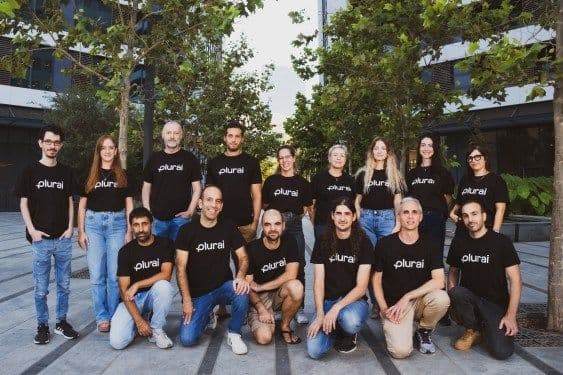
AI agents are all the rage, but they’re not quite as capable as their purveyors would have you believe. Efforts to benchmark agents tasked with complex work show that they aren’t typically reliable enough to function without close supervision. LiveBench 2.0showsClaude Fable 5.2 and ChatGPT-6 Astra succeeding on 82.9 and 75.6 out of 100 tasks, respectively, andan effortby the AI infrastructure company EON to test agents in a simulated corporate environment found the most successful model tested, Claude Opus 4.8, performed tasks at 76.8% accuracy. Now, a startup known as Plurai wants to boost those numbers with the same techniques that put self-driving cars on the street: Simulations using synthetic data based on a company’s own digital systems, meant to prepare models to tackle difficult edge cases. Co-founders Ilan Kadar and Elad Levi previously worked for Nexar, which develops autonomous driving technology. Kadar worked with Waymo to simulate and evaluate its end-to-end deep learning driving software. “The moment that we saw the wave of AI agents, we saw the same pattern: That it is very easy to build a demo, but [hard] to get something that will be reliable and cost effective,” Kadar told TechCrunch. “Since we saw the same pattern, the same pitch was that we want to build this simulation layer.” On Wednesday, the startup said it had raised $13 million in seed funding to make that happen. The round was led by Team8, with participation from U&I, Velocity and Mercer. Like the end-to-end models trained to drive cars, AI agents are probabilistic systems operating in unpredictable environments. When pressed by customers, agents tasked with booking travel can ignore spending policies. Or, when tasked with querying one database, agents can reliably provide an answer, but combining information from multiple data sets tends to gum up the works. A long conversation with a customer service bot can overwhelm an agent with too much context and lead to wrong turns. To fix that, Plurai creates a digital twin of the company’s electronic systems, including the knowledge base and tools that an agent will have access to in production. It then maps all the possible flows of the agents, and uses that graph to prepare the model with evaluations and fixes for possible edge cases. The platform works alongside existing agentic tools like Claude Code, Codex, Copilot and Cursor. However, Kadar says the company’s real promise is using the data it gathers to post-train small, open-weight models tailored to individual customer needs. Tests performed in cooperation with Nvidia and Nebiusshowedthe company’s models outperforming mid-tier frontier models at lower costs. “We can take a large language model, we can take the task, decompose it into a smaller task using the simulation, train [an open-weight] model, and using the simulation, verify that the quality is higher or comparable to the frontier model, and an order or two orders of magnitude cost reduction,” he said. Reah Miyara, a Google DeepMind researcher who backed Plurai as an angel investor, said the company’s edge comes from understanding failure modes in production, and generating synthetic data to tune models. As businesses try to optimize their AI expense, Plurai’s approach could prove a real advantage, since IT leaders are seeing that “frontier-capable models are out of distribution with my specific data, and the cost of these things isn’t sustainable in the long term,” Miyara said. Plurai hopes analogies between AI agents in physical and digital environments can prove predictive: While powerful general AI models are imbuing robots with fascinating capabilities, they aren’t yet reliable enough to be deployed widely. Meanwhile, robots powered by AI models built for specific tasks are in the field right now, working for customers and gathering valuable real-world data. “My view is that no matter how smart OpenAI and Anthropic model will be — and they will be much smarter — they will not know your business and your policy,” Kadar said.

Databricks on Wednesday unveiled an updated version of its AI agent Genie, which can now perform multi-step jobs that take extended work to finish. It does this through an ontology that Databricks built to give Genie the context it needs from the information that customers store on the Databricks platform. Corporate leaders can now assign the agent a wide range of tasks, and it will complete them unsupervised, the company says. To prove the point, Databricks CEO Ali Ghodsi showed me how he uses it internally. Instead of a product demo, he fired up his actual agent and walked me through his most recent chats and charts. He showed me how it analyzed the parts of an employee satisfaction survey where the company didn’t score well, and how it helped him rate (and discard) fixes for those low scores that some executives suggested. He showed me how it summarized a big sales pitch to a prospect that went poorly — including the features the prospect said it needed before buying. It also prepped him for a podcast interview by reviewing his previous appearances and developing likely questions. While we talked, he even had it tell him what he should say to me. (And its advice on that wasn’t bad.) The fascinating part was that Ghodsi was using Genie to find the stuff that he’s now unlikely to hear as the big boss. It was a source of unvarnished truth about what wasn’t going well that he needed to address. “Have you heard of Dunbar’s number? The magic number is 150,” he said when I pointed this out. Named for British anthropologist Robin Dunbar, it’s theoretically the maximum number of people with whom humans can maintain stable relationships. In a small startup, a CEO knows everyone, has direct relationships with them, and they feel safe to tell him negative info straight up. With 12,000 employees, Ghodsi is the first to admit he can’t know everyone. At that size, a salesperson isn’t likely to confess a disastrous sales call to the CEO. An HR manager isn’t likely to confess that their idea for increasing employee satisfaction will probably fail. “Anyone who has more than 150 employees, which is a lot of companies, a lot of people can get value out of this,” he said of AI agents generally and his product, Genie, specifically. Ghodsi’s own use of Genie (often called dogfooding, from the phrase “eating your own dogfood”) is one reason why Databricks is now pitching it as an always-on agent for business leaders. He says he also uses it in his personal life, rather than a security-questionable alternative like OpenClaw or Instinct or Muse. He believes Genie can do for the business side what AI, agents and harnesses (the software that wraps around an AI model and lets it use tools) are doing for programmers. As for the risk that agents will ratchet up corporate AI costs, Ghodsi has an answer for that, too. He said costs can be controlled through Databricks’ Unity Gateway product. It allows companies to set usage limits and to swap in less expensive open-weight models.

OpenAI is bouncing back from the doldrums it experienced earlier this year. The company’s quarterly revenue crossed $10 billion for the first time, thanks to strong demand for its recent AI models, Bloomberg reported, citing anonymous sources. If true, that would represent an almost 50% jump from the $6.7 billion in sales the companyreportedlyrecorded in the second quarter. That would also mark a sizable increase in its revenue growth rate, which was previously said to be about 18% between the first and second quarters of the year. OpenAI’s profitability picture also appears to have improved, with its adjusted operating margin narrowing from -150% in the second quarter to -109% in the third quarter, the report said. OpenAI, one of the first to commercialize AI models, wasn’t exactly struggling to continue growing its top-line expansion — 18% growth on top of $5.7 billion in quarterly revenue is massive by any measure, especially compared to most software businesses. But it was seeing those gains be trumped by its archrival Anthropic, which has taken the lead in capturing the enterprise market for AI models and recentlyreported Q3 revenue of $17 billion. OpenAI’s broader focus helped it attract a large user base and gain popularity early on, and it says it hasover a billion users, but it’s reasonable to assume most of those are free users or subscribers to its cheapest plans. Still, the company lagged Anthropic in catering to enterprises, a market where the Claude-maker has pulled ahead, at least in terms of revenue growth. OpenAI has recently benefited from a combination of tighter pricing, discounts, improving models, and a greater focus on building more enterprise-focused products and AI agents that can help people complete tasks. OpenAI has now reached an annual revenue run rate of $50 billion, according to Bloomberg. Meanwhile, Anthropic, which isseeking a $1.4 trillion valuation in an IPO likely to happen soon, said yesterday that its annual revenue run rate had increased by $10 billion within a month to $81 billion as of the end of October. (Note that OpenAI and Anthropic calculate their annualized revenue differently: Anthropic counts sales made by its cloud partners, while OpenAI only reports its share of some sales through its partners.) None of those figures are small, of course, but the companies are also competing with models from Meta, Amazon, Microsoft, and Google, as well as a plethora of cheaper but still highly capable models from open-source AI labs, especially those from China.

The AI industry is still reeling from Nvidia CEO Jensen Huang’s honeypot scandal, but some in the industry see it as an issue that’s much larger than one man. The Chinese government has been active in economic espionage for decades, and with semiconductors at the center of the AI boom, there’s intense pressure to infiltrate any company involved. At the same time, many of the executives getting rich off that boom have made themselves easy targets. As CEO of investment intel firm Heron Intelligence, Nate Singer has a unique view into the problem. His firm works on corporate due diligence: Essentially, making sure companies know the relevant dirt before making a major acquisition or executive hire. And while the Nvidia case is particularly severe, Singer says there are lots of similar cases in the semiconductor industry that have stayed under the radar. “We’ve got former employees talking about behavior at senior executive levels,” Singer told TechCrunch, saying executives are “really crossing lines that should not be crossed.” Ina widely circulated LinkedIn post, Singer detailed one case in which a CEO’s wife made an unexpected board room appearance, “screaming about her husband and another company exec flying around in the corporate jet with a couple young ladies (who also turned out to be state-sponsored actors).” It’s an alarming story, but an unfortunately common one. Singer says he’s seen at least three reports of similar cases, and suspects many more have gone unreported. “There’s a lot more than this one woman,” Singer said. “They are embedded in these companies.” Semiconductor companies are already big targets for international trade secret theft. There have beendozens of prosecutionsfor similar cases in recent years, includinga case involving the fabrication powerhouse TSMCin 2006. In 2017, four executives atan unnamed “Bay Area semiconductor equipment manufacturer”were charged with stealing trade secrets for use at a competing company in China. According to the indictment, the technology in question “related to the high-volume manufacturing of semiconductor wafers to be used in lighting and electronic devices, such as flat screen televisions and smart phones.“ Any sexual elements in such cases rarely become public, in part because of the severe consequences for executives and their companies. But according to Singer, the ongoing threat has become a kind of open secret in the industry. “There are a lot of senior people in the industry that know this is happening, and are effectively condoning it,” he told TechCrunch.

The Series A funding will support engineering and enterprise expansion as the startup launches PuppyGraph 1.0 graph query engine.
View

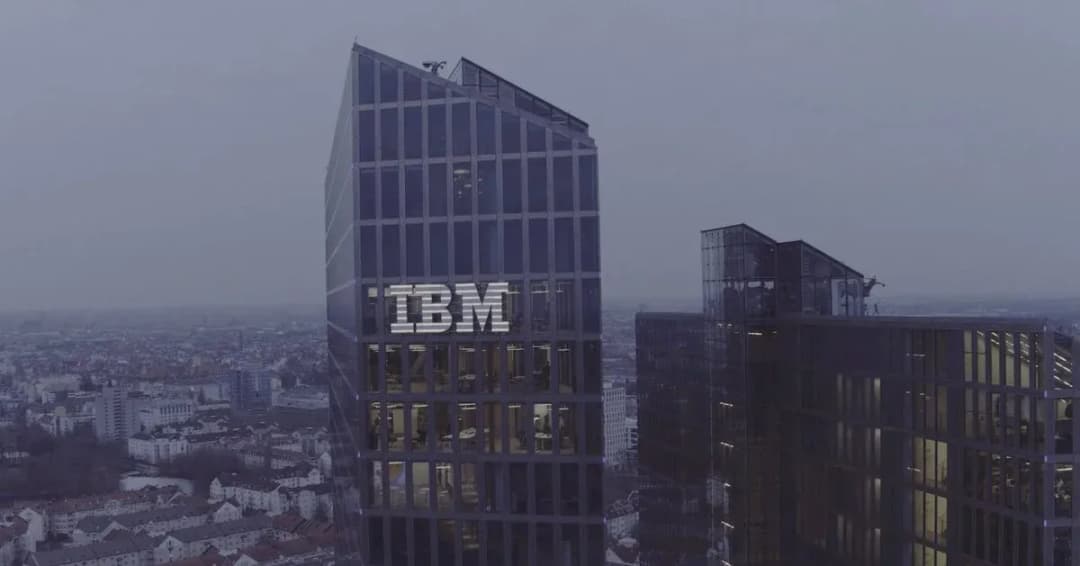
IBM had historically used high-skilled visa programmes to address talent shortages, but its participation had been declining for several years.
View

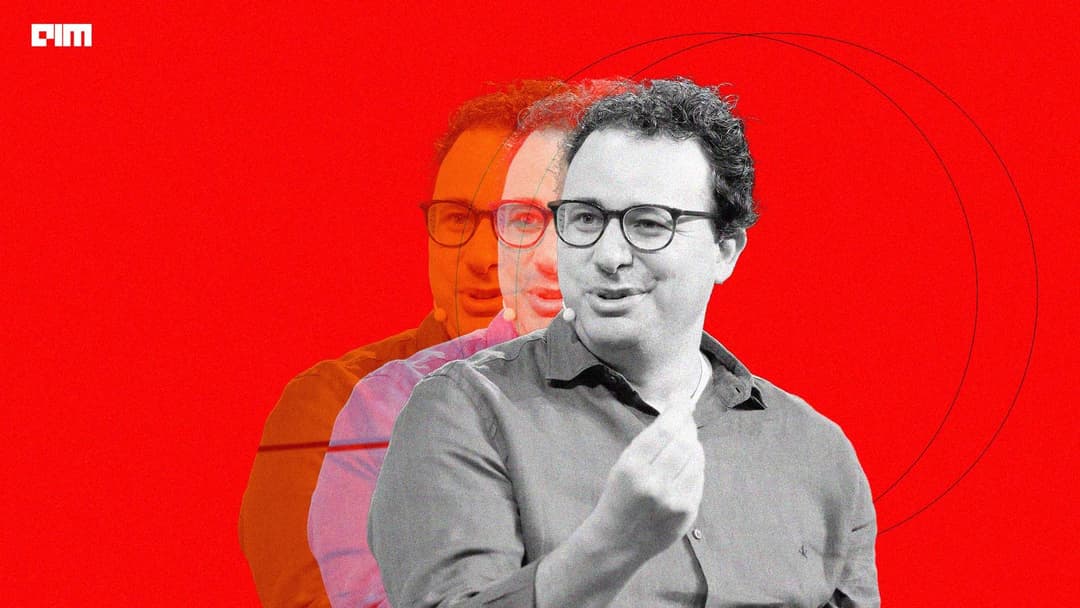
Anthropic is offering 825 million shares of Class A common stock at an indicative price range of $70–78 per share.
View

AI agents today—the ones that can use your web browser and autonomously perform tasks—are getting more intuitive. But are they safe enough?
View
View
View
View
View
View
View
View