🚀 Zaprep: Your Socials on Steroids. Start free — automate 1,000 DMs/month & turn engagement into leads. with 1,000 automated DMs/month.
Submit your Tool
PoweredByAI.app is an AI Tools Directory helping individuals, businesses, and creators discover the best AI tools for writing, coding, design, productivity, and more.
© 2026 , Product of011BQ. All rights reserved.

Coforge CAICO Anup Nair says the IT services firm is skipping a Palantir-style platform and betting on context, trained engineers and repeatable projects.
View

Markets can do little more than speculate about possible outcomes until the investigations yield conclusive results. But what if Huang is ousted as CEO?
View

If you signed up for ChatGPT Go through the 12-month free offer in India, you might be wondering what happens when the free period ends. If you don't want to continue with a paid subscription, it's worth checking your renewal date and cancelling in time. ChatGPT Go costs Rs. 399 per month in India after the offer period. The cancellation process is fairly simple, but the steps differ depending on whether you signed up through the website, Google Play Store or App Store.
View

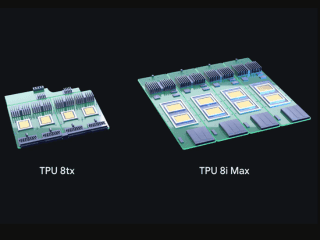
Google introduced the 8tx and 8i Max chips on Wednesday as its two new eighth-generation Tensor Processing Unit (TPU) systems. With the unveiling of the two new TPUs, the Mountain View-based tech giant now has four eighth-generation chips, including TPUs 8t and 8i. The company first introduced its eighth-generation range of TPUs at Google Cloud Next in April, initially including two chips. Google further highlighted that the launch of the two TPUs marks the first time it has introduced four systems in a single year. The new TPU 8tx and TPU 8i Max are designed for confidential computing and large context and density computing, respectively.
View

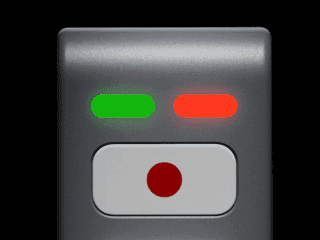
Nothing is scheduled to launch its first “AI-native” device next month. The company recently started teasing the debut of the unspecified device, while keeping its name and product category under wraps. The upcoming device will mark the UK-based tech firm's entry into a new AI-powered hardware market, which currently has AI pendants, AI pins, AI smart glasses, and dedicated AI-backed companions. However, Nothing has already confirmed that its AI-native device will be different. Now, a company executive has revealed the design of the upcoming AI hardware, which appears to be a metal box with LEDs and a physical button.
View

Anthropic announced the expansion of Claude's capabilities beyond its existing chat and coding tools. According to the company, users will be able to access new ways for teams to create and work with data. Among the notable additions are Claude Sheets, Claude Whiteboards, and Claude Data, which allow users to build spreadsheets, organise ideas, and create interactive dashboards with the chatbot. Further, Anthropic is also upgrading interactive connectors, which let users access third-party applications without leaving Claude.
View

Google announced the rollout of Gemini 4 Carbon on Tuesday. Following its release last month, the Mountain View-based tech giant is expanding access to developers and enterprises through paid plans. Meanwhile, Google AI Ultra subscribers can also use it across select products, including the Gemini app and AI Mode in Search. Compared to Gemini 4 Argon, Carbon is claimed to be capable of handling more demanding, multi-step tasks by spending more time reasoning and verifying its output.
View

OpenAI has announced Businesses in ChatGPT, a new feature that allows companies to manage their business information on the platform. It includes a Business Hub where businesses can claim their profiles, update details and check how people engage with them on ChatGPT. The company has also introduced Business Agents, which can answer customer questions about products and services. The tools are currently in beta, although access to Business Agents is initially restricted to eligible businesses in the US.
View

OpenAI launched GPT-Live earlier this year, in July, as the Sam Altman-led AI giant's latest voice model. Since its introduction, the US-based company has witnessed a notable spike in its usage. Now, the ChatGPT developer has announced that it will be retiring the Advanced and Standard Voice models next month, as most users have transitioned to the new GPT-Live voice model. However, the chatbot will retain user conversations with the Advanced and Standard models. While ChatGPT Voice will no longer be powered by the two speech-to-text and turn-based voice models, select functionalities will remain based on one of the models.
View

Adobe and Google are adding more features from their respective platforms to each other's services as part of an expanded partnership. Adobe apps will be available across more Google products, while Google's AI models will make their way into several Adobe tools. The two companies are also working on new AI-powered editing features for Photoshop. Announced at Adobe Max 2026, the collaboration covers Google Workspace, Gemini, Gemini Enterprise and AI Mode in Google Search.
View

David Turturean, a recent MIT graduate and a member of the technical staff at the startup labPhysical Superintelligence (PSI), used early access to Anthropic’s Fable 5.2 model to solvean 18-year-old problemabout quantum computing. “I’m totally accepting the idea that this might be the last paper I ever put out,” Turturean, who deferred plans to pursue a master’s at MIT’s prestigious computer science and AI lab to join PSI, told TechCrunch. “In a few months, like, why would you even put out a paper?” The problem in question, the Aaronson-Ambainis conjecture, concerns the ability of quantum computers to solve problems faster than classical ones. Scott Aaronson, one of the two researchers who posed the problem,writesthat he doesn’t quite understand the proof but that he believes it’s correct because it was autoformalized in Lean, a coding language for math, andexplainedby a team of top researchers with whom PSI shared the solution. The solution appears to close the door on one avenue quantum computers could follow to solve certain difficult problems at high speed, but not all of them. “It’s a negative result that allows people to know, okay, we’re no longer looking there,” Turturean said. More broadly, it reflects the upheaval in the scientific world caused by AI problem-solving. “A proof of full [Aaronson-Ambainis conjecture] was one of the last remaining open problems in quantum query complexity that everyone seemed to agree was centrally important,” Aaronson, who described himself feeling satisfied, awestruck, disappointed, and fatigued by the news, wrote. “I was surprised, honestly, to see it missing from OpenAI’s Mathocalypse dump a few weeks ago. Surely they tried it, so was it really so much harder than all the problems that were solved?” That’s a point in favor of PSI’s model, which is to solve scientific problems with specialized model harnesses and scaffolding. “An effective kind of research system should have lots of things related to harnesses, lots related to tools, memory systems, simulation infrastructure,” PSI CEO Matt Pines told TechCrunch. “You want to be able to really go after a problem at breadth and depth, and be able to consider a wide range of potential alternatives.” For now, the company’s revenue comes from using its tools to optimize data centers, simulating the variables of heat, power, water, sound — “where the performance of that site as well as its impact on the community are a direct function of its physics.” The long play, however, is converting theoretical physics breakthroughs into actual technologies. “Six to nine months ago, when I was talking to investors, like I had to sort of stretch to validate that conditional, right? Like, ‘no, no, no, trust me, pretty soon, theoretical physics is going to be mostly the domain of machines,’” Pines said. “And it’s not there yet, but it’s on its way.” Still, while AI has claimed important solutions in fields like mathematics and computer science where it’s possible to express them in validated code, doing so in less abstracted disciplines like the life sciences or physics has proven more difficult. Last week, the startup Discovered Materials released a $1 million grand challenge for researchers using AI to understand problems like superconductivity and heat dissipation. “At the end of the day, physics is different than math because it’s the real world … nature gets a vote in your models of reality,” Pines said. He said the startup is focused on understanding how to take computational results and validate them with experiments in the most efficient way possible. “If it’s a true fact of nature, that’s a trick that you can exploit,” Pines said. “You could build a device out of it, right? The AI suggests an idea; it allows you to do something in the world you weren’t able to do before … and so each of those are kind of loops that PSI is building.” As “neolabs for science” become a pathway for potentially groundbreaking science, the participants are still figuring out what the standards are for this new world. Because PSI had to hold its result until Anthropic’s model was nearly ready for release, they were able to share it with relevant researchers to better understand it. “As an academic, we wanted to play our role in doing things the right way,” Jim Halverson, a professor at Northeastern University who advises PSI, said. He’ll be attending a summit at MIT next week where leading physicists will try to hash out a response to the new pace of science. “Best practices are still emerging … We figured that transparency is a good way to go, and contacting experts is a good way to go.” “We had some time to sit on it … and it was the first time that I actually took one of my AI-elicited solutions on print, and I read through it, and I was like, okay, how can I make this … be presented more naturally for a human?” Turturean, who said the academic community will expect him to be able to explain the result, told TechCrunch. “And I think it also made me realize, oh my God, the weight of what AI can do.”
Ouraannouncedon Tuesday that it’s acquiring AI-native primary care company Counsel Health for $625 million. The deal comes a few weeks after Ourapostponeditsup to $2.2 billion IPOindefinitely, citing “uncertainty in the IPO market.” Counsel Health is an AI-powered healthcare platform that combines a chat-based medical experience with access to licensed physicians. Its service was integrated into the Oura app in June. Users can connect with Counsel’s medical AI to get personalized medical advice, and chat with a physician when needed, all within the Oura app. Now, the companies plan to expand on their existing partnership to build across preventative care, acute care, and specialty and chronic care. While Oura has largely dominated the smart ring market for years, rivals like RingConn and Ultrahuman are emerging to dethrone it, putting pressure on the company to keep innovating. By acquiring Counsel Health, Oura is looking to expand its business and help users access medical care. “Oura helps members understand their physiology and, with Counsel, they can take action on their health across a range of needs, from quick questions and prescriptions to lab results, chronic care, and referrals,” said Oura CEO Tom Hale in apress release. Counsel Health raiseda $25 million Series Aa year ago, led by Andreessen Horowitz (a16z) and GV. PitchBook estimates it had raised a total of $36 million. Following the acquisition, Oura says Counsel will continue serving existing and new enterprise partners, with the goal of expanding its AI-native care model to more people beyond Oura’s membership. Counsel CEO Muthu Alagappan will join Oura as chief clinical AI officer, alongside the company’s 70 employees,Bloombergreports. “At Counsel, we’ve built medical AI around trust, safety and responsibility, keeping physicians in the loop for clinical decisions,” Alagappan said in the press release. “Oura’s data gives clinicians objective context, trended biometrics, and member engagement to deliver more informed care. From the start, our teams bonded over a joint vision, shared culture, and mission, further solidifying as we negotiated our deal over the past few months.” The deal is expected to close before the end of 2027. Oura also announced that its revenue grew 153% year-over-year to $533 million for the quarter ended on September 30. For its fiscal year 2026, Oura generated revenue of approximately $1.75 billion, marking 92% year-over-year growth. The company reached an$11 billion valuationfollowing a $900 million late-stage funding round in October 2025.
View
View