🚀 Zaprep: Your Socials on Steroids. Start free — automate 1,000 DMs/month & turn engagement into leads. with 1,000 automated DMs/month.
Submit your Tool
PoweredByAI.app is an AI Tools Directory helping individuals, businesses, and creators discover the best AI tools for writing, coding, design, productivity, and more.
© 2026 , Product of011BQ. All rights reserved.

Canva announced a new vision-language model for powering its AI design tools on Friday. Called Canva Brush, it is said to help edit and refine existing creations within Canva while preserving their original elements. According to the company, the model can operate on natural language instructions and can make changes from a single line of text to an entire presentation. Canva Brush is initially available for supported design edits to Canva Pro subscribers.
View

No description available.
View

AI infrastructure companyRunwareis making news again, just months after unveiling the Sonic Inference Pod, amodular data centerbuilt in a factory and shipped to customers ready to install. Now the company has bigger plans. It told TechCrunch it wants to build a factory that assembles these pods on a production line, as if they were cars. The idea isn’t entirely new. Companies like Crusoe and Schneider Electric also sell prefabricated pods, but Runware says it can ship its pods faster. Flaviu Radulescu, co-founder and CEO of Runware, told TechCrunch that the company plans to scale production at its Romania-based factory to 30 megawatts of data center capacity per day by 2028, or nearly 1 gigawatt per month. That’s a whole lot of capacity: at that pace, Runware would produce roughly as much in a year as the entire U.S. was expected to add in data center power this year,about 10 gigawatts. But it also reflects an industry-wide push to deploy data centers faster more efficiently. Nvidia announced, for example, theVera Rubin AI factoriesand theDSX PODearlier this year. Both are also meant to make it faster and easier for companies to build their own AI data centers. The difference with Runware, though, is that it says it has actually built a factory rather than just designed the infrastructure that would let others build one. Radulescu said Runware will gradually increase production starting next year and that it already has two factories — one it has used for a few years to build the pods, and a second it started building earlier this year. The second is expected to be finished within months and go online early next year. Runware will manufacture the modular data centers on an assembly line. Customers can provide their own site to assemble them, or Runware can find one for them. Radulescu said Runware aims to bring the pods online within 48 hours. That time covers installation and set-up time, not build time. A pod once took three weeks to build but it will soon take one day as it ramps up production, says the company. Runware will provide spare parts if components fail. Customers can also rent compute from Runware or supply their own GPUs and pay a monthly fee for the pods and operations. Power and internet are charged separately, he said. The pods can also be customized to customer preferences, he said. The pods have a standard design, but can be configured to meet customer requirements and the latest GPU chips. Chips can take a long time to arrive after they’re ordered, which works in Runware’s favor. “Our pod delivery times are also shorter than current GPU lead times, giving us time to adapt the infrastructure to the hardware being ordered,” he said. “For new GPU generations, our in-house hardware team can design, build, and test components itself, allowing us to adapt quickly.” Right now, these are all plans — execution is the test. The factory will need a lot of people, inventory, supply chain logistics, and money. There are cautionary tales about reinventing manufacturing, notably the electric vehicle startup Arrival, once valued atover $13 billion, which struggled to mass-produce electric vehicles cost-effectively compared with traditional plants. Runware, which has raised more than $60 million to date, said it plans to raise a Series B, but for now it is finishing and launching the factory with the$50 million Series Ait raised last December. “Our cost structure is very different,” Radulescu said, explaining how Runware seeks to avoid Arrival’s fate. “We do have headcount and materials cost,” he continued. “But our factory staff is cost-effective relative to the value of deploying compute for AI.” He also said that designing its own systems and buying widely available, affordable parts helps keep costs low. “We’ve brought in a highly experienced plant manager from the automotive industry to work alongside our chief of hardware and help us get that execution right.” Sourcing components could also be a challenge. Though Runware says it designs and builds its own cooling and other pod systems with standard components, some parts, such as pumps and fans, come from Germany, and it still depends on Nvidia for networking. Still, Runware claims it has received $1 billion in committed interest for its Sonic pods since it began offering them to outside customers a month ago, “representing over 20 megawatts, which we’re now working to deliver,” Radulescu said. Data centers in the U.S. and abroad have come under fire for how much energy they consume and how that affects the grid and other resources. When pressed, Radulescu said his company’s pods only need power and an internet connection. They’ll use a closed-loop liquid cooling system with air-cooled radiators to release heat, so they don’t really need a water connection. “We’re working with power providers on a site pipeline covering 397 megawatts, with potential to expand to 1.2 gigawatts,” he said, referring to its list of planned sites and adding that the company is deploying its modular data centers on sites that are much smaller than those used by hyperscalers like Amazon, Microsoft, and Google. The sites, he continued, typically already have power, so they shouldn’t further strain the grid or disrupt the community. The pods also run “completely silent up to temperatures of 86 degrees Fahrenheit. We use energy from renewable sources whenever possible,” he continued. “We are actively working on expanding our network of energy providers and sites. We’re aiming to have renewables as our main energy source.” Next, Runware will bring its new factory online early next year, then expand to the U.S. and other regions worldwide. Modular systems are the future and will soon become “the standard for large AI deployment,” Radulescu said. “Customers should be able to plan a hyperscale data center around factory-built pods from the beginning and have it working in months instead of years,” he added.
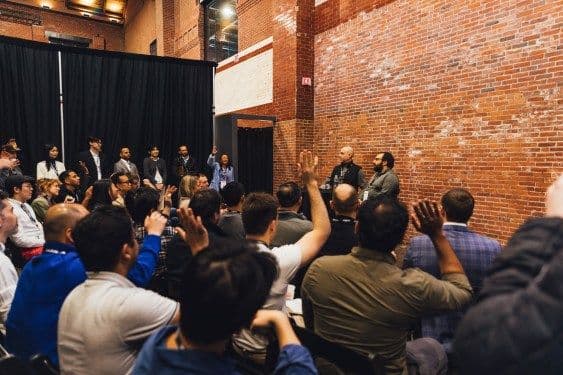
A great founder event shouldn’t just leave you with ideas. It should give you connections, insights, and actionable advice to turn those ideas into growth. Just five days away,TechCrunch Founder Summit, presented by Fidelity Private Shares, is bringing founders together for hands-on learning and meaningful connections. Explore two breakout stages packed with practical advice, then dive into interactive roundtables where you can ask questions, exchange ideas, and get direct insights from people who understand the challenges of building and scaling a company. Don’t just take notes. Make connections, find answers, and leave with a clearer path forward.Register now to save up to $100 on your pass, plus get a second for free. Get tactical about building your company. TheBuild Stagefocuses on what it takes to turn an idea into a growing business, with practical sessions on distribution, fundraising, emerging AI opportunities, and pitching. Visit the agenda to see the full session lineup. These aren’t just conversations about startup success. They’re practical lessons you can take straight back to your company. Get tactical about building the company. You’ll hear perspectives on why distribution can matter as much as the technology itself, what investors are looking for as founders prepare to raise, how high-performing startup teams are built, and why the best pitch is often the one that earns another meeting. These are lessons designed to move from the stage back into your company. Register for your pass before prices go up at the door. TheImpact Stagefocuses on the decisions that help founders build sustainable, scalable businesses, from finding product-market fit and knowing when to accelerate growth to building enterprise relationships and identifying future category leaders. Through candid conversations with experienced founders, investors, and industry leaders, you’ll get practical insights into scaling responsibly, navigating competitive markets, unlocking strategic partnerships, and positioning your company for long-term success.Explore the full agendato see the rest of the lineup. Register for your pass before prices go up at the door. Roundtablesmake the conversation smaller and more specific. Founders can dig into challenges, including entering difficult industries, building an events strategy without a dedicated team, reducing AI hallucinations, landing major enterprise customers before Series A, building entirely new categories, and using AI to help lean teams compete with much larger organizations. Instead of simply hearing how someone else approached a problem, you can ask the questions that matter to your company and compare experiences with the people sitting around you.Explore the full roundtable agenda. TechCrunch Founder Summitis intentionally more hands-on than a massive conference. Come ready to listen, but also come ready to ask, challenge, compare notes, and participate. Just five days remain.Save up to $100 on your pass, get a second for free, and join the Boston startup hub at SoWa Power Station on November 4.

There’s a big uproar about AI agents taking over commerce and orders, but that might not be the case just yet. Delivery company DoorDash revealed during itsthird-quarter earningscall that it has only seen “several hundred” orders from third-party agents like Muse, Instinct, Fo, and others. For comparison, the company said in its 2025 report it completes an average of 3 million deliveries daily. “I would say that this [using agents to order] is something that is still a very dynamic area. And my take on all things technology is you never want to fight gravity. But at the same time, you don’t want to be delusional,” DoorDash CEO Tony Xu said in an answer to an analyst’s questions about the topic. “What I mean by that is if you look at where AI agents are today, we’re seeing maybe several hundred orders in total from some of these third-party agents,” he said. Xu mentioned that users are still predominantly placing orders through DoorDash’s app. However, the company wants to learn more about agentic use cases and develop a healthy relationship with third-party agent makers. He added that, in the future, there could be an opportunity for it to advertise within these agents. DoorDash has its own agents, includinga text-to-order agent it launched in September, a CLIagent introduced in July, and a chatbot called Ask DoorDash it launched it June, which allows users toplace orders through prompts and photos. The company also releasedan MCP to enable ordering from other chatbotsfor corporate ordering. The space of agent-based ordering is evolving, as websites are still deciding whether to allow them to access their content or not. Amazon has been blocking such personal agents, but Walmart has laid out a red carpet for them in order tosnag some business from its competitors.
View

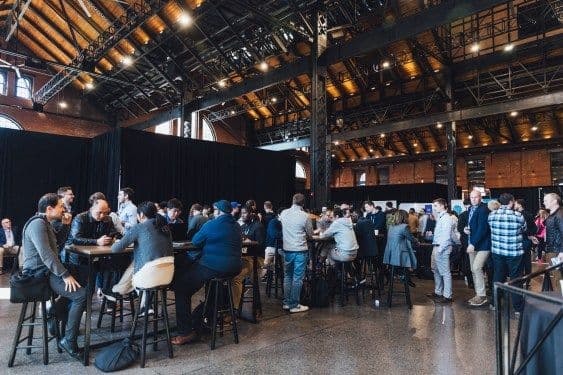
The best connection you make at an event is not always the person standing next to you in line for coffee. Sometimes it is the founder who has already solved the problem keeping you up at night. The investor who can challenge the way you are thinking about your next round. Or the operator who has learned firsthand what happens when a company scales too quickly. AtTechCrunch Founder Summit 2026, happening November 4 at SoWa Power Station in Boston, networking powered by Braindate is designed to make those conversations easier to find, whether they are in 1:1 or small-group on-site meetings. The only way to make these game-changing connections is at Founder Summit.Grab your pass, plus get a second pass for free. The Founder Summit Networking Lounge gives attendees the opportunity to schedule one-on-one or small-group Braindates throughout the day. Instead of hoping to run into the right person, Braindate lets you connect around the topics you actually want to discuss. Bring a challenge. Share something you have learned. Ask for perspective. Offer your own. Whether you want to compare fundraising strategies, talk through hiring challenges, swap lessons on product-market fit, get another founder’s perspective on enterprise sales, or simply meet people building in Boston and beyond, the conversation starts with what matters to you. Grab your pass now to save up to $100 on your ticketand get a deal on a pass for whoever you want to bring along. Founder Summit is built around questions founders are already asking: How do you know when you are ready to scale? How do you build a stronger team? What makes investors take the next meeting? How do you land enterprise customers before you have a massive sales organization? Theagendatackles those questions across theBuild and Impact stages and in smaller roundtablesthroughout the day. Braindate gives you another way to continue them. HearKent BennettofBessemer Venture Partnersdiscuss product-market fit, then find another founder working through the same challenge. Listen toDave BalterofTrue Venturesand Edisyl unpack what makes a pitch earn the next conversation, then compare notes with someone preparing for their own raise. Hear directly fromToast co-founder Steve Fredetteabout scaling and navigating changing markets, then use the rest of the day to connect with people building through their own version of that journey. The value of the day does not have to stop when a session ends. Founder Summit is intentionally smaller and more hands-on than a massive conference. Alongside the main stages, attendees can join interactive roundtables, watch founders put their pitches to the test live, explore the exhibitors who bring scaling solutions, and spend the day meeting other founders, investors, and operators. Braindate adds another layer by helping turn networking from something accidental into something you can actively shape. You do not need a perfect pitch or a stack of business cards. You need a question worth asking. TechCrunch Founder Summit 2026takes place November 4 at SoWa Power Station in Boston. Current passes include access to breakout sessions, roundtables, Braindate networking, the Expo Hall, and post-event session materials. And right now, when you buy one pass, you can bring a guest for free. Bring a co-founder, partner, or someone else who should be part of the conversation.Get your Founder Summit pass and claim your free second ticket.

Google announced new capabilities for the Gemini app on Thursday. The Mountain View-based tech giant has introduced new tools that let users create, preview, and edit documents, PDFs, presentations, spreadsheets, and other files directly within a chat. As per the company, users can make changes to generated files, highlight specific sections to ask questions, and request edits to text and visuals without leaving the conversation. Google is also expanding access to free textbooks in Gemini Notebook.
View

Andy Jassy hasmade it knownthat he believes AWS can be a trillion-dollar revenue business. During Amazon’s quarterly earnings call on Thursday, he repeated this ambition. “What we’re building at Amazon is unlike anything that’s ever been seen before. There has never been a business with a trillion dollars of annual revenue,” he said. However, before the cloud business gets there, Amazon is going to have ramp up its capital expenditures to build out the infrastructure necessary to support that blossoming business. “We still expect 2026 cash capex of approximately $220 billion — the majority for AWS — and expect to spend meaningfully more in 2027, with a clear line of sight to attract its financial returns,” Jassy revealed on Thursday. Amazon’s big spending on its AI infrastructure buildout has beenan ongoing source of concern for investorsthis year. Indeed, during Thursday’s call, Wall Street analysts repeatedly asked Jassy to explain the spending, the signals that the growth really will come, and the profit margins expected. Jassy told them it was all money well spent because the e-commerce giant planned to capitalize on a historic moment in global cloud demand driven by AI. AWS revenue increased 39 percent from the year-ago quarter, a trend of steady growth for thesixth straight quarter. And the CEO forecast on the call that it would increase by 40% not just next year, but in 2028, too. “AWS is a $184 billion annualized revenue run-rate business, and yet the opportunity remains extraordinary,” the CEO enthused. “With our continued pace of innovation, new core and AI functionality, enterprises wanting to run their core and AI workloads in AWS, and the amount of capacity that we’re adding each year, we believe that AWS can grow north of 40 percent in each 2027 and in 2028, and be a trillion-dollar revenue business in the next five to 10 years.” Jassy added that the company was “in the very early days” of AI adoption by the enterprise and said that, so far, the “strategy is working.” Later, when questioned why the investment needed to grow AWS was so substantial, Jassy characterized the AI boom as a “once in a lifetime opportunity” that required, and was worth, such a big financial commitment now. “We’re going to invest to continue being the leader,” he said. “We can fund this plan, and I think it will forever change the size of Amazon. It will forever change our revenue.” Investors, however, remained concerned. Shares were down about 6% on Thursday in after-market trading. The AI boom has been a mixed blessing for the cloud industry, since the AI services that undergird the boom are supported by cloud infrastructure. Like Amazon, other cloud providers arespending bigbut also earning big. Microsoft, for instance,just postedyet more record-breaking revenue growth, driven largely by its cloud business. It, too,has spent a bundle.

Pope Leo XIV has decried AI as a threat tohuman dignity, but it’s not just the devoutly faithful who might worry about how AI squares with their beliefs. David Durman, a nontheistic Humanist, recently secured areligious exemptionfrom using AI in the workplace. “Humanism is a collection of beliefs about the human experience and how humans interact with the world,” Durman, a University of Kentucky administrator, told TechCrunch. It centers on “human well-being and flourishing, both individually and collectively […] and implores a person to try to improve both their well-being and their flourishing as well as the others around them.” As he watched AI grow more popular in daily life, Durman sought out theAmerican Humanist Association(AHA) — a nonprofit advancing secular humanism — to investigate how he could gain legal protections against having to use AI at work. He believes that using the technology runs counter to his beliefs. “The way we become moral actors for ourselves and for others is through the active application of our minds, and the diminishing of that [through AI use] is going to necessarily have a negative impact on our ability to do so,” he said, reflecting on how overreliance on AI might affect critical thinking. In astatementpublished by the AHA earlier this week, Durman wrote, “AI is interfering with people’s ability to earn a living, the environmental costs spell disaster for humanity and our planet, and its supplanting and theft of human creativity threaten elements of our culture like art and literature that make society flourish.” Humanism is not anti-religious, but it tends to appeal to people who are skeptical of a god or other supernatural power yet still seek a scientific and moral framework to ground themselves in. “Concern about AI and human dignity can run through several different faiths and traditions, whether that’s Catholic teachings, or Universalism, or Humanism, and we want Humanists or nontheists to know that they fall into these categories — that they are also protected by the law at work,” Alexandria Huiskens, Staff Attorney at the AHA, told TechCrunch. Durman is the first Humanist to secure workplace accommodations that allow him to abstain from AI use, and one of the first people to publicly discuss their pursuit of these protections. He was inspired to seek them when he read thatErin Maus, a Unitarian Universalist and software engineer, was able to secure similar protections for herself. “For me, this was about me and my convictions,” Durman said. “I’m obviously not trying to tell people how to think or feel… But I do hope that it encourages people who have similar concerns to pursue not necessarily religious exemption, but pursue their concerns to the best of their ability where they feel is the most appropriate.” University of Kentucky spokesperson Jay Blanton told TechCrunch that the institution reviews requests for religious accommodations on an individual basis, considering the employee’s job responsibilities and the circumstances of the request. “In this case, the university determined that an accommodation could be provided while allowing the employee to continue performing the essential functions of their position,” Blanton said in a statement. “As technology and job responsibilities evolve, accommodations may be reviewed to ensure they remain reasonable and workable.” Maus’ situation is especially unusual, since it has become rare for software engineers to write code without any AI assistance. But in Durman’s administrative role, in which he supports researchers applying for grants, he has not been required to use AI at work. Like many workers across fields, some of his colleagues and leadership have recommended that employees try out these tools, so he sought to secure his exemption now, in case the suggestion becomes a mandate in the future. “I hope that if [others] have similar feelings, that they feel encouraged to pursue some kind of resolution,” Durman said.

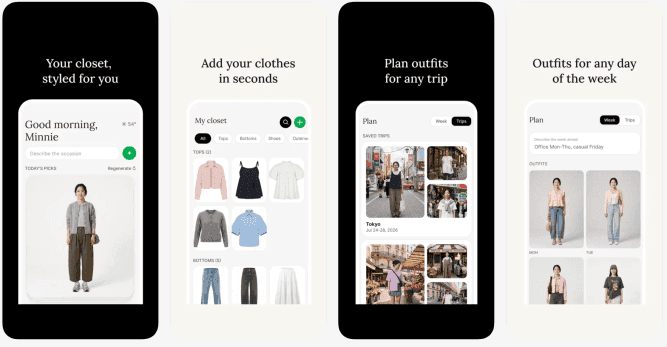
Meta has quietly launchedStyle Sketch, an AI fashion app that helps users put together outfit ideas using clothes they already own. The app connects to Instagram to build a virtual closet from photos you’ve posted, or lets you add items manually by snapping a photo, recording a quick video, or uploading images from your camera roll. Style Sketch then suggests outfit combinations built from your wardrobe matched to your style. Users can then try on the outfits on a “realistic model matched to your body shape and skin tone,” the app description reads. The app, which was first spotted by social media consultantMatt Navarra, is available in Indonesia, Singapore, and Thailand oniOSandAndroid. Meta did not respond to TechCrunch’s request for comment. It’s unknown whether Meta plans to launch Style Sketch more widely. 🚨 Meta quietly launched an AI fashion app! 👗Style Sketch connects to Facebook & Instagram to build a wardrobe from photos you’ve already posted• 👕 AI outfits from clothes you own• 🪞 Virtual try-ons matched to your body• ☀️ Weather-based looks• ✈️ Trip packing planspic.twitter.com/uNYX6VHRCn Several apps already use AI to help users digitize their wardrobes and visualize new outfits, including startups likeAlta. EvenGoogle Photosoffers tools that let users turn photos of their clothes into digital closets where they can create new outfit ideas. To compete with what’s already on the market, Meta will likely rely less on the novelty of the idea and more on the app’s integration with Instagram, where users already have a visual record of their personal style. Rather than relying on random suggestions, users can also select a specific item from their wardrobe and get fresh outfit ideas built around it, according to the app description. The app can also help users plan outfits for trips. If they enter their destination, trip length, and planned activities, users can get a day-by-day outfit plan that takes the weather forecast and itinerary into account. Style Sketch is one of many AI apps from Meta in recent months. Most recently, the company launched an app calledWaddle World, which essentially looks like a Tamagotchi clone, but with AI. Meta has also launchedPocket, a tool for vibe-coding games, andVibes, which lets users quickly generate AI-powered videos. The wave of new apps is part of a broader effort at Meta to release more apps. TheWall Street Journalreported earlier this year that CEO Mark Zuckerberg told employees the company plans to release far more apps than it has historically, as AI-driven efficiencies have made it faster and easier to ship new apps.

Thrive Holdings has acquired physical security company ADT for $10 per share or about $7.6 billion in equity, the companiesannouncedon Thursday. Beyond equity, the total enterprise value of the deal is $15.3 billion, ADT said. Thrive Holdings is the PE spinout from Josh Kushner’s powerhouse VC firm Thrive Capital. It also counts OpenAIas its partner, as well as an investor. The firm’s mission is to hold other companies long-term, revitalizing them with AI. Currently, Thrive Holdings holds over 75 companies, it says. As a partner, OpenAI supplies AI models and tech as well as people, otherwise known as forward-deployed engineers, to Thrive’s companies. Neither ADT nor Thrive announced what new AI-powered security products they will be releasing, but they did tease that the plan was to invest and release new products. “ADT will form the foundation of Thrive Holdings’ smart home security business,” the press release said. AI-powered physical security is having a moment right now.Apple just entered the fieldwith a new line of smart home and home security products in collaboration with LG and Schneider Electric. Amazon updated its smart home line, includingnew AI-powered home cameras. And who knows what the future might bring? Somestartups are offering AI dog robots as roving security guards.
View

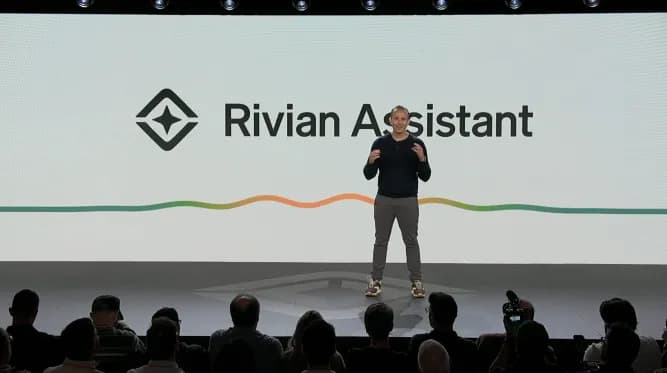
The $5.8 billion joint venture between Rivian and Volkswagen Group is expanding to include AI assistants. Rivian is now licensing elements of its AI voice assistant technology to Volkswagen Group as part of the broader joint venture, according to the company’sthird-quarter investor presentationreleased Thursday. Rivian didn’t disclose the licensing fees, payment terms, or which Volkswagen vehicles will use the technology. However, the AI assistant, whichrecently rolled out to Rivian vehicles, could make its Volkswagen debut in the automaker’s low-cost EV called theID EVERY1. The small four-door hatchback is slated to be the first VW vehicle to use Rivian’s software and electrical architecture under the joint venture established in 2024. The joint venture between Rivian and VW Group has already expanded once before, at least financially. The companies initially announced a joint venturevalued up to $5 billion, but within months VW upped its commitment to invest up to $5.8 billion in Rivian by 2027. The initial tie-up, formalized through an independent company that kicked off in November 2024, focused on bringing Rivian’s electrical architecture and software to Volkswagen’s next generation of vehicles. Rivian described the expansion to include elements of its AI assistant technology as “a proof point for the extensibility of the platform we’ve built in-house.” Rivian spent two years developing its AI assistant before showing it off last year. That development work continued longer than expected, with the assistant finally rolling out in May 2026 to its flagship R1S SUV, R1T pickup truck, and in October to its new midsize R2 SUV. Rivian has big aspirations for its AI assistant, which allows drivers and passengers to interact with the vehicle and control certain functions. Rivian founder and CEO RJ Scaringe told TechCrunch onstage at Disrupt 2026 that the company has created its own in-house agentic framework that understands what action a person wants to take when they talk to the vehicle, and routes it to the right part of the car’s software. That capability could eventually allow Rivian vehicles to run AI agents created by other companies, including Anthropic. The in-house AI assistant program also fits into Rivian’s push to become more vertically integrated — a strategy the company emphasized in its third-quarter earnings report. “Our relentless focus on vertical integration remains a core competitive differentiator, allowing Rivian to seamlessly unify our hardware and software architecture to deliver significant value to our customers,” the company noted in its investor presentation. That strategy led to Rivianoverhauling its flagship R1T truck and R1S SUV, changing everything from the battery pack and suspension system to the electrical architecture, sensor stack, and software user interface. Its new electric architecture system and compute platform slashed the amount of wiring used and reduced the total number of electronic control units, or computers, used to control the vehicle from 17 different ECUs to seven. That foundation, Rivian argued, would allow it to build vehicles that can handle the computing demands required for advanced software and automated driving. That technology caught the attention (and money) of VW, which has struggled to offer customers a modern software-centric vehicle found in competitors like Tesla. Rivian made that vertical-integration case repeatedly in its investor presentation, noting that because it controls the entire technology stack, including compute, sensors, displays, lighting, and sound, “it can roll out rapid, vehicle-wide OTA updates that go well beyond the basics.” This article was updated to provide the two separate rollout dates for the AI assistant.
View
View
View
View
View
View
View