🚀 Zaprep: Your Socials on Steroids. Start free — automate 1,000 DMs/month & turn engagement into leads. with 1,000 automated DMs/month.
Submit your Tool
PoweredByAI.app is an AI Tools Directory helping individuals, businesses, and creators discover the best AI tools for writing, coding, design, productivity, and more.
© 2026 , Product of011BQ. All rights reserved.

Nothing, the smartphone startup behind the distinctiveNothing Phone, is working on an AI product, but what it is remains unclear. On Wednesday, CEO Carl Peiposted on Xthat the company’s first “AI-native product” ships in December. “It’s a tool, but one built with the personality and care that have come to define a Nothing product. It has no new screen, and it couldn’t have been an app,” Pei wrote. Pei has teased an AI-first devicefor some timeand the companyhas also saidthat it plans to release a pair of AI-linked smart glasses, as well as earbuds with AI integrations. Pei’s description adds up to a screenless non-app that uses AI? He also calls it a “productivity tool.” Adding further mystique to the announcement, Pei seems to downplay any link to AI wearables. “The whole industry is hunting for its iPhone moment: the pendant, the pin, the glasses, the companion, some magical consumer device that makes AI part of everyone’s life,” Pei wrote. “I admire the boldness, but I read this moment differently.” No firm release date has been announced, but Nothing fans should know soon enough what the company has in store for them.
View

Political groups both supporting and opposing the AI industry spent millions of dollars trying to influence Tuesday’s midterm elections and shape the future of AI regulation. That spending produced mixed results, with some of the most heavily backed candidates losing their races. On the industry side, two AI-focused political action committees (PACs) that raised and spent money to influence the elections — American Mission and Building the Future — collectively spent $4.8 million to back South Carolina Senate candidate Darline Graham, who lost. American Mission is the Republican spending arm ofLeading the Future(LTF), a broader political group backed by OpenAI president Greg Brockman and the VC firm Andreessen Horowitz. American Mission also spent more than $500,000 apiece supporting Republican House candidates Aaron Flint in Montana and Laurie Buckhout in North Carolina, both of whom lost. LTF’s Democratic spending arm, Think Big, had better luck backing Florida Rep. Jared Moskowitz, who won reelection. Groups advocating for stronger AI safeguards also saw mixed results.Public First,which is backed by Anthropic, supported several Republicans who lost through its affiliated PAC but had more success backing Democratic candidates. It also contributed $3 million to a PAC supporting California state Sen. Scott Wiener, who was leading his race at the time of publication. Meanwhile,Guardrails Alliance, a group that has sought to make taking money from AI companies a political liability, spent more than $1 million apiece opposing two candidates who lost: California Rep. Jimmy Gomez and Montana’s Aaron Flint. It also spent $300,000 supporting Angela Gonzales-Torres, who defeated Gomez. It’s difficult to separate the impact of AI-related spending from the broader Democratic wave that swept Tuesday’s elections. Elon Musk, who reportedly poured half a billion dollars into supporting Republicans in the midterms, also sawmany of his candidates lose. Indeed, LTF also backed some candidates it believed were likely to win, only to see them lose to the Dems. For LTF, though, the general election wasn’t the main focus. The group told TechCrunch ahead of Election Day that it thinks primaries (the contests that choose each party’s nominee) are a more effective use of its money, because spending there can build name recognition and help candidates set up AI policy agendas. LTF spent $27.38 million in the primaries, including $8 million alone on opposing New York Assembly memberAlex Bores, who lost his bid for Congress back in June. When deciding whether it’s worth jumping into a general election race, LTF assesses how competitive the race is, whether it thinks spending could make a difference, and whether it should keep its powder dry for future elections. Charlie Blaettler, political director of Guardrails Alliance, had a different theory for why LTF spent comparatively little in the general election. “They don’t want their money to become an issue in these elections,” he said. He pointed to the Michigan Senate primary election, in which a pro-Israel lobbying group called AIPAC spent close to $30 million backing Democratic candidate Haley Stevens against Abdul El-Sayed. Stevens conceded the primary to El-Sayed, who went on to win the Senate seat. “AIPAC became the story in that race,” Blaettler said. “We know people hate AI billionaires. They hate the people running these companies. They’re very distrustful and disgusted by the political spending and lobbying that the tech industry does. If they spend in a competitive race, they would just become an enormous liability for their candidates.” The main fight among AI-related PACs, whether they are pro-industry or pro-regulation, is whether Congress should establish a national AI framework thatoverrides state laws, or whether states will maintain their own ability to impose safeguards. Neither side seems poised to back down. LTF, which favors a single national AI framework, told TechCrunch it plans to keep spending in the 2028 elections, while Guardrails Alliance says it wants to keep opposing candidates backed by the AI industry. Blaettler said that while LTF’s ads rarely touch on AI, instead focusing on popular issues for each candidate, Guardrail Alliance’s ads are specifically about who is taking money from the AI industry. “Our goal is to make AI money politically toxic,” Blaettler said.

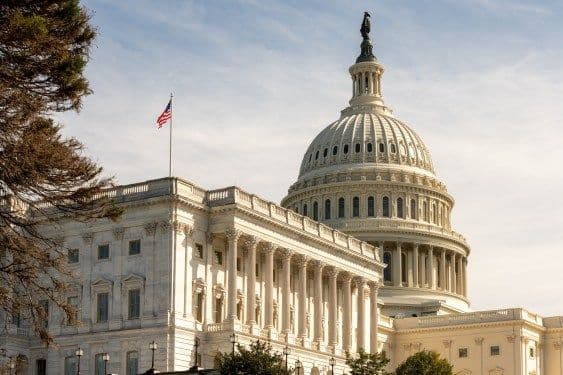
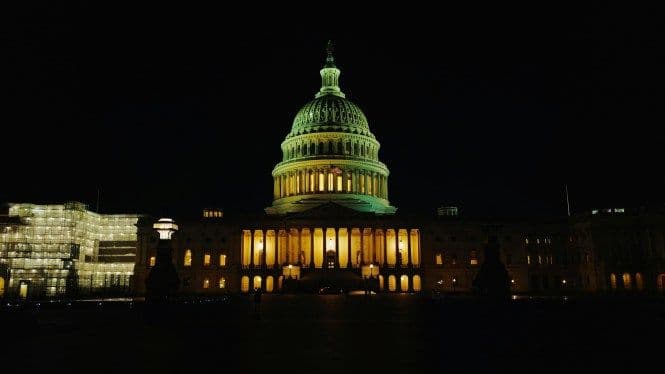
The November 3 midterm results gave Democrats full control of Congress, setting the stage for what could be one of the most divided U.S. governments this decade, with Republicans in the White House. Tuesday’s results suggest that anger over data centers, the large facilities that house the computers powering AI, is becoming a political force. With Democrats now in control of Congress, that could lead to new limits on where data centers can be built and how much say local communities have. Data centers became a ballot-box issue in various states. AnNBC exit pollshowed how concerned voters are about AI: More than half of respondents believe that AI will do more harm than good, while almost 80% are against the building of data centers in their neighborhoods. Almost 60%, meanwhile, said data centers were acrucial or major factorin their vote. Nadine Smith, president and CEO of the racial justice organization Color of Change, called Tuesday’s election a referendum on “who this economy is built for.” “National security matters,” Smith said, referring to a common argument from data center supporters that the infrastructure is essential for the U.S. to stay ahead in war and in its rivalry with China. “And so do the families in South Memphis breathing exhaust from the gas turbines powering an AI supercomputer.” (She was referring to xAI’s data center in Memphis, Tennessee, which uses gas turbines for power.) Voters in several states pushed back against the AI buildout, even as pro-AI super PACs spent millions hoping to sway them this midterm. The anti-data center backlash was especially felt in states like Ohio, where OpenAI has eyed a $500 billion data center, backed by more than $100 billion in financing from Nvidia. In fact,the Ohio countywhere Meta had planned a 700,000-square-foot facility just passed a ban on data centers, and local communities across the state overwhelmingly voted against data center buildout measures. Analysts atMorgan Stanley predict thatDemocratic governor-elect Amy Acton will also pose a major risk to Ohio’s data center buildout. Elsewhere, candidates in Texas, Maine, Michigan, Nevada, Georgia, and South Carolina all won seats after taking a stance against the rapid buildout of data centers. “It is clear that money does not buy outcomes,” said Anshi Bhatt, a tech and policy researcher, adding that in modern politics, creating a “local villain” is one way to build campaign momentum. Likely next steps include more construction moratoriums or requiring data centers to pay for their own power grid upgrades instead of passing those costs on to nearby communities. Goldman Sachs, in fact, predicts data center construction delays in states like Georgia and Texas because of Democratic gains. Democratic control of Congress could also improve the odds for bills like the one Sen. Bernie Sanders and Rep. Alexandria Ocasio-Cortez introduced earlier this year, though any such bill would also face a possible veto. It proposes a nationwide moratorium on new data centers until Congress adds new guardrails and ensures that the buildout does not raise electricity costs, harm the environment, or proceed without community approval. There are also bills like the GRID Savings Act, proposed by New Mexico Sen. Martin Heinrich, which would prevent grid infrastructure costs from being passed on to communities during large AI data center buildouts. The environment is also a major concern, especially at xAI’s data center in Memphis and at the data centers throughout Virginia, known as the world capital of data centers, where gas turbines are used for power. Maia Woluchem, program director at Data & Society, a nonprofit research group, believes that changes to energy regulations, land rights, and other environmental policies could affect the data center buildout, especially as congressional Democrats look further into the Trump administration’s rollback of certain energy protections,as the New York Times reported they might. “Regardless of federal action, I could imagine that we will see additional movement at the state and local level, given the momentum that’s been building from the ground up,” Woluchem continued, citing governor-elect Gina Hinojosa, who supports a statewide moratorium on data centers, as an example. Both Hinojosa and Gov. Greg Abbott called for some limits, but Hinojosa centered much of her campaign on opposing data centers, a notable choice in Texas, whose electrical grid has proved vulnerable over the past decade. But the hard part is still to come. Smith, for example, is now expecting a fight, or even more executive orders, to bypass what Congress is now likely to block. “Even among Democrats, a blanket freeze is contested,” she said, referring to some Democrats’ worry that a moratorium could slow AI progress and hurt national security. She also expects AI lobbyists to start calling lawmakers. “Democrats ran on making Big Tech pay,” Smith said. “Our job is to make sure they remember it once the cameras leave.” The backlash runs deeper than the buildings themselves, which aren’t new. One private equity executive told me recently that people don’t necessarily hate data centers, but rather AI, and that data centers have become a stand-in for people’s fears and anxieties about the technology. “It does look like the results are pointing to a real frustration with tech power at minimum,” Woluchem said, noting that this is also a bipartisan issue. For the past month, people have told me they are worried about data centers’ effect on the environment and about theirlack of sayin whether they’re built. Amazon, for example, built a data center in Gilroy, California,without many residents knowing, by satisfying a 45-year-old zoning law. Vague or outdated zoning laws, along with requirements that local officials sign nondisclosure agreements (NDAs) barring them from discussing data center projects, have only fueled people’s outrage about the buildout. Data centers have also received billions in tax breaks, and although many tech companies have touted the benefits, such asjobsand community programs, for many people, that simply wasn’t enough. People want to know they still have a say in what happens in their communities. Many also fear that AI buildouts will mainly enrich a few wealthy people while their communities suffer and living costs rise. “If AI infrastructure is truly a national priority, then the companies building it can afford to pay for their own power, meet clean air standards, disclose what they use, and build with the consent of the people who live next door,” Smith said. “Families should never be subsidizing the richest corporations in history through their utility bills.”
Apple is cutting the daily amount its engineering teams can spend on AI, BloombergreportedWednesday. It’s a big change for a company that has workedto integratethe technology into its engineering processes. In October, Apple lowered the daily AI spending cap for its engineering teams, decreasing it from $300 to $200, the outlet reported. And more cuts are in the works, with some allowances falling to $100 a day, sources tell Bloomberg. Outside engineering, Apple is reportedly weighing a daily limit as low as $25 a day. TechCrunch has reached out to Apple for comment. Earlier this year, atsunami of tokenmaxxingtook hold, with companies pushing staff to use AI as much as possible in the name of vaguely defined efficiency gains. The frenzy was short-lived, however, as bills for said tokens came due, and companies decided that token rationing might be a more fiscally sensible approach. Concerns persistabout an apparent gap between what AI costs to build and run and the (often unclear) productivity gains the technology is suppose to generate.
View

The company’s adjusted profit rose 20.7% year-on-year, while its proposed ITC Infotech merger remained on track.
View

Their departures come as Claude Code expands its role in Anthropic’s AI coding business.
View

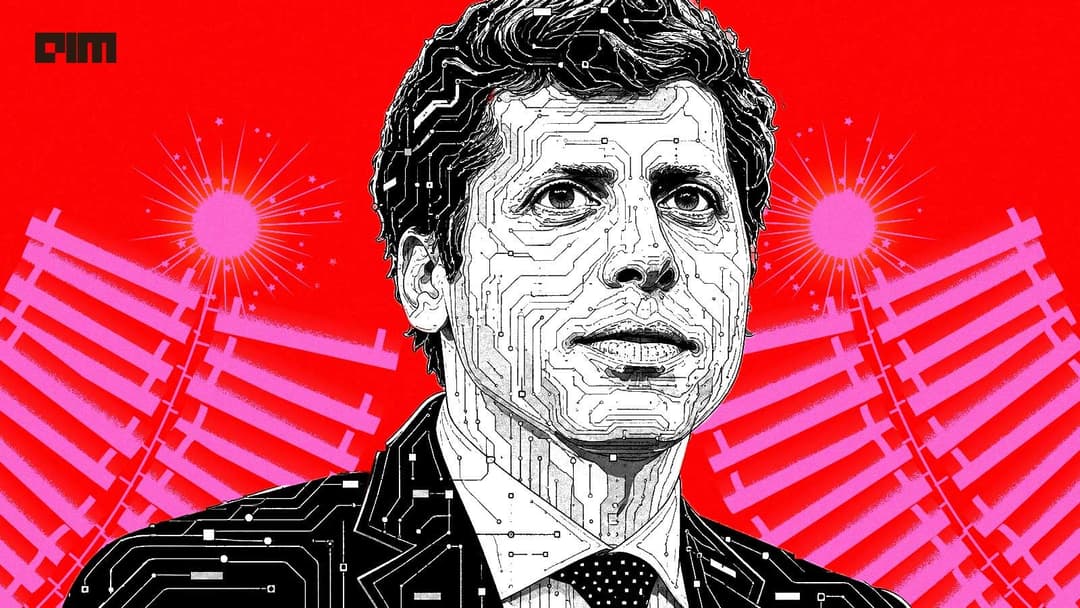
Altman’s recent comment on RAM shortage has reignited the debate over memory allocation between AI data centres and consumer devices.
View

The new capabilities give AI agents business context, enterprise controls and the ability to execute recurring tasks autonomously.
View

Security, governance and model dependence are emerging as major concerns for businesses, even as executives report productivity gains from AI investments.
View

FDE salaries in India range from Rs 32 lakh to Rs 1.55 crore annually, with compensation rising alongside experience
View

Chatbots such as ChatGPT, Anthropic’s Claude, and Meta’s new Muse assistant are becoming alternatives to traditional search.
View

GPT-6 Astra, used through Codex, helps Mazda engineers explore different vehicle nose shapes, simulate airflow and identify designs that could reduce aerodynamic drag.
View
View
View