🚀 Zaprep: Your Socials on Steroids. Start free — automate 1,000 DMs/month & turn engagement into leads. with 1,000 automated DMs/month.
Submit your Tool
PoweredByAI.app is an AI Tools Directory helping individuals, businesses, and creators discover the best AI tools for writing, coding, design, productivity, and more.
© 2026 , Product of011BQ. All rights reserved.

Muse Voice, a feature that lets users call and video chat with Meta’s consumer AI agent, Muse, is now available to everyone in the U.S., the company announced on Thursday. Firstintroducedat Meta’s Connect developer conference in September, the video-chatting feature involves new AI models,Muse Realtime Avatarand Muse Realtime Voice technology, which help power the digital avatar that chats with the user. While other AI competitors offer voice chat features, Meta’s Muse offers a cute, animated avatar (nicknamed Jolly), which users interact with as they ask questions or request tasks to be handled on their behalf. Users can also customize the avatar as they choose, changing it to something that looks more like a person, animal, or some other character. The company believes that anthropomorphizing Muse in this way could make consumers feel more connected to their AI agent — a connection that could grow even stronger as they begin to engage in live conversations with it. As the Muse avatar speaks, Meta says it will use “subtle expressions and gestures” that match the tone of the conversation. (Muse doesn’t actually “see” the user, but it hears them and reacts based on their conversations.) The news of the rollout was announcedvia blog postandon Xby Meta’s chief AI officer, Alexandr Wang, who shared a demo of his Muse in action. The video saw Wang joking around, referencing his love of posting memes on X, which he told his Muse may have gotten him in trouble with his boss. His Muse, a fluffy white dog, responds with a suggestion to add disclaimers to those memes that could be misinterpreted as Meta endorsing anything risqué. (Ha!) The added support for video chats and calls comes just before Meta’s plan to launcha Tamagotchi-like wearable device for its Muse AI agentbefore year-end. When the device arrives, the digital avatar will appear on its small screen, letting users talk to the agent, which can then reply or carry out tasks for them. Meta says the real-time conversations are supported on mobile, web, and Mac and will later come to its AI Glasses and the upcoming “Muse Charm” hardware device.
View

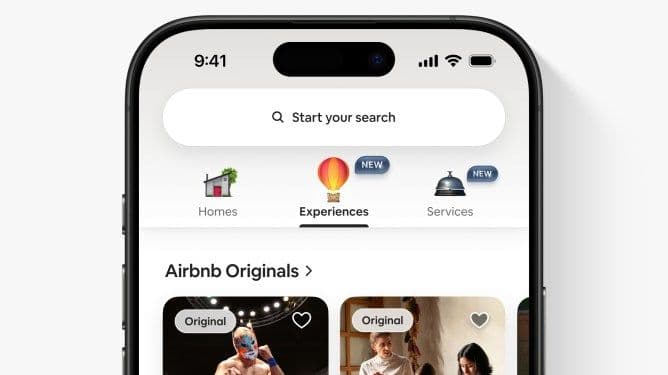
Airbnb hasteasedits plans to build its own AI travel agent before, but on Thursday the company announced that the new AI feature will launch in the first half of 2027. In the company’sQ3 shareholder letter on Thursday, Airbnb also provided more detail about how the agent will work, what it will actually do, and how it’s different from a typical AI chatbot. In prior interviews, CEO Brian Chesky sketched out the travel company’s approach to AI,describing a plan to build an AI agentthat has a richer interface than a conventional chatbot. He also expressed his opinions about how chatbots aren’t the right interface for travel, noting that people take pleasure in the planning process and in anticipating a trip. Any agent that it built, then, shouldn’t take away from the inspiration and the browsing,he told TechCrunchin an interview last month. Chesky today reiterated that belief, telling analysts on the earnings call that people won’t use one AI agent for everything. “Today’s AI agents like Muse and Instinct are good at simple routine tasks like making a restaurant reservation or scheduling an appointment. But planning a trip is different,” he said. “Travel is aspirational. Discovering where to go and where to stay is part of the experience. In fact, 80% of travelers say they enjoy spending time researching trips. People want to look at photos. They want to compare homes. They want to make decisions with people they’re traveling with,” he continued. “And I don’t think the general-purpose agents are the best to do that. So that is why we are building our own AI agent,” Chesky said. Airbnb described its agent as having a personalized interface that’s designed specifically for travel, where it will “build an interface” around a user’s question instead of simply responding as a chatbot would. “What we are doing is developing a custom-designed AI-native experience that responds to what guests are looking for,” Chesky said. “So instead of relying on traditional chat alone, which is very text-heavy — which, again, is definitely not the way you should plan travel, our agent draws from a library of hundreds of travel-specific interface components — maps, photos, comparisons, calendars, itineraries — and composes them in real time to match what they’re looking for.” The exec said the agent will feel “a little bit like generative UI” as it’s designed to offer up “the right interface at the right time” for someone’s specific travel needs. In its shareholder letter, the company touted that its nearly 20 years of experience in bringing hosts and guests together is informing how the agent is built, as it incorporates insights about how people both book and host on its platform. The agent will also be able to help travelers beyond the booking itself. “Our agent will be able to help guests throughout their trip — from changing a reservation or resolving a payment issue to getting help with refunds, rebooking, or 24-hour safety support. These are things an outside agent can’t easily do on its own,” the company wrote. Over time, Airbnb expects the agent will be able to help travelers with other aspects of their trip, including not only homes and hotels, but also services and experiences. Services and experiences are two areas that have become a bigger focus for the company followingits redesign last year. While the company previously said to expect its AI agent sometime in the next year, it’s now more specifically committing to roll out the new technology to consumers in the first half of 2027. The news of the agent’s release was delivered alongside strong third-quarter earnings, with revenue growing 19% to $4.87 billion, topping Wall Street estimates. It also raised its 2026 revenue growth forecast, which it now predicts will be in the high teens, instead of the mid-teens. “Airbnb is back in growth mode,” Chesky told analysts on the Q3 earnings call on Thursday. “It’s rare for a marketplace of our size to reaccelerate growth, but that’s exactly what we’re doing. Q3 was our fastest revenue growth in more than three years,” he added.

Palo Alto Networks is in talks to acquireClutch Security, a startup that secures AI agents’ access to company systems, for $500 million in cash plus additional milestone-based payouts, according to a person familiar with the discussions. Three-year-old Clutch was last valued at $85 million when it raised a $20 million Series A round in January 2025, led by Lightspeed and SignalFire, according to our source. The startup is currently approaching $10 million in annual recurring revenue (ARR). That means the acquisition, if completed, would value Clutch at about 50 times its ARR, a standard way of pricing software companies. Palo Alto Networks and Clutch Security did not respond to a request for comment. The Information was the first to report the acquisition discussions. The high valuation is not an anomaly in a market increasingly focused on securing software against bad actors using AI to breach systems more easily. Upwind, a startup using AI to secure cloud infrastructure, recently turned down an acquisition offer from DataDog that valued it at roughly 40 times ARR, TechCrunchreportedlast week. If the deal happens, it would be Palo Alto Networks’ seventh acquisition this year, according to PitchBook. The cybersecurity giant has a history of buying innovation rather than building it in-house, and it has ramped up dealmaking this year in response to rising AI-driven cyberattacks. In September, Palo Alto Networks acquired Console, a two-year-old startup that uses AI agents to automate routine IT help desk tasks. The transaction valued Console at $500 million in stock and cash, TechCrunch reported. Other VC-backed companies that Palo Alto Networks has scooped up this year include NEA-backed Embrace, for$325 million; Chronosphere, an observability platform backed by Greylock and Lux Capital, for$2.95 billion; and Koi, a cyber startup backed by Battery and Team8, for$231 million, according to regulatory filings. Several of Clutch’s competitors have also been acquired. Cyera, a cybersecurity startup valued at $12 billion earlier this year, acquired Oasis Security, which, like Clutch, focuses on managing AI agents’ access to systems, for$1 billion. Meanwhile, Cisco bought Menlo Ventures-backed Astrix for roughly$400 million, Calcalist reported.
View

The company’s adjusted profit rose 20.7% year-on-year, while its proposed ITC Infotech merger remained on track.
View

Their departures come as Claude Code expands its role in Anthropic’s AI coding business.
View

Altman’s recent comment on RAM shortage has reignited the debate over memory allocation between AI data centres and consumer devices.
View

The new capabilities give AI agents business context, enterprise controls and the ability to execute recurring tasks autonomously.
View

Security, governance and model dependence are emerging as major concerns for businesses, even as executives report productivity gains from AI investments.
View

FDE salaries in India range from Rs 32 lakh to Rs 1.55 crore annually, with compensation rising alongside experience
View

Chatbots such as ChatGPT, Anthropic’s Claude, and Meta’s new Muse assistant are becoming alternatives to traditional search.
View

GPT-6 Astra, used through Codex, helps Mazda engineers explore different vehicle nose shapes, simulate airflow and identify designs that could reduce aerodynamic drag.
View

The research surveyed 700 enterprise employees and 75 C-suite and business executives at companies with revenues up to and exceeding $10 billion.
View
View