🚀 Zaprep: Your Socials on Steroids. Start free — automate 1,000 DMs/month & turn engagement into leads. with 1,000 automated DMs/month.
Submit your Tool
PoweredByAI.app is an AI Tools Directory helping individuals, businesses, and creators discover the best AI tools for writing, coding, design, productivity, and more.
© 2026 , Product of011BQ. All rights reserved.

Hardware startupAinareleased a smart ring today that features a screen, a joystick, and a mic so that you can talk to your agents and take notes. The $399 ring has a speaker so you can take calls using it as well. The startup, which raised$5.5 million in July, is positioning the ring as a controller of sorts for both AI and non-AI apps. The company previously made Mirage, a three-key controller that let you invoke buttons based on the app on your Mac’s screen. For instance, if you were on a Google Meet call, you could map keys to camera on/off, mic mute/unmute, or to leave the meeting. Aina has baked in lessons from that device to create the new ring, which it’s simply calling “AI ring.” Using its mic, you can take notes, send a prompt to agents, set reminders, and dictate notes on your Mac using Wispr Flow or the startup’s own dictation engine. Now, there are already smart rings in the market that do similar things, like thePebble Index 01,Sandbar Stream,Oasis, andNatura, which is probably why Aina has added more controls and functionality to stand out. Its ring comes with a speaker so that you can take calls, and there is a screen, which lets you see notifications from your phone or which apps you are controlling. For navigation, there is a joystick, and it also supports gestures, so that it can trigger different actions based on what’s on your Mac or phone’s screen. The ring also lets you control music or even smart home devices like Apple TV. I have used the ring for a few days, and it feels like a smartwatch in a ring format, with more controls. I can get notifications and reply to them. It surfaces my meetings; I can call Uber if I want to get a ride home. It’s easier to use Apple TV’s remote itself, but the Aina ring proved useful the couple times I couldn’t find the remote. Granted, a lot of the software and features are still being fleshed out, so it’s hard to figure out where such a device ring might sit in my daily usage, but it is squarely aimed at folks who are surrounded by digital devices and AI applications. “Phones and laptop screens were designed for an age of browsing where you think about opening apps. For interacting with proactive agents, we need a better interface, and that is what we had in mind while designing Aina,” Apoorv Shankar, Aina’s founder, told TechCrunch over a call. Companies are trying to cater to programmers and AI enthusiasts with specialized hardware that could help them harness different agents. This includesOpenAI’s experimental keyboardand Rabbit trying toposition itself as a controller. The hope with such hardware is that enough people will have multiple agents running to invest in specific gadgets to keep tabs on them. Aina’s ring goes on preorder starting Thursday at early-bird pricing of $399, and the company plans to start shipping the device in January 2027. Once the early-bird period ends, the ring will cost $499.
View

Dropbox is making a big push into AI infrastructure with a $350 million acquisition of cloud technology company Tigris Data, marking what appears to be its largest acquisition to date. AnnouncedThursday, the deal is expected to strengthen Dropbox’s AI infrastructure capabilities and support the development of DBX Agent Cloud, a new storage platform aimed at businesses and developers building AI models and agents. Dropbox told TechCrunch via email that the transaction is expected to close in the fourth quarter of 2026. The company also said it currently has no plans to reduce headcount as part of the acquisition. The company already cut 9% of its global workforce last month,WSJreported. DBX Agent Cloud will initially offer object storage as a stand-alone product, allowing businesses to purchase storage independently and use it with existing tools and applications built for Amazon S3 (Simple Storage Service), which is a cloud storage service that enables businesses to store and retrieve large volumes of data. Beyond its infrastructure ambitions, Dropbox is also bringing more AI capabilities to its core product. Users will be able to ask AI to perform supported tasks using their files, choose between different AI models, and connect their Dropbox content to third-party tools, including ChatGPT, Claude, and Muse. The company also plans to expand DBX Agent Cloud with additional capabilities designed to help AI systems work with different types of content, including documents, images, audio, and video. Other planned additions include filesystem features that will allow AI agents to manage files and maintain continuity across tasks and sessions. Dropbox says the updated experience has already reached more than 70,000 teams. The initial rollout is available to eligible Standard and Advanced customers in the U.S., U.K., and Australia, with broader availability planned for 2027. Tigris Data was founded by former Uber engineers who helped develop the ride-hailing company’s storage infrastructure. The company provides cloud storage technology that helps businesses store and access data across different regions. Its platform automatically positions data closer to the users and computing resources that need it, helping reduce access times and improve performance. Tigris Data raised$25 millionin a Series A funding round last year. While the Tigris deal appears to be Dropbox’s largest acquisition, it is not the company’s first move to expand its AI capabilities through M&A. Dropbox has previously acquired several AI-focused companies, includingReclaim.ai,Promoted.ai, andMobius Labs.

It feels like AI is cracking a new math problem every week. Last month, OpenAI released719 manuscriptsclaiming solutions to some of the field’s hardest problems. But even the computer checks meant to confirm those resultscan slip. After years of AI slop, it’s fair to wonder whether math is next. Axiom Mathis betting math can avoid that fate, not by slowing down, but by standing on firmer ground. The$1.6 billion startupwants to build a verified foundation that AI agents can rely on to write software and, eventually, do science. On Wednesday, the companyannouncedit had formally verified the Stacks Project, one of the largest bodies of mathematics ever written by humans. Mathematicians often hold Stacks in rare regard — Columbia mathematician Peter Woit has claimed there’s “nothing else really comparable,” comparing the project to “the famous Bourbaki books,” a series thatrebuilt math from its foundationsin the 20th century. Woit’s Columbia colleague Johan de Jong started theStacks Projectin 2005 as an open source reference. Mathematicians have contributed to it ever since, building out results from college-level algebra all the way up to the field’s most advanced ideas across algebra, geometry, and number theory. The company’sfleet of AI agentstranslates the library’s roughly 7,654 pages into about 16 million lines of computer-checked code. Formalizing math is a way of making sure the structure underneath it is sound. Mathematicians rewrite the proof as code in a programming language called Lean, and a program called a proof assistant checks the code line by line. If the proof passes, mathematicians can trust that it’s logically sound. Engineers use the same idea, called formal verification, toconfirm their chip designs work, while researchers in France have used it tocatch bugsin software that calculates family benefits. For a library like the Stacks Project, checking each theorem is only part of the job. The theorems and definitions in Stacks are interconnected, and each one builds on the ones before it. Like a family tree, many results in Stacks trace back to the ones that came before it. That interconnectedness made Axiom unsure the project would work at first. The team had to keep every connection intact across about 16 million lines of Lean code. “Things that are big and things that are delicate in life just don’t go together,” Axiom CEO Carina Hong told TechCrunch. “[Stacks] is a collection of mathematical results that is the foundation of mathematics. You want [theorems] to be consistent and not, like, paradoxical. You want the definitions to not fight with each other.” The 25-year-old CEOdropped out of a Stanford math PhD programand founded the company in March 2025. In March, Axiom raised a$200 million Series A led by Menlo Ventures. “We were not sure if vibe coding would be able to preserve the beauty of Stacks,” Hong said. To pull off the project, the team gave its agents a loose structure and let them run in parallel. “With Stacks, we imposed a hierarchy … [but] it was not, like, a complete hierarchy of dictating what every single agent was doing,” said Ashvin Swaminathan, a member of Axiom’s technical staff. “The agents were finding tasks for themselves and identified things that they could work on in parallel.” Axiom also trained its own models to be good at math, an approach Hong said most other verification startups haven’t taken. At first, the team relied on one of its in-house Lean experts to teach the agents a human sense of taste. Over time, Hong said, the agents have picked up taste on their own. The result fills one of the biggest gaps in formalized math. “When you look at what has been formalized in mathematics, there’s this huge black hole. And that black hole covers algebraic geometry,” Swaminathan said. Until now, researchers who wanted to check new work in algebraic geometry with Lean had little to build on, Swaminathan said. “Well, now they do.” Axiom argues that each verified result becomes a building block, so future proofs can lean on checked math instead of starting from scratch. Terence Tao, the UCLA mathematician and Fields Medal winner,has made the general case more simply: “The more formalized proofs you have, the more formalized proofs you can make.” Mathematicians aren’t Axiom’s only intended audience. Developers havelong struggledto guarantee that their code is free of bugs and security holes. That problem grows as AI agents write more of the world’s code. Axiom is betting that the software of the future will need to rest on verified foundations, the way Stacks now does. “We believe that mathematics is the domain where you start building these things and that it’s a transferable skill,” Swaminathan said. “Agents can read our code, understand it, and build new infrastructure on top of it. Our Lean formalization is now the substrate that agents can build upon.” The way Axiom’s agents built Stacks, working in parallel and picking their own tasks, is how Hong expects much of AI’s future work to happen. AI agents, she argues, will need a well-built, reusable body of knowledge to keep from producing slop. “You want [agents] to have a reusable library for them to build on and keep pushing the frontier,” Hong said. “If you slop drop in a way that’s bad engineering choices in the beginning, then it’s very hard for them to grow that boundary.” Hong is confident enough in that approach to issue a dare. “I openly challenge all the coding companies to work on formalization at this scale.”

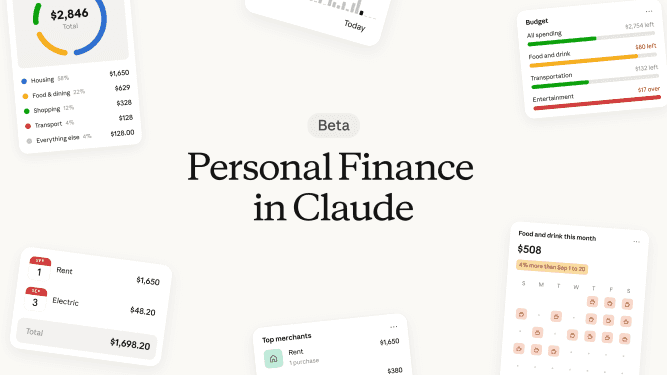
Anthropic announced Thursday that Claude is getting a new tool called “Personal Finance,” designed to help users keep track of their money. With it, users can connect their bank and credit card accounts through Plaid and ask Claude questions about their finances. Anthropic says access is read-only, meaning Personal Finance can’t move, manage, or invest users’ money. By letting Claude connect directly to bank and credit card accounts, Anthropic is positioning its chatbot as a financial companion that can help people understand their spending and make sense of their money, rather than simply offering them generic advice. With the launch, Claude is playing catch-up to OpenAI’s ChatGPT, which introduced similarpersonal finance toolsin May that also let users connect their financial accounts and ask questions about everything from spending patterns to long-term financial planning. “Claude gives you answers in everyday language, from your balances and transactions, and explains any term that’s new to you,” Anthropic wrote in a blog post. “Like the rest of Claude, Personal Finance has no ads or sponsored recommendations, and it doesn’t offer credit cards, loans, or savings accounts of its own, so your money questions get a straight answer.” For instance, at the end of the month, a user could ask Claude, “Where did my money go this month?” The chatbot will then add up spending across the connected accounts and sort it by category, such as rent and utilities, food and drink, and shopping. Users can choose to go deeper by following up with questions like, “Is that more than usual?” or “Anything else I’m missing?” Anthropic says the tool goes beyond basic spending summaries by analyzing transactions across connected accounts to flag potential issues, such as duplicate charges, unexpected fees, and steadily increasing bills. Users can also ask broader questions about their finances, such as whether they’re spending more than they earn. The tool can also explain financial concepts like APR (annual percentage rate), while providing calculations that show users how much they’ve paid in interest over the past year. Of course, some people will have reservations about connecting their financial accounts to an AI chatbot. Anthropic says Claude’s access is limited to each connected bank’s name, account name and type, the last four digits of the account number, balances, credit limits, and up to two years of transaction history. Additionally, the company notes that when users chat with Claude in the Personal Finance hub, those conversations aren’t used to train its models. Personal Finance starts rolling out in beta this week to users on the Pro, Max, and Ultra plans in the U.S. The launch of the new tool comes as Anthropic has been expanding Claude into new verticals. For instance, Anthropic launchedClaude for LegalandClaude for Financial Servicesearlier this year.

OpenAI co-founder and president Greg Brockman said the company would be ready for an IPO in 2027, noting that its enterprise revenue has been growing. Speaking at aWall Street Journal tech conferenceon Wednesday, the executive touted how the company had been gaining ground in the enterprise market, where rival Anthropic had already successfully made inroads. In response to the interviewer’s question about being IPO-ready next year, Brockman replied, “I think so. Yes.” “We’ve been very clear this year that we want to go public when we feel is the right time for us, and I feel extremely good about the business. I feel like we’ve made so much progress this year, and I’ve honestly never felt more confident in what we’re doing,” Brockman said. He detailed how OpenAI’s trajectory as an enterprise had changed over the course of 2026, noting that the first and second quarters were “pretty rough.” He also admitted that OpenAI “wasn’t even in the conversation” when it came to agentic coding — an area where Anthropic’s Claude Code has gained market share. “We had Codex, but no one was talking about it,” Brockman continued, “and I think that we just kept our heads down and executed.” By the third quarter, activity picked up, as OpenAI saw 70% quarterly growth in its annualized revenue — something Brockman attributed to the enterprise side of the business doubling. He explained that the growth wasn’t simply the result of something that happened in the quarter itself, but rather the culmination of investments the company had been making up to that point. Now the majority of OpenAI’s revenue is coming from the enterprise business, which previously accounted for only around 30% of its total revenue. “And it’s not that consumer [revenue has shrunk] … It’s been growing, but it’s the enterprise segment has really taken off,” he said, pointing to a recent partnership with JPMorgan Chase as one example of the type of client it’s now winning deals with. Brockman also spoke more broadly about the lessons OpenAI learned from selling into the enterprise market as well. He said the company had come to understand that its job was to help businesses identify the most important milestones they could achieve with its AI technology, build trust with clients, and demonstrate that it was a reliable partner for the long haul. “A year ago, we weren’t even really in the enterprise game, right? We were really perceived as a consumer company, and a lot of the companies we’d start talking to would say, ‘Is OpenAI really committed to the enterprise?’” Brockman said. “But it’s so different today.”

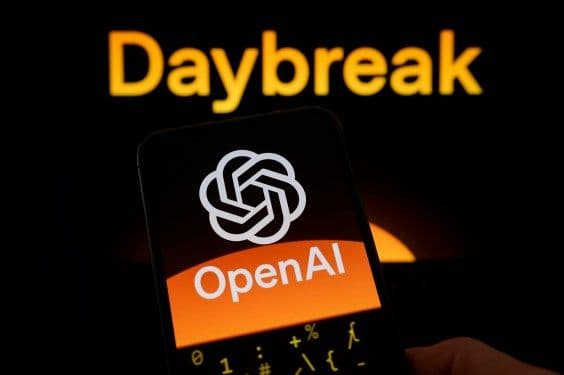
Max Justicz, the chief technology officer and co-founder of the startup Charge Robotics, used an OpenAI model to finda severe vulnerabilitythat — if exploited — could allow hackers to take control of servers running Ubuntu, a widely used open source Linux-based operating system. Justicz, who has a hobbyist’s interest in cybersecurity and previously found a vulnerability in the same codebase, told TechCrunch that he found this issue using GPT 5.6 Sol, released in July, through the AI maker’s Daybreak Blue, a program that gives cybersecurity defenders access to powerful frontier models. “I literally just aimed ChatGPT at the same body of code and said ‘I found this bug previously that was fixed several years ago, please find bugs as bad or worse,’ and it came back in two hours with this,” Justicz said. “It’s extremely convoluted and hard for a human to find, but it works!” He reported the issue to the Debian Project, which maintains the software in question and issued a patch to fix the vulnerability. There has been no known evidence of exploitation. Still, the ease with which he found it suggests that we’ve only seen the tip of the iceberg when it comes to potential exploits that even novice hackers can utilize with the help of AI models. “I can only imagine what one could do with more time and access to less neutered models. We should expect some extremely crazy bugs to be found and exploited over the next few months,” Justicz wrote in asocial media threaddiscussing his finding. “This might be obvious to most folks here, but there is currently huge alpha in taking some code or binary someone has not audited yet and just aiming a powerful AI model at it.” OpenAI appears to have noticed. Today, the AI giantannounceda new model focused on cybersecurity, ChatGPT Cyber, would be made available to the highest tier of users in the cybersecurity program, Daybreak Red, which allows offensive cybersecurity researchers tools for vulnerability hunting and development. Yesterday, OpenAIsaidthat the same model had been used to scan and prepare patches for vulnerabilities in the Linux kernel, finding 948 potential issues. OpenAI also found 81 “novel” vulnerabilities in Firefox, the web browser. “Our goal is to dramatically expand Daybreak, bringing advanced security research to organizations of every size, independent researchers, and open-source maintainers,” the frontier lab said in a statement. OpenAI has insisted that there is a narrow window of time for the people who safeguard digital infrastructure to take action before AI models become even better at hacking and easier to access. For cyber defenders, however, it can feel like the frontier labs have unleashed a mountain of new work that outstrips their resources. Justicz said that he personally spent about $5,000 on subscriptions and tokens to find several exploits. Besides Daybreak’s model access, OpenAI hasalso announceda $1 billion initiative to support cybersecurity professionals in the program who work on critical infrastructure like the electrical grid or water systems. The Daybreak program has its own critiques. Justicz notes that the frontier lab appears to have recently “nerfed” Daybreak Blue to make it less useful at finding vulnerabilities. On one hand, it may be good to limit access from potential bad actors — Justicz said he just uploaded a photo of his driver’s license to join the program. On the other, cybersecurity professionals say they have one hand tied if they can’t use frontier technology while bad actors can deploy open-weight models withabliterated guardrails. Still, OpenAI says just “thousands” of cybersecurity professionals are participating in the Daybreak program, versus a far larger number of potential hackers. It’s unclear if frontier labs are devoting enough of their resources to this issue. Eric Wallace, a researcher on OpenAI’s technical staff, said that “we are now allocating a significant amount of our frontier compute towards discovering and patching vulnerabilities in open source codebases, fully pro bono.” But the Linux bug hunt cost $1.2 million, which is significantly less than the approximate $6 million token spend the company invested in finding a potential solution to a famous problem of fluid dynamics. If there is a narrow window of time to patch the digital infrastructure the world depends on, more urgency may be required.

Meta president Dina Powell McCormick said that the Democratic wins in the midterm elections are going to make it a lot harder for companies to build data centers, adding that the industry has “not done as good a job as we needed to explain the benefits of these investments.” Speaking at theWSJ Tech conferenceon Wednesday, the Meta exec pointed out that the backlash against data centers — which wasvery much on the ballot during this election season— was also tied to people’s feelings about AI technology overall. “The visible sort of manifestation of AI is a data center, and it’s something that people can say, ‘I don’t want this in my community,’” she explained. “I think there’s an underlying bigger issue, which is how people feel about AI in general.” Meta believes it could turn around the negative consumer sentiment around AI if it’s able to demonstrate the value, not only of the data centers coming to local communities, but also in the technology itself. “The stakes of who builds the technology that cures cancer, that gives access to education, that is also a very fundamental difference … Mark [Zuckerberg, Meta CEO] is very ‘long human,’ and he’s betting on humans more than machines,” Powell McCormick explained. “And that’s what we mean when we say the future is for everyone. That people should not be left behind. But the way to ensure that is that this technology is democratized, that people have access to it in a very fair and transparent way,” she said. The exec also touted Meta’s experience in building data centers, saying that the company has been doing so for 20 years, as it takes a lot of compute power to offer the products it does in the social networking space. Today, the company has data centers in 23 states, she said, and five of them, including one in Texas, are planned as projects of 1 gigawatt or more. But Meta is now worried that it could lose some of its investments after politicians ran on anti-data-center platforms during the midterms. “I think it’s going to be harder,” Powell McCormick said, describing what the future of building data centers looks like. “It has been hard, I should say, but I also think that it’s becoming clear what models work, and the states want those models that work.” Specifically, communities only want data centers when it benefits them in some way, she explained, laying out the approach that Meta today uses to close its data center deals in local communities. Successful projects see Meta paying for its own electricity, directing any tax surpluses as a result of the data centers toward teachers and first responders, keeping the labor force local, and getting bipartisan support for the project, among other things. Going forward, she expects data center projects to come under more review and be weighed against whether the constituents actually want them. Meta has pinned its hopes on its AI investments, particularly its consumer AI agent Muse scaling far beyond the 10 million users it has today, to become a business that one day serves billions. But even if that’s not the case, it believes that its investments in data centers will not be for nothing, as the compute itself will be valuable. “We’re getting calls every day to lease that compute [we’ve built], and so one way or another, we’re seeing a path to monetization,” Powell McCormick said.

Muse Voice, a feature that lets users call and video chat with Meta’s consumer AI agent, Muse, is now available to everyone in the U.S., the company announced on Thursday. Firstintroducedat Meta’s Connect developer conference in September, the video-chatting feature involves new AI models,Muse Realtime Avatarand Muse Realtime Voice technology, which help power the digital avatar that chats with the user. While other AI competitors offer voice chat features, Meta’s Muse offers a cute, animated avatar (nicknamed Jolly), which users interact with as they ask questions or request tasks to be handled on their behalf. Users can also customize the avatar as they choose, changing it to something that looks more like a person, animal, or some other character. The company believes that anthropomorphizing Muse in this way could make consumers feel more connected to their AI agent — a connection that could grow even stronger as they begin to engage in live conversations with it. As the Muse avatar speaks, Meta says it will use “subtle expressions and gestures” that match the tone of the conversation. (Muse doesn’t actually “see” the user, but it hears them and reacts based on their conversations.) The news of the rollout was announcedvia blog postandon Xby Meta’s chief AI officer, Alexandr Wang, who shared a demo of his Muse in action. The video saw Wang joking around, referencing his love of posting memes on X, which he told his Muse may have gotten him in trouble with his boss. His Muse, a fluffy white dog, responds with a suggestion to add disclaimers to those memes that could be misinterpreted as Meta endorsing anything risqué. (Ha!) The added support for video chats and calls comes just before Meta’s plan to launcha Tamagotchi-like wearable device for its Muse AI agentbefore year-end. When the device arrives, the digital avatar will appear on its small screen, letting users talk to the agent, which can then reply or carry out tasks for them. Meta says the real-time conversations are supported on mobile, web, and Mac and will later come to its AI Glasses and the upcoming “Muse Charm” hardware device.
View

Airbnb hasteasedits plans to build its own AI travel agent before, but on Thursday the company announced that the new AI feature will launch in the first half of 2027. In the company’sQ3 shareholder letter on Thursday, Airbnb also provided more detail about how the agent will work, what it will actually do, and how it’s different from a typical AI chatbot. In prior interviews, CEO Brian Chesky sketched out the travel company’s approach to AI,describing a plan to build an AI agentthat has a richer interface than a conventional chatbot. He also expressed his opinions about how chatbots aren’t the right interface for travel, noting that people take pleasure in the planning process and in anticipating a trip. Any agent that it built, then, shouldn’t take away from the inspiration and the browsing,he told TechCrunchin an interview last month. Chesky today reiterated that belief, telling analysts on the earnings call that people won’t use one AI agent for everything. “Today’s AI agents like Muse and Instinct are good at simple routine tasks like making a restaurant reservation or scheduling an appointment. But planning a trip is different,” he said. “Travel is aspirational. Discovering where to go and where to stay is part of the experience. In fact, 80% of travelers say they enjoy spending time researching trips. People want to look at photos. They want to compare homes. They want to make decisions with people they’re traveling with,” he continued. “And I don’t think the general-purpose agents are the best to do that. So that is why we are building our own AI agent,” Chesky said. Airbnb described its agent as having a personalized interface that’s designed specifically for travel, where it will “build an interface” around a user’s question instead of simply responding as a chatbot would. “What we are doing is developing a custom-designed AI-native experience that responds to what guests are looking for,” Chesky said. “So instead of relying on traditional chat alone, which is very text-heavy — which, again, is definitely not the way you should plan travel, our agent draws from a library of hundreds of travel-specific interface components — maps, photos, comparisons, calendars, itineraries — and composes them in real time to match what they’re looking for.” The exec said the agent will feel “a little bit like generative UI” as it’s designed to offer up “the right interface at the right time” for someone’s specific travel needs. In its shareholder letter, the company touted that its nearly 20 years of experience in bringing hosts and guests together is informing how the agent is built, as it incorporates insights about how people both book and host on its platform. The agent will also be able to help travelers beyond the booking itself. “Our agent will be able to help guests throughout their trip — from changing a reservation or resolving a payment issue to getting help with refunds, rebooking, or 24-hour safety support. These are things an outside agent can’t easily do on its own,” the company wrote. Over time, Airbnb expects the agent will be able to help travelers with other aspects of their trip, including not only homes and hotels, but also services and experiences. Services and experiences are two areas that have become a bigger focus for the company followingits redesign last year. While the company previously said to expect its AI agent sometime in the next year, it’s now more specifically committing to roll out the new technology to consumers in the first half of 2027. The news of the agent’s release was delivered alongside strong third-quarter earnings, with revenue growing 19% to $4.87 billion, topping Wall Street estimates. It also raised its 2026 revenue growth forecast, which it now predicts will be in the high teens, instead of the mid-teens. “Airbnb is back in growth mode,” Chesky told analysts on the Q3 earnings call on Thursday. “It’s rare for a marketplace of our size to reaccelerate growth, but that’s exactly what we’re doing. Q3 was our fastest revenue growth in more than three years,” he added.

Palo Alto Networks is in talks to acquireClutch Security, a startup that secures AI agents’ access to company systems, for $500 million in cash plus additional milestone-based payouts, according to a person familiar with the discussions. Three-year-old Clutch was last valued at $85 million when it raised a $20 million Series A round in January 2025, led by Lightspeed and SignalFire, according to our source. The startup is currently approaching $10 million in annual recurring revenue (ARR). That means the acquisition, if completed, would value Clutch at about 50 times its ARR, a standard way of pricing software companies. Palo Alto Networks and Clutch Security did not respond to a request for comment. The Information was the first to report the acquisition discussions. The high valuation is not an anomaly in a market increasingly focused on securing software against bad actors using AI to breach systems more easily. Upwind, a startup using AI to secure cloud infrastructure, recently turned down an acquisition offer from DataDog that valued it at roughly 40 times ARR, TechCrunchreportedlast week. If the deal happens, it would be Palo Alto Networks’ seventh acquisition this year, according to PitchBook. The cybersecurity giant has a history of buying innovation rather than building it in-house, and it has ramped up dealmaking this year in response to rising AI-driven cyberattacks. In September, Palo Alto Networks acquired Console, a two-year-old startup that uses AI agents to automate routine IT help desk tasks. The transaction valued Console at $500 million in stock and cash, TechCrunch reported. Other VC-backed companies that Palo Alto Networks has scooped up this year include NEA-backed Embrace, for$325 million; Chronosphere, an observability platform backed by Greylock and Lux Capital, for$2.95 billion; and Koi, a cyber startup backed by Battery and Team8, for$231 million, according to regulatory filings. Several of Clutch’s competitors have also been acquired. Cyera, a cybersecurity startup valued at $12 billion earlier this year, acquired Oasis Security, which, like Clutch, focuses on managing AI agents’ access to systems, for$1 billion. Meanwhile, Cisco bought Menlo Ventures-backed Astrix for roughly$400 million, Calcalist reported.
View

Their departures come as Claude Code expands its role in Anthropic’s AI coding business.
View

Altman’s recent comment on RAM shortage has reignited the debate over memory allocation between AI data centres and consumer devices.
View
View
View
View
View
View
View
View