🚀 Zaprep: Your Socials on Steroids. Start free — automate 1,000 DMs/month & turn engagement into leads. with 1,000 automated DMs/month.
Submit your Tool
PoweredByAI.app is an AI Tools Directory helping individuals, businesses, and creators discover the best AI tools for writing, coding, design, productivity, and more.
© 2026 , Product of011BQ. All rights reserved.

CoreWeave is rewriting how it pays for the AI boom, according to thecompany’s third-quarter earnings, reported on Tuesday. CoreWeave, a neocloud that rents out the computing power behind AI, said it’s increasingly asking customers to pay up front, borrowing against specific contracts, and even pursuing short-term deals that could lead to higher prices. The new strategies could help CoreWeave finance its growth more efficiently while squeezing more cash from existing infrastructure. But these bets only hold if today’s demand and pricing power continue. CoreWeave reported $3.66 billion in revenue, up 168% from the year prior, but it also posted a $709 million net loss and $846 million in quarterly interest expense. “We will not use the unsecured debt market to fund our business at current yields, nor do we need to,” CoreWeave CEO Michael Intrator said during Tuesday’s earnings call. Instead, CoreWeave’s plan is to rely on loans backed by specific customer contracts, drawing on funds as needed to finance most of the infrastructure it still has to build to deliver on its significant backlog of $132.5 billion. CoreWeave also said it expects about $9 billion in customer prepayments and deposits over the next three months, including more than $3 billion tied to signing new customer contracts for capacity it has already built, which requires no additional spending on hardware. Rivals Nebius and IREN have also relied on hefty Microsoft prepayments to pay for computing capacity, signaling that the industry is moving toward asking Big Tech to pay up for their buildouts. Upfront payments could alleviate CoreWeave’s immediate borrowing needs, but they also commit the company to providing services at a price that might be less attractive down the road if compute demand continues to surge. CoreWeave is also looking to capitalize on that growing demand by signing more shorter-term contracts that can command much higher prices. The company raised prices across its offerings by about 25% in July and by another 10% later in the quarter. Prices are still climbing this quarter, in a way that “more than offset[s] cost increases,” said Intrator. “We are also allocating more capacity to short-term opportunities, where the pricing justifies it, selling capacity at more than $40 million per megawatt annually, while pricing for new infrastructure on four- and five-year contracts is moving to $20 million to $25 million per megawatt,” the chief executive said. CoreWeave’s financing strategy now revolves around those opportunities. In August, the company closed a $2.6 billion loan, its first designed specifically for shorter-term customer contracts. Known as DDTL 5.5, it lets CoreWeave borrow in installments as it needs the money. While short-term deals let CoreWeave charge higher prices and change them more frequently, it’s a trade-off. Lenders give more weight to longer-term contracts, even if they’re priced lower, because they value predictable cash flow and consistency to repay the loan above all. Even though Wall Street reacted positively to CoreWeave’s earnings, bond investors are much less sanguine. Last month, yields on some of thecompany’s bonds hit above 15%,highlighting that investors are concerned about the debt needed to fund data center buildouts before those investments see a return. In short, CoreWeave is finding new ways to expand without relying on unsecured debt. The strategy it has chosen could boost profits, but it also carries greater risk around contract renewals and pricing — and it just goes to show how dependent the AI infrastructure boom is on sustained, and as yet unproven, demand. TechCrunch has reached out to CoreWeave for more information about its loan facility.
View

The data center boom is running into serious real-world obstacles, from widespreadlocal oppositionand permitting delays to ascramble for electricity. Before those challenges even come into play, though, there’s a more basic problem: A lot of the projects being announced may never get built in the first place. Withbillions of dollarsin AI infrastructure investment at stake, separating realistic projects from speculative ones is becoming increasingly important. On this episode of TechCrunch’sEquitypodcast, hosts Rebecca Bellan and Tim De Chant are joined byBrent Nelson, senior managing director of markets and strategy atAscend Analytics, to separate the data center projects that are likely to get built from the ones that may never get off the ground. Listen to the full episode to hear about: Subscribe to Equity onYouTube,Apple Podcasts,Overcast,Spotifyand all the casts. You also can follow Equity onXandThreads, at @EquityPod.
View

A key figure in Meta’s growth into a social media and tech industry powerhouse is leaving the company. Santosh Janardhan, the company’s longtime head of infrastructure and co-head of engineering, will be stepping down, Meta told TechCrunch. He will be replaced by Dave Brown, who joined the company as vice president of infrastructure earlier this year, the company added. Previous to coming aboard at Meta, Brown spent 19 years at Amazon, where he focused on compute, cloud, and AI,his LinkedIn shows. It sounds like Janardhan will remain at Meta for a little bit, although he is expected to leave next year. “Santosh will stay on for transition and he is moving into an advisory role on Meta Compute,” said a Meta representative. Janardhan, who originally joined the company in 2009, helped the firm grow into the massive internet presence that it is today. Bloombergoriginally reportedJanardhan’s departure, citing an internal memo that had recently been circulated. It’s unclear why Janardhan is stepping down from the role. The memo did not specify the reasons for his departure and Meta didn’t immediately respond to a request for clarity on the issue. However, Janardhan’s memoapparently citedthe need to “pass the baton.” In recent years, the company’s investment in infrastructurehas exploded, as it seeks to keep up with its competitors in the AI race. Earlier this year, Janardhan was taskedwith leading Meta Compute, the company initiative to scale its data center investments and strategy.
View

Loading the player… The data center boom is running into serious real-world obstacles, from widespreadlocal oppositionand permitting delays to ascramble for electricity. Before those challenges even come into play, though, there’s a more basic problem: A lot of the projects being announced may never get built in the first place. Withbillions of dollarsin AI infrastructure investment at stake, separating realistic projects from speculative ones is becoming increasingly important. On this episode of TechCrunch’sEquitypodcast, hosts Rebecca Bellan and Tim De Chant are joined byBrent Nelson, senior managing director of markets and strategy atAscend Analytics, to separate the data center projects that are likely to get built from the ones that may never get off the ground. Subscribe to Equity onYouTube,Apple Podcasts,Overcast,Spotifyand all the casts. You also can follow Equity onXandThreads, at @EquityPod.
View

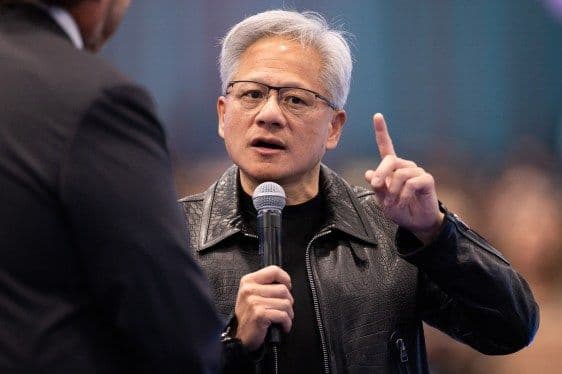
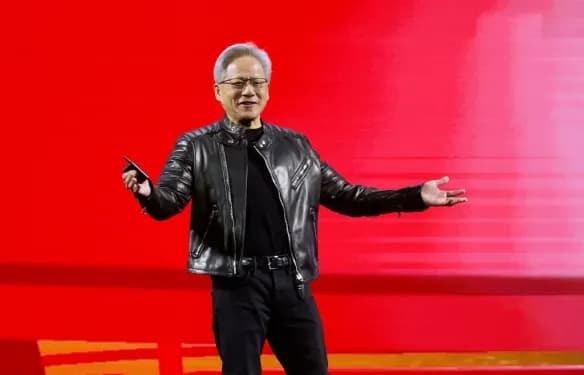
Nvidia CEO Jensen Huang is already under investigation after having admitted to having an affair with a womanaccused of being a Chinese spy. Now the New York Times isreportingthat Huang is also suspected of having another extramarital affair, with a direct report of his at the company — Kimberly Powell, Nvidia’s vice president of healthcare. Powell, like Huang, is married, the outlet says. The Times says it was told of the alleged affair by five employees at the company. The sources said that Huang and Powell were captured on video “being affectionate at a San Jose, Calif., hotel” during a conference earlier this year. Like many companies, Nvidia has rules discouraging superiors from having relationships with employees in subordinate roles, the Times notes. TechCrunch reached out to Nvidia for comment. The company’s board has initiated an investigation into Huang’s publicly admitted affair. Additionally, two House Republicans said Wednesday that Congress isgearing up to subpoenaHuang over the spy allegations if he doesn’t voluntarily respond to their summons to a closed-door briefing. Late Wednesday, after the reports of the second affair were published, the Wall Street Journal reported that the Nvidia boardwas preparing to oustHuang, who co-founded the company in 1993.
View

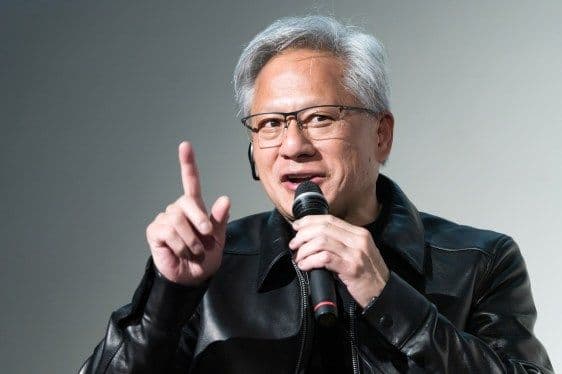
Nvidia is reportedly planning to oust its co-founder and CEO Jensen Huang, who has led the company for the last 33 years,the Wall Street Journal reports. Sources told the newspaper that the Nvidia board is meeting as soon as Wednesday to determine Huang’s future at the company. On Sunday, Huang admitted to having an extramarital affair with a woman purported by U.S. intelligence to be a Chinese spy. On Wednesday evening, the New York Timesreportedthat Huang also had an affair with an executive who reports to him. Nvidia has become one of the most valuable companies in the world as it designs the chips that power the AI boom, but in the midst of Huang’songoing scandal, Nvidia stock fellabout 8%in after hours trading on Wednesday. The stock is down about 11% in the past five days. Huang famously delegates very little and has about 60 direct reports, hehas said. The company also has not had an obvious successor or a succession plan. According to Bloomberg, Nvidia is working with an outside firm to identify candidates that couldpotentially replaceHuang as CEO.
View

Nvidia co-founder CEO Jensen Huang has never been as flashy or controversy-prone as AI leaders like OpenAI’s Sam Altman or SpaceXAI’s Elon Musk. Now, the 63-year-old industry kingpin has admitted that hecheated on his wifeof 40 years in an affair that could have ramifications beyond Huang’s personal life and potentially impact national security. United States officials believe that Huang’s likely romantic interest, Megaspeed executive Alice Huang, isa Chinese spywho has been feeding information back to Beijing. (Alice Huang, a Chinese citizen, is of no relation to Jensen Huang.) Megaspeed, a Singapore-based AI infrastructure company, had reportedlypurchased$4.8 billion in Nvidia chips over the last two years. The U.S. and Singapore have both previously investigated Megaspeed over suspicions that the firm was illegally sharing chips with China. The Justice Department has since taken over the federal investigation into the company, the Times has reported. The story took a sudden new turn on Wednesday. Citing five people who worked at Nvidia, the Times reported that Huang alsohad an extramarital relationshipwith Kimberly Powell, the company’s vice president of health care, who reports directly to him. Nvidia, Huang and Powell have not confirmed the report. Reached by a Times reporter, Huang reportedly said, “I don’t think you should be talking to me directly,” before hanging up. Separately, the Wall Street Journal reported that Nvidia’s board is preparing tooust Huang, and Nvidia’s shares fell in after-hours trading. The U.S. and China are embroiled in a fierce technological arms race to build the most advanced AI infrastructure, which could shape each country’s economic future, military prowess, and capacity for innovation. Nvidia is valuable in this competition as one of the world’s largest makers of AI chips, which are essential for accelerating AI development. But as an American company, Nvidia faces government restrictions on the sale of its most powerful chips to Chinese entities. As the controversy unfolds, we are organizing the most relevant events into a reverse-chronological timeline to keep you up to date. After reports of a second extramarital affair, Nvidia’s board reportedly plans to meet to discuss Huang’s future at the company, per the Wall Street Journal. Stock fellabout 8%in after hours trading on Wednesday and is down 11% in the past five days. Huang famously delegates very little and has about 60 direct reports, hehas said. The company has not had an obvious successor or a succession plan. The New York Timesreportedthat Jensen Huang also had an affair with Nvidia vice president of healthcare Kimberly Powell, who reports directly to the CEO. According to the report, Huang and Powell were captured on film “being affectionate” at a hotel during a conference earlier this year. Huang has not responded to a request from three Republican congressman to appear for a closed-door briefing for questioning about his affair with an alleged Chinese spy. House China committee Chairman Moolenaar said Wednesday on Fox Business that if Huang doesn’t agree to the briefing, he’ll likely besubpoenaed. The Nvidia CEO pulled out ofupcoming speaking engagementsat the ElevenLabs Summit and Anthropic CEO Forum. Alice Huang and her family reportedly built a network of companies in China and Singapore to acquire Nvidia chips, including founding a Chinese company called Shanghai Century Litong. Founded in 2023, it became an Nvidia-preferred cloud partner, giving it priority access to chips,The Information reported. The Information also reported that Shanghai Century Litong facilitated buying $7.5 billion worth of Nvidia’s chips, including banned chips. Nvidia’s head lawyer, Tim Teter, intervened in a 2025 U.S. government probe surrounding the suspected smuggling of AI chips by Megaspeed International,Bloomberg reported. Teter contacted Commerce Under Secretary Jeffrey Kessler asking questions about whether the Trump administration played a role in detaining Alice Huang. In early 2025, Alice Huang and a business partner sought China-based investors for an Asian data center, promising they had no problem in securing GPUs,the Financial Times reported. On Sunday night, President Trumpweighed inon Huang’s controversy and showed support for the Nvidia CEO. “I have not spoken to him about it. I just know he’s a fine person, but you never know what’s going on,” Trump said. When asked if Huangshould remain chief of Nvidia, Trump said, “I think so. Oh yeah, sure.” Jensen Huang wrote in aletterto Nvidia employees — which was also published as a press release — that he cheated on his wife. “I owe my family and all of you an apology,” Huang told his company. “I was unfaithful to my wife. My actions hurt her and our children. There is no excuse for what I did. I am deeply sorry.” Huang did not mention Alice Huang by name in the message, but linked his infidelity to “the national security concerns raised in news reports.” “Nvidia’s Board of Directors has initiated an independent investigation. I support the investigation and will cooperate fully. I love our country and our company. I am committed to protecting Nvidia and supporting America’s national security. I am proud and grateful to be an American,” Huang wrote. Nvidia shares slidover 5%the following day. Three Republican congressmen — Chairman John Moolenaar of the House Select Committee on China, Chairman Brian Mast of the House Foreign Affairs Committee, and Chairman Rick Crawford of the House Permanent Select Committee on Intelligence — sent a request to Huang for a closed-door joint briefing with their three committees. “Recent reports raise significant national security concerns regarding the [People’s Republic of China]’s access to sensitive U.S. technology and information,” the chairmenwrote. “The issue of PRC infiltration and access to cutting-edge U.S. technology is core to the investigative work of our three committees this Congress. It is vital that Congress determines the extent to which U.S. national security has been placed at risk.” U.S. officials had been investigating Alice Huang and Megaspeed for more than a year whenthe New York Timesbroke the story in late October that the two executives also had a close relationship. An Nvidia spokesperson denied that this relationship was something out of the ordinary. “Jensen’s interactions with Ms. Huang are not unusual or unexpected. Meetings with customers are part of a CEO’s job; Jensen talks with thousands of customer executives every year,” Nvidia spokesperson John Rizzo said. He added that “if the U.S. government believes that any person is a threat to American industry, it would let us know.” U.S. officials circulated a secret memo among policymakers that warned that Megaspeed’s Alice Huang, who had a relationship with Jensen Huang, was a spy for China’s Ministry of State Security. This memo was not public knowledge until it was laterreportedby the New York Times. Secretary of State Marco Rubiosupervisedthe drafting of the memo. Around the same time, per the New York Times’report, U.S. President Donald Trump was briefed about intelligence findings that possible Chinese spy Alice Huang had formed a close relationship with Jensen Huang. Trump did not act on this information. The Nvidia CEO, anally of Trump, hasrepeatedly advocatedfor the U.S. government to let Nvidia expand its business in China. Megaspeed wasconfirmedto be under investigation by both the U.S. and Singaporean governments in October 2025. As a customer of Nvidia, Megaspeed wassuspectedof helping Chinese companies get around American embargoes on chip exports. Megaspeed, a neocloud that used Nvidia chips, had been renting computing power to Chinese internet giant Alibaba and other Chinese companies, the Times reported. A Commerce Department official who had visited Megaspeed’s data center in Malaysia in 2024 had found a hoard of Nvidia equipment that was still packed in boxes and the concern was that this equipment was being directly shipped somewhere else, like China, rather than installed and sold as a cloud service. Jensen Huang had been spotted socializing with Megaspeed executive Alice Huang as early as 2024 in Taiwan, where the Nvidia CEO was born. These investigations into Megaspeed highlighted concerns about the degree to which Nvidia is able to track its chip exports. At the time, an Nvidia spokesperson told press that the company did not have “any reason to believe products had been diverted.” “NVIDIA visited multiple Megaspeed sites yet again earlier this week and confirmed what we previously observed — Megaspeed is running a small commercial cloud, like many other companies throughout the world, as allowed by U.S. export control rules,” the Nvidia spokespersonsaidat the time.

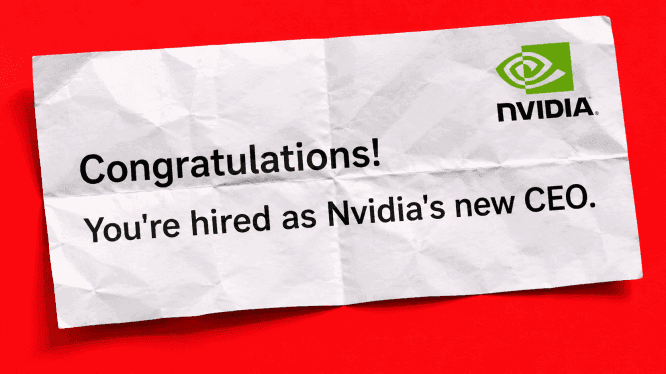
It’s almost inconceivable that Nvidia would fire its rock star CEO. Yet here we are, on the precipice of this happening. Over at Kalshi, Jensen Huang’s odds of surviving the week are sitting at alowly 30%. Even though he built one of the world’s most valuable — and, many would argue,dangerously powerful— companies, the tides have completely turned against him. He has confessed to an extramarital affair, but as of Wednesday afternoon it isn’t even clear whom he meant: Alice Huang, the Chinese executive suspected by U.S. intelligence of spying for her country, or Kimberly Powell, an Nvidia executive who reports to him and who, five sources told The New York Times in anexplosive new report,was also a paramour. Even if Huang is pushed out as CEO, the board members he has made very rich are unlikely to cut him loose entirely. Barring another shoe dropping, they could keep him on as chairman, a role Nvidia doesn’t currently have. But someone still has to run the company, and there’s no apparent succession plan, which leaves us, like everyone else, to speculate while we wait to see what happens next. While Huang’s 60 direct reports undoubtedly get a closer look, consider this our own parlor game, featuring some obvious and less obvious candidates: Lisa Su. The AMD CEO runs Nvidia’s most credible rival, as well as a distant cousin of Huang. The Informationfloated her namethis week, but why would she leave her job for his? Her company stands to benefit from every day that Nvidia spends distracted by an investigation, congressional briefings, and all the mini dramas that are sure to follow. Her best move might be to send a nice note and keep her current corner office. Eric Schmidt.He was the pick of Jeffrey Sonnenfeld, senior associate dean for leadership studies at the Yale School of Management, who wetalked withearlier this week. Schmidt could “parachute in tomorrow and do a very good job,” Sonnenfeld said, and perhaps he could. He ran Google from 2001 to 2011, chaired the National Security Commission on AI from 2018 to 2021, and now runs the rocket company Relativity Space. Chips, software, government, rockets — it’s an impressive range. Then again, Schmidt would bring alotof baggage when it comes to his ownextramarital dalliances. It’s hard to see him clearing the board for that reason. Lip-Bu Tan. Intel’s CEO knows chips, and right now he might welcome a very soft landing. Last month, Intel reported third-quarter revenue up 21% to $16.5 billion, then warned its fourth-quarter results would fall short of Wall Street’s forecasts. The AI boom has caused a memory-chip shortage, pushing up PC prices and cutting PC sales. That’s hurt Intel (PC chips are a big part of its business), and its stock plunged 20% in after-hours trading on the warning, having already slid more than 30% since September. A move to a company that’s eating everyone’s lunch would be a pretty amazing escape hatch. Bret Taylor.The former Salesforce co-CEO and OpenAI board chair now runs the AI startup Sierra, and his resume includes a lot of the biggest brands in Silicon Valley. He co-created Google Maps, served as Facebook’s CTO, and chaired Twitter’s board through its sale to Elon Musk. He then took over as OpenAI’s board chair after the “Blip,” Sam Altman’s firing and fast return. When companies need an unflappable, likable adult in the room, they call Taylor. He probably knows nearly every customer Nvidia has, too. Ian Buck.If the board feels strongly about having a “builder” at the helm, they could do worse than the Nvidia VP who helped develop CUDA, the chip software that has become central to Nvidia’s dominance in AI. Analysts and former employees have floated him as a possible successor, and Kalshi traders give him amiddling shot. He’s no household name, but the Stanford PhD seems more viable if Huang can can keep that chairman title and push for a successor he can work with. Someone else down the hall.Andrew Bell, Nvidia’s senior vice president of hardware engineering, arrived 25 years ago as a fresh Cornell grad and has been on an upward trajectory at the company ever since. Like Buck and dozens of other executives who are presumably being scrutinized, he reports directly to Huang. Nvidia CFO Colette Kress is the insider most often named, but analysts say she isn’t necessarily a natural successor as an innovator and visionary, and Bell has the chip pedigree. The wild card?Lori Huang. Nobody has floated her, but hear us out: Jensen met his wife as lab partners at Oregon State, so she has been working with him since before Nvidia existed. After graduating, she worked at Silicon Graphics as a micro chip engineer (making more money than her husband, he has said), then scaled back to raise the couple’s family, and she now co-leads the family trusts. If the board wants continuity, they could do worse than a humbler Huang who is also a brainiac. There’s a reason they say that behind every great man is a great woman (and vice versa). Whatever happens next, we’ll know soon.

The Series A funding will support engineering and enterprise expansion as the startup launches PuppyGraph 1.0 graph query engine.
View

IBM had historically used high-skilled visa programmes to address talent shortages, but its participation had been declining for several years.
View

Anthropic is offering 825 million shares of Class A common stock at an indicative price range of $70–78 per share.
View

AI agents today—the ones that can use your web browser and autonomously perform tasks—are getting more intuitive. But are they safe enough?
View
View
View