🚀 Zaprep: Your Socials on Steroids. Start free — automate 1,000 DMs/month & turn engagement into leads. with 1,000 automated DMs/month.
Submit your Tool
PoweredByAI.app is an AI Tools Directory helping individuals, businesses, and creators discover the best AI tools for writing, coding, design, productivity, and more.
© 2026 , Product of011BQ. All rights reserved.

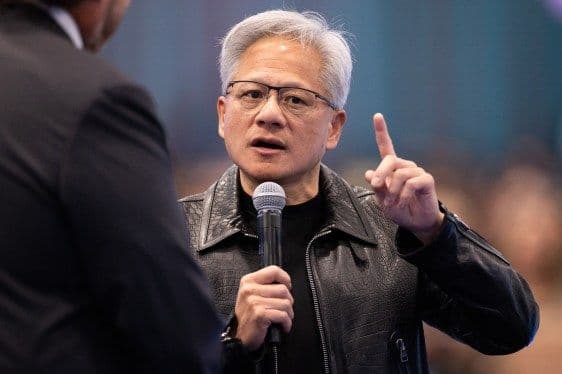
A memo circulated earlier this year claimed that technology executive Alice Huang was recruited by China’s Ministry of State Security to spy on Nvidia CEO Jensen Huang, according to multiple media reports. The New York Times, which had previously said Nvidia’s chief executive had been the target of Chinese intelligence, wasthe first to report on the memo, which was reportedly based on U.S. intelligence.The Financial Times subsequently reportedthat the memo also claimed Jensen Huang had a romantic relationship with Alice Huang, an executive at a Singapore-based company called Megaspeed. An Nvidia spokesperson told the NYT that Jensen Huang’s interactions with Alice Huang were “not unusual,” and that the company does not share classified information with its customers. Aseparate NYT reportexamined New Matrix, a Chinese company authorized by the U.S. Commerce Department to buy advanced Nvidia chips. But at the office address listed by New Matrix, reporters only found “a hollow gray shell,” raising concerns that it could be a front for a blacklisted private equity firm. The Nvidia spokesperson said the company sells “the first, best and most of our technology in America.”
View

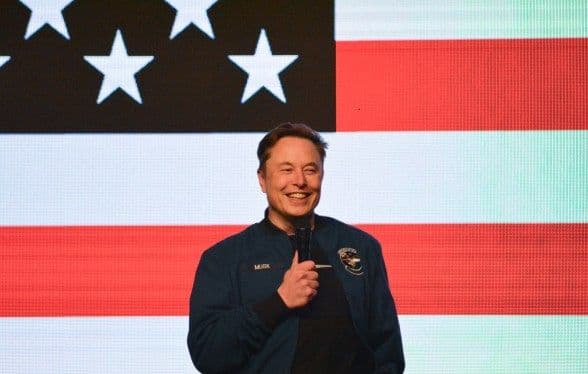
Democrats’ historic victory in this week’s midterm elections could also have a dramatic effect on the tech industry. In dozens of local ballot measures, votersrejected data centers. And even when they weren’t voting on the issue directly, they were electing politicians — like Texas’ new governor-elect Gina Hinojosa — who campaigned on the promise of restricting data centers. On the latest episode ofTechCrunch’s Equity podcast, Kirsten Korosec, Sean O’Kane, and I discussed what the midterms mean for the tech industry. Sean kicked it off by noting that Elon Musk “seems to have basically nothing out of donating half a billion dollars” to Republicans, while his companies are now headquartered “in a state that has, remarkably, turned about as blue as it could possibly turn.” And Kirsten said that while data centers probably weren’t the main cause of the “blue wave,” they’ve become an “an increasingly grassroots issue, in part because of how hyperscalers and companies have gone about” getting their projects approved. And now, “we’re already seeing companies like OpenAI all of a sudden go, ‘Actually, we can change our policies.’” Keep reading for a preview ofour conversation, edited for length and clarity. Sean O’Kane:First off, let’s talk about the fact that one of the biggest data center builders was also the largest donor to the Republican Party. Elon Musk seems to have gotten basically nothing out of donating half a billion dollars — maybe even more, by the time we see the final count — and in fact is now sitting there with all of his businesses in a state that has, remarkably, turned about as blue as it could possibly turn for the first time in a very long time, if ever. That, I think, is the biggest thing hanging above a lot of this discussion. But, there were also a bunch of ballot measures up around the country that would have paved the way for data centers to get built faster. Almost all of them got shot down, or voted against. [Actually, many of the ballot measures would have imposed restrictions or moratoriums on data centers, and almost all of those measures passed.] With [Democrats] in power, there is a consensus view, at least in the tech world, that this is going to mean we have a lot of roadblocks ahead for data centers, especially in places like Texas, where [you have] folks like the governor-elect [Gina] Hinojosa, who has spoken pretty openly about this being a campaign promise and something that she wants to focus on once she takes power, now that she’s beaten Greg Abbott. It’s the thing that I think the tech world is maybe a littletoofocused on. I’m curious what you guys think about that. Anthony Ha:I don’t necessarily think that they’re too focused on it, but I understand why it would feel a little bit disproportionate — the data center ballot measures, certainly there were a number of them, but it wasn’t something that was on the ballot everywhere. And in different races, the dynamic might have been a bit different, but there was this undercurrent and sense that it seems to be an issue that reaches across the country, that is bipartisan in a lot of ways, but that the Democrats seem to have been more effective at harnessing that energy. And of course, there’s all kinds of reasons why the Democrats did so well on Tuesday, but it does seem like anti-AI and especially anti-data center sentiment was a big part of it. That seems like a pretty potent political force. The next two years, [and] potentially beyond that, are going to be more difficult for tech companies in general, and hyperscalers, data center companies in particular. I also imagine that they have to be a little bit worried about: Is this going to continue to be an issue, not just with the people who got elected this year, but potentially in 2028 and beyond? Kirsten Korosec:Absolutely. I don’t think that the data center issue is what brought everyone to the polls and led to the quote-unquote “blue wave.” However, I will say that data centers have been an increasingly grassroots issue, in part because of how hyperscalers and companies have gone about getting these data centers [approved] — very secretive, oftentimes requiring NDAs of a elected officials or appointed officials, not sharing information about the scale of a project in very environmentally sensitive areas, including in the Southwest, where there’s very much a water scarcity issue. So I think that a lot of folks — Republicans, independents, and Democrats — all saw this as wrong. They were motivated by it, but I don’t think it was a singular issue. Now, here’s the interesting thing. There was a lot of waving of hands about how [AI companies] can’t possibly operate under any other circumstances. And we’re already seeing companies like OpenAI all of a sudden go, “Actually, we can change our policies.” They just released what they calla compute campus policy blueprint. And guess what? They’re not going to require NDAs anymore. They’re going to share their plans and supposedly operate in less secrecy. I think what this shows is that when you put up either a regulatory certainty in the marketplace, or at least signals of going in that direction, then corporations will respond. If you don’t do that, they will not necessarily do the thing that we hope that they will do. Anthony:One thing I want to emphasize is that they’re calling it this [their] “compute campus policy.” And part of what that’s doing, beyond laying out these policy changes, is also an attempt to rebrand data centers, because they have become such a toxic phrase. So they’re not data centers anymore, they are compute campuses, and I’m curious, whether either of you think that’ll take. Sean:I mean, this is ridiculous. Come on. It’s not going to change anything. It’s going to cause them more effort. For a company that likes to say that it’s no longer focused on side quests, OpenAI still loves to go in different directions a lot. And this is just the latest kind of thing where it’s just like: Why are you spending time on this at all? It doesn’t really seem like it’s going to move the needle. Kirsten:I have a great idea for OpenAI. Because in the spirit of making threatening things seem cute, they should 100% create a compute campuses avatar, [a] cutesy thing, and then just present that instead of a power-, energy-sucking, water-sucking data center. Anthony:And if these are just lovely compute campuses, they should just build their own offices there or work next door, see how that works out for them. Something else that I’m wondering about is, to what extent the election is maybe the second part of a one-two punch. [We’ve just seen] a big shift in how Wall Street is reacting to a lot of these hyperscalers and AI companies and this sense that [investors] are not excited about the idea that they should be spending all this money building new data centers, spending all this money on compute. And so there’s a financial incentive not to build all these data centers. I’m very curious how that’s going to play out. [From a regulatory standpoint,] it’s probably going to be harder to build data centers. Wall Street is probably not going to reward you for building data centers. But at the same time, to get to the scale that they want to get to, they are probably going to need to build data centers somewhere.

Amid the numerous tech layoffs happening across the globe, comes news about Google that has reportedly extended its voluntary exit programme to more countries this year. While there are no confirmed details about how many employees have voluntarily signed up for it, it has now been reported that Google had expanded its voluntary buyout offers in June. The news comes shortly after software giant Microsoft offered voluntary exit buyouts to about 60,000 employees primarily in the US, UK, India and Canada. More recently, Canva trimmed down 22 percent of its workforce, which affects 1,271 employees across several countries.
View

OpenAI has rolled out Images 2.6 for ChatGPT and its API, adding GIF creation to its image generation tools. Users can now animate photos or create GIFs from text prompts, change playback speeds and edit individual frames. The update also lets them save images of people, pets and characters to use as references later. Developers, meanwhile, get two new image generation models, along with SVG exports and more control over image edits.
View

Apple is said to be tightening its spending limits on artificial intelligence (AI) tools used by employees. According to a report, the Cupertino-based tech giant has already reduced the daily allowance for some engineers using AI models from $300 to $200, with further cuts being considered for select teams, even as it looks to make AI a bigger part of its internal operations. The proposed changes will reportedly bring some engineering budgets down to $100 per day. Meanwhile, employees in other departments may also face lower limits.
View

OpenAI announced GPT-6 Cyber on Thursday as its latest AI model to help security researchers identify software vulnerabilities, develop working exploits, and create fixes. According to the San Francisco-based company, it delivers significant improvements over GPT-5.6 Cyber on cybersecurity benchmarks, including a 51 percent relative improvement on ExploitGym. The AI model is also claimed to be capable of following authorised testing boundaries more reliably. OpenAI says GPT-6 Cyber has already helped uncover vulnerabilities in widely used software.
View

ElevenLabs, the AI music generation platform from ElevenLabs, has announced a partnership with SoundCloud aimed at simplifying the process of creating, sharing, and uploading music. This collaboration lets users publish AI-generated music directly to the music streaming platform through its ElevenMusic service. The integration allows creators to generate music using ElevenMusic and upload their tracks to SoundCloud without leaving the platform. As part of the partnership, new and existing SoundCloud Artist Pro subscribers will also get three months of ElevenMusic Pro at no additional cost.
View

Claude Personal Finance was introduced by the Dario Amodei-led AI giant Anthropic on Thursday. It is a specialised tool that has been integrated directly into Anthropic's AI chatbot. The AI giant claims that Claude Personal Finance allows users to manage their money matters better by providing insights. Users have to connect their financial accounts, allowing the specialised AI tool to retrieve information on their financial health. However, the company says that the Claude Personal Finance tool can not make changes on the user's behalf. The new Claude tool will be rolled out in beta to paid subscribers in select regions.
View

Google DeepMind has introduced Gemini Omni 1.2 Flash. This latest video generation model introduces native 15-second video creation and new editing capabilities. Google says the new model brings a 30 percent price reduction compared to Gemini Omni 1.1. It lets users draft content at 360p or 720p for just $0.07 per second. It supports generating and editing continuous video clips up to 15 seconds long and enables Conversational Editing.
View

After launching its AI assistant in September, Meta is back with another update which will now let users have real-time conversations. Called Muse Voice, the feature will work Meta's Muse Realtime Avatar to provide life-like conversations complete with gestures and expressions. The feature will only be available to users in the US and will be coming to other markets soon. The assistant was launched in the US in September but has made its way to Canada. However, it's not possible to access the AI assistant outside of these countries due to regional app store locking.
View

Airbnb reported its third-quarter (Q3) 2026 financial results Thursday. Along with its financial health, the platform also shared its plans and products it plans to introduce soon. The company has revealed that it has started developing a dedicated AI agent that will help users plan their trips. Airbnb plans to start rolling out the AI travel agent next year. Airbnb says that its upcoming AI travel agent will use data from different travel-specific libraries. The company has already deployed an AI agent for customer support. The platform also features AI Search, AI Filters, AI Listing Descriptions, and AI Companion, with each tool offering a specific functionality.
View

Amazon is jumping on the currently most popular bandwagon for interacting with AI agents: texting. The company on Friday said it is launching a feature that lets customers chat with its Alexa AI agent over text messages to help them shop, much like you can with AI agents like Muse or Instinct. The move comes after Amazonblocked Meta’s Muse from querying its site in September.The company is rolling the features out just before the start of the holiday shopping season. The e-commerce giant said select U.S. customers will get a text asking them to enable the shopping feature. Those with access can text Alexa to shop on Amazon using natural language queries, spanning everything from searching for items, adding them to cart, and purchasing. The text agent builds on the recent shopping-focusedupgrades to Alexa, and so can manage lists, keep tabs on prices, search for items across the web, compare products, and check the status of orders. Users can also share a picture of an item or someone wearing an outfit to search for similar listings on Amazon. The company said over time, Alexa will learn users’ preferences and suggest items accordingly. The company said users who don’t get invited to use this feature cansign up to a waitlist. The feature will be rolled out more broadly in the coming weeks. As the market for consumer-focused AI agents balloons, platforms like Amazon are building their own to tap this new avenue of user interaction. Last month, delivery company DoorDash said that third-party agents had so faronly placed hundreds of ordersin total on its platform, and that it plans to concentrate on developing its own text-based agent,launched in September, further.
View
View