🚀 Zaprep: Your Socials on Steroids. Start free — automate 1,000 DMs/month & turn engagement into leads. with 1,000 automated DMs/month.
Submit your Tool
PoweredByAI.app is an AI Tools Directory helping individuals, businesses, and creators discover the best AI tools for writing, coding, design, productivity, and more.
© 2026 , Product of011BQ. All rights reserved.

Companies can restrict the browser from answering queries without taking actions or limit automated actions to approved domains.
View

Foxconn plans to use SAP’s enterprise applications to support its transition to a fully digitised, AI-driven organisation.
View

Flowmon 13 is an AI-powered platform designed to improve network visibility, accelerate threat detection and enhance cyber defence capabilities.
View

The new integration streams RTX-powered 3D applications and simulations to Apple Vision Pro for enterprise and developer use.
View

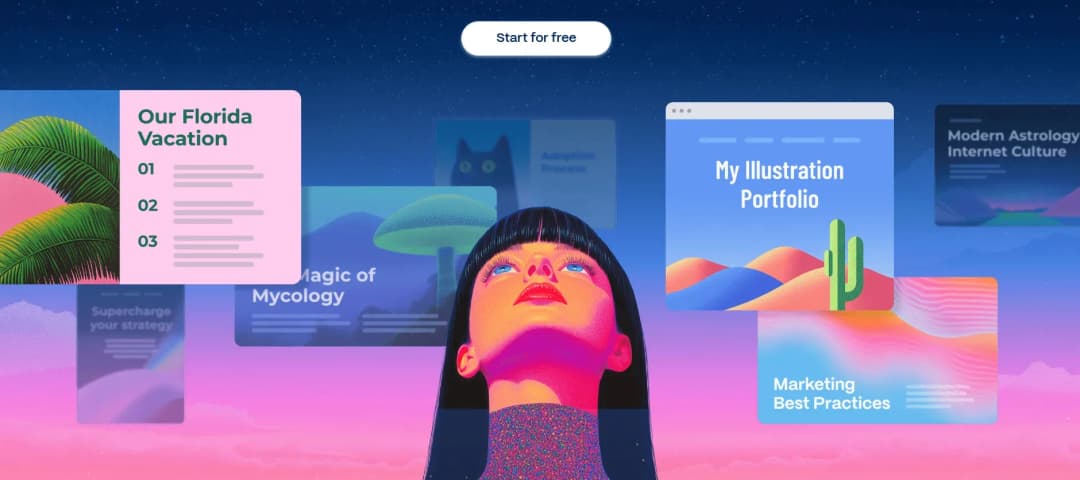
Gamma Imagine is an AI tool that creates branded visual assets instantly.
View

The partnership helps to bridge the gap between data potential and business performance to help enterprises build and scale AI applications and agents.
View

The study highlights how short-form, episodic storytelling is emerging as both a new content category and a growing business vertical.
View

Adobe and Nvidia announced a strategic partnership at the GPU Technology Conference (GTC) on Monday. This collaboration focuses on artificial intelligence (AI). It spans agentic creativity and marketing workflows, the development of the next-generation Firefly models, and the integration of Nvidia's platforms into Adobe products. The partnership is part of several major announcements made by Nvidia at the event, including the introduction of the NemoClaw stack for OpenClaw agents, DLSS 5 graphics upscaler, and the launch of the Vera Rubin platforms for agentic workloads.
View

Startups targeting productivity now emphasise cross-functional AI capabilities over headcount.
View

Y Combinator’s famed CEO Garry Tan told aSXSW audiencethat he’s got “cyber psychosis” and is barely sleeping because he’s so excited to be working with AI agents. “I sleep, like, four hours a night right now,” he told his interviewer, fellow VC Bill Gurley, during an onstage interview Saturday. “I have cyber psychosis, but I think a third of the CEOs that I know have it as well,” he joked about his current AI obsession. (At least, we hope he was joking. AI-induced psychosiscan actually be a dangerous condition.) “Once you try it, you’ll realize: It’s like I was able to re-create my startup that took $10 million in VC capital and 10 people, and I worked on that for two years, and I took anti-narcoleptics — I remember, you know, sort of being on modafinil,” he described, referencing thesleep-preventing drug that’s popular with the startup hustle-culture crowd. (Tan sold his Y Combinator-backed blogging startupPosterous to Twitter back in 2012.) But now, his psyche is so amped working with AI agents, it’s a natural insomnia. “I don’t need modafinil with this revolution. Like, I’m up. I slept at 4 a.m. I woke up at 8 a.m.,” he said. “I wanted to sleep more, but I couldn’t because: Let’s see what’s going on with the 10 workers. I’ve got like three different projects going right now.” He’s so excited about his agents that on March 12, just two days before the interview, he proudly, freely shared his Claude Code (CC) setup on GitHub under an open source license. The setup included six “opinionated” Claude Code skills he developed. Skills are reusable prompts stored in special “skill.md” files that instruct the AI how to behave in specific roles or tasks. “I’ve been having such an amazing time with Claude Code, I wanted you to be able to have my *exact* skill setup,” heposted on X. He called his Claude Code setup “gstack.” gstack is available now athttps://t.co/VPvWDzV5c0Open source, MIT license, let me know if it works for you. It's just one paste to install it on your local Claude Code, and it's a 2nd one to install it in your repo for your teammates. Since then he’s added several more skills. The gstack GitHub repository currently lists 13, but it seems like every hourTan tweetsabout something new. In one post, he gave an example of how his setup works. First, he gets Claude’s opinion on whether a startup idea or feature is a good idea using a skill where Claude acts like CEO. He uses another skill to have Claude write the feature as an engineer, and another to review its own work for bugs and security issues as a code reviewer. Other skills cover design, documentation, and so on. The love for gstack began immediately: His tweet went viral on X and trended onProduct Hunt. It’s accumulated nearly 20,000 stars on GitHub with 2,200 “forks,” meaning people who have taken the files to modify for themselves. But shortly after releasing gstack, Tan posted a tweet that caused a heap of hate, too. He wrote that a CTO friend told him gstack was “god mode” that instantly found a security flaw in his company’s code and predicted it will be widely used. My CTO friend texted me: "Your gstack is crazy. This is like god mode. Your eng review discovered a subtle cross site scripting attack that I don't even think my team is aware of. I will make a bet that over 90% of new repos from today forward will use gstack."https://t.co/P7aOFu5wFM To quote just a few of the many hater comments that followed: One founderposted to X: “(1) Garry should be embarrassed for tweeting this. (2) If it’s true, that CTO should be fired immediately.” Vlogger Mo Bitar did a takeon gstack called“AI is making CEOs delusional” in which he pointed out that the project was essentially “a bunch of prompts” in a text file. The vlogger summarized the common complaint: Developers who use Claude Code already have their own versions of this. Added one person onProduct Hunt, “Garry, let’s be clear and honest: if you weren’t the CEO of YC, this wouldn’t be on PH.” So who’s right? Is gstack a uniquely useful way to work with Claude Code? Or unremarkable? To find out, I asked the experts, including Claude (which, not surprisingly, absolutely loved it). I also queried ChatGPT and Gemini, both of which were surprisingly positive. Gstack is a group of “reasonably sophisticated prompt workflows, but they’re not ‘magical,’” ChatGPT opined. “The real insight here is that AI coding works best when you simulate an engineering org structure. Not when you just ask: ‘build this feature.’” Gemini called the setup “sophisticated,” adding that “gstack is essentially a ‘Pro’ configuration. It is less about making coding easier and more about making it correct.” Claude called gstack “a mature, opinionated system built by someone who actually uses it heavily,” adding, “It’s one of the better examples of Claude Code skill design out there.” We’ll take that as a thumbs-up from an expert on the topic. On Monday, Tan explained in anotherX post, “I took modafinil just to stay awake longer to be able to turn the momentary crystalline structures I had in my brain into lines of code before sleep or human distraction turned it to grains of sand. I love coding but I love coding with AI even more. I speak it listens and we create. I see the structure and it is built. There is no more powerful an experience to me than that.” Tan did not respond to multiple requests for comment.
Most enterprise AI projects fail not because companies lack the technology, but because the models they’re using don’t understand their business. The models are often trained on the internet, rather than decades of internal documents, workflows, and institutional knowledge. That gap is whereMistral, the French AI startup, sees opportunity. On Tuesday, the company announced Mistral Forge, a platform that lets enterprises build custom models trained on their own data. Mistral announced the platform atNvidia GTC, Nvidia’s annual technology conference, which this year is focused heavily on AI and agentic models for enterprise. It’s a pointed move for Mistral, a company that has built its business on corporate clients while rivals OpenAI and Anthropic have soared ahead in terms of consumer adoption. CEO Arthur Mensch says Mistral’s laser focus on the enterprise is working: The company is on track tosurpass $1 billion in annual recurring revenuethis year. A big part of doubling down on enterprise is giving companies more control over their data and their AI systems, Mistral says. “What Forge does is it lets enterprises and governments customize AI models for their specific needs,” Elisa Salamanca, Mistral’s head of product, told TechCrunch. Several companies in the enterprise AI space already claim to offer similar capabilities, but most focus on fine-tuning existing models or layering proprietary data on top through techniques like retrieval augmented generation (RAG). These approaches don’t fundamentally retrain models; instead, they adapt or query them at runtime using company data. Mistral, by contrast, says it is enabling companies to train models from scratch. In theory, this could address some of the limitations of more common approaches — for example, better handling of non-English or highly domain-specific data, and greater control over model behavior. It could also allow companies to train agentic systems using reinforcement learning and reduce reliance on third-party model providers, avoiding risks like model changes or deprecation. Forge customers can build their custom models using Mistral’s wide library of open-weight AI models, which includes small models such as the recently introducedMistral Small 4. According to Mistral co-founder and chief technologist, Timothée Lacroix, Forge can help unlock more value out of its existing models. “The trade-offs that we make when we build smaller models is that they just cannot be as good on every topic as their larger counterparts, and so the ability to customize them lets us pick what we emphasize and what we drop,” Lacroix said. Mistral advises on which models and infrastructure to use, but both decisions stay with the customer, Lacroix said. And for teams that need more than guidance, Forge comes withMistral’s team of forward-deployed engineerswho embed directly with customers to surface the right data and adapt to their needs — a model borrowed from the likes of IBM and Palantir. “As a product, Forge already comes with all the tooling and infrastructure so you can generate synthetic data pipelines,” Salamanca said. “But understanding how to build the rightevalsand making sure that you have the right amount of data is something that enterprises usually don’t have the right expertise for, and that’s what the FDEs bring to the table.” Mistral has already made Forge available to partners, including Ericsson, the European Space Agency, Italian consulting company Reply, and Singapore’s DSO and HTX. Early adopters also include ASML, the Dutch chipmaker that ledMistral’s Series Cround last September at a €11.7 billion valuation (approximately $13.8 billion at the time). These partnerships are emblematic of what Mistral expects Forge’s main use cases to be. According to Mistral’s chief revenue officer Marjorie Janiewicz, these include governments who need to tailor models for their language and culture; financial players with high compliance requirements; manufacturers with customization needs; and tech companies that need to tune models to their code base.

Google announced on Tuesday that it’s expanding Personal Intelligence, its feature that allows its AI assistant to tailor its responses by connecting across your Google ecosystem, such as Gmail and Google Photos, to all users in the U.S. Previously only available to paid users, Personal Intelligence is available inAI Modein Search, theGemini app, and Gemini in Chrome. “Whether you’re looking for a specific brand of sneakers you previously purchased, or planning a family getaway based on your hotel confirmations and past travel memories, Personal Intelligence helps you find exactly what you need without having to give all the context,” Google explained in ablog post. Personal Intelligence is off by default, as users have the option to choose if and when they want to connect their Google apps to these services. If you’re at a tire shop and don’t remember your car’s tire size, any AI chatbot can help determine it. But with Personal Intelligence, Gemini can go further by suggesting all-weather tires after recognizing family road-trip photos in your Google Photos. Or, say you’re planning a vacation and searching for things to do and places to eat that everyone in your family will enjoy. With Personal Intelligence, AI Mode can draw on your hotel booking in Gmail and past travel memories in Google Photos to suggest a tailored itinerary with something for everyone. For example, you might see recommendations like an old-timey ice cream parlor based on the many ice cream selfies stored in Google Photos. In another example, you could be looking for a new bag to match the new shoes you just bought. With Personal Intelligence in Chrome, you’ll see a range of options tailored to your recent purchases and preferred brands and styles. The recommendations will include subtle details, like purses with hardware that go with your new gold shoes. Gemini doesn’t train directly on your Gmail inbox or Google Photos library. Instead, it trains on specific prompts in Gemini or AI Mode and the model’s responses, Google says. Personal Intelligence is available today in the U.S. for AI Mode in Search, and is starting to roll out in the Gemini app and Gemini in Chrome for free-tier users in the U.S. Google notes that these experiences are only available for personal Google accounts, and not for Workspace business, enterprise, or education users.
View
View
View