🚀 Zaprep: Your Socials on Steroids. Start free — automate 1,000 DMs/month & turn engagement into leads. with 1,000 automated DMs/month.
Submit your Tool
PoweredByAI.app is an AI Tools Directory helping individuals, businesses, and creators discover the best AI tools for writing, coding, design, productivity, and more.
© 2026 , Product of011BQ. All rights reserved.

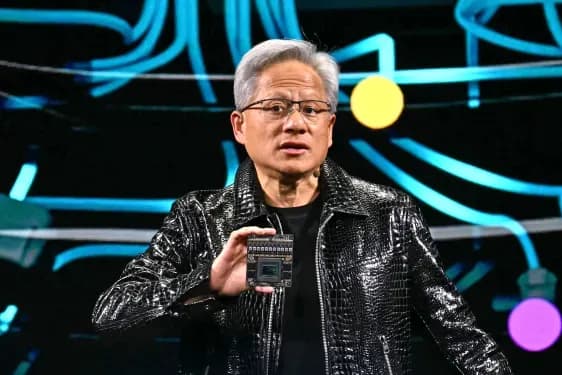
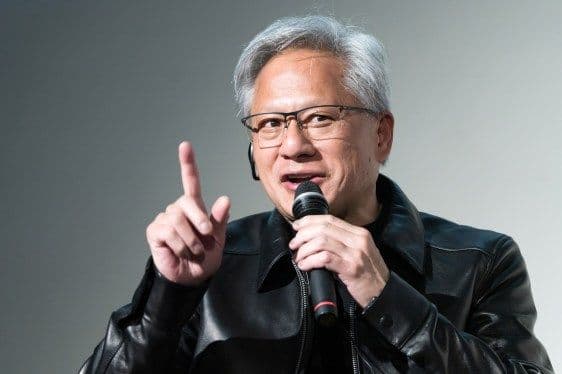
Nvidia’s board announced Sunday that it’s launching anindependent investigationafter CEO Jensen Huang told staff he was unfaithful to his wife. But this isn’t a case of just another CEO having an extramarital affair. The romantic interest is Megaspeed executive Alice Huang, whom U.S. officials believe is a Chinese spy who was feeding information back to Beijing. In short, the stakes reach well beyond Nvidia, given how many tech and financial partners depend on its place at the center of the AI economy. “I’m responsible for anentire industry,” Huang recently told Bloomberg in a sit-down. A spokesperson for the Chinese Embassy in Washington dismissed the allegations in late October as “groundless smears and slanders,” and no one has been charged. But U.S. intelligence officials reportedly briefed President Donald Trump about their concerns a year ago, and unnamed senior officials inside the Trump administration told the Times that they doubt Huang could haveremained unawareall that time of Alice Huang’s intelligence-gathering role for China. When Trump was first briefed, the Times reported, officials didn’t believe Huang knew, and it isn’t clear whether their assessment has changed. The board, meanwhile, says it sees no sign that national security or company secrets were compromised. The question is whether Huang can survive this. To think through what could come next, this editor spoke Sunday with famed professor Jeffrey Sonnenfeld, senior associate dean for leadership studies at the Yale School of Management and founder of the Chief Executive Leadership Institute, which has hosted Huang at its CEO summits. Sonnenfeld likes Huang, he said, and he called Huang’s career salvageable but put the odds at “about a 50-50.” He also had a lot more food for thought. First, the damage. Until now, Huang has been “revered and trusted by everybody in technology,” Sonnenfeld noted. But he called this episode “remarkably poor judgment.” Even if Huang was merely naive, he said, “any employee in Nvidia other than him would be fired over this,” and the recklessness alone would mean “an irretrievable loss of confidence.” Sonnenfeld suggested that Huang’s saving grace could be what social psychologists callidiosyncrasy credits, if he can prove he was being duped. The term comes from Edwin Hollander, a social psychologist who proposed in a 1958 paper that people earn latitude in a group by showing competence and following its rules. Huang has been earning latitude since he co-founded Nvidia in 1993. But all that goodwill can run out when a screw-up looks self-serving or touches the group’s core norms. Here that group includes Nvidia’s board, its roughly 42,000 employees who are bound by security rules, and, in a looser sense, the U.S. government, given it restricts its exports. We also talked about precedents, except, as it turns out, there really are none for what’s unfolding right now. Executives who survive personal scandals sometimes pick up where they left off at another company, Sonnenfeld observed. Former HP CEO Mark Hurd is one example. Between 2005 and 2010, he drove HP to the top of the tech industry by revenue, then was pressured to resign after he filed inaccurate expense reports that hid a personal relationship with a contractor. Oracle hired him about a month later. Huang has no equivalent because Nvidia is his company As for the bench at Nvidia, that doesn’t really exist either. While there is typically a hierarchy inside companies of Nvidia’s scale and importance, Huang has kept things as flat as possible, with about 60 direct reports by his own account. That structure makes it hard to figure out who would succeed him (though his children, both of whom work at Nvidia, are sometimes the subject ofsuccession speculation). That won’t stop the worldwide guessing game that’s sure to follow. And boards in crisis often reach for a “messianic solution” from outside, Sonnenfeld said, floating former Google CEO Eric Schmidt as one idea. Nvidia’s role at the center of a massive and complex circular financing web is what makes this particular predicament so tricky and, undoubtedly, terrifying for a wide number of constituents. Nvidia isn’t just the biggest provider of chips driving the AI boom but also largely the bank behind the buildout. In addition to stakes in hundreds of smaller startups, Nvidia has invested in OpenAI, Anthropic, xAI, CoreWeave, and Nebius. In August, it also signed preliminary agreements with Apollo, BlackRock, Blackstone, Brookfield, Goldman Sachs, and KKR aimed at mobilizing more than $500 billion over time, and Huang has said Nvidia could backstop up to a quarter of it. The move was widely interpreted as a way to spread risk. Now, a leadership crisis at the center is how a stumble becomes a collapse. So what’s Nvidia’s board likely doing at this moment? Sonnenfeld noted that Huang’s constant, public advocacy for selling advanced chips to China had already made people anxious. Anthropic’s Dario Amodei, whose company Nvidia has backed, had a lot to say about selling chips to China at Davos back in January, likening it to “selling nuclear weapons to North Korea.” Now the board’sindependent members— meaning everyone but Huang — will have to establish what technology reached China if any, and by what routes, including by better understanding Nvidia’s relationship with Megaspeed. The Singapore cloud company, which grew out of a Chinese gaming business and became Nvidia’s largest buyer in Southeast Asia, bought roughly$2 billion of its chips, The New York Times reported in October 2025, raising broader questions about whether it was helping China circumvent U.S. export restrictions by re-exporting the chips to China or renting them to Chinese customers remotely. (An Nvidia spokesperson told The Hill after the Times report that the allegations were “thoroughly investigated anddebunked last year.”) In the meantime, Huang will keep running the company, Nvidia said Sunday. That’ll be a tall order, even for a CEO who already spends much of his time traveling the world to promote Nvidia. For starters, three House chairmen want a closed-door briefing from Huang on November 18. Nvidia is also reporting its newest earnings on November 17. Sonnenfeld expects that even if Huang keeps the title, he’ll have to hand off some of the day-to-day decision-making. Only one thing is certain right now. Huang doesn’t own the kind of super-voting stock that would cement his power at Nvidia. Sonnenfeld often argues for dual-class structures that empower founders, and he says Huang’s success without one has been the best counterargument to that case. But if Huang had one, Sonnenfeld continued, removing him would be harder. This episode may be remembered as a pivotal moment for how the tech industry guards its secrets. Sonnenfeld argues tech has been “way too lax” compared with defense contractors that face clearance regimes. Thearrest last monthof an OpenAI engineer points to the same problem. He was accused of hiding a recording device behind a TV in an executive conference room, and while OpenAI has said it has no indication that model weights, source code, or customer data were accessed, the case highlights how exposed tech companies are to people who get close. Huang may well survive the investigation (Sonnenfeld hopes the board clears him of knowingly aiding anyone). The bigger test comes when Nvidia’s employees, customers, and partners, and, indirectly, the millions of Americans with Nvidia in their 401(k) plans, have to decide whether an AI economy built largely on the judgment of Huang still makes sense.

View

WordPress has been a crucial technology and content management system for websites like TechCrunch. Now, WordPress.com owner Automattic is responding to the changing state of the web by debuting a new service calledSpacefast, which will allow users to deploy vibe-coded websites and apps. Spacefast is designed to provide infrastructure for the vibe-coded apps, including databases, authentication, file uploads, emails, and analytics, to make them functional websites, apps, or services. The product competes with the likes of Lovable and Emergent, which offer both interface and rails for vibe-coded apps, but in a more open way. Users can connect Spacefast with other agents and chatbots like ChatGPT, Claude, Hermes, OpenClaw, Grok Bot, Muse, Pi, Cursor, OpenCode, and Amp. Alternatively, they can connect a Git repository to Spacefast to get started. The product is headed by Batuhan İçöz, who worked on it during one of the company’s hackathon sprints earlier in the year. At that time, he worked on the company’s cross-platform messaging app Beeper and said that he often got Vercel links from his non-technical friends while exploring vibe coding. “I thought there had to be a better way for everyone to set up and deploy their projects. Automattic already has good infrastructure, but we have been traditionally associated with just WordPress. I thought, why do I have to use Cloudflare when we have a CDN (content delivery network) just as good? So I started working on what was called Stattic and now Spacefast,” he told TechCrunch over a call. İçöz eventually disseminated the solution to his friends and added more features to make the product more dynamic. Automattic soft-launched the product in September to get feedback before today’s launch.The company has seen varied use cases of their product, with people and organizations using it for internal mockups, slideshows, and offer-related websites. However, that’s not the only competition Spacefast has. Productivity and design software like Figma, Canva, and Notion have launched products that sit at the intersection of vibe coding, mockups, and presentations. İçöz thinks that, compared to something like Lovable, Spacefast has the advantage of giving users a choice of their agent and using the solution their way. The counter-argument might be that a certain kind of user wouldn’t want to choose and just have everything figured out for them. Spacefast said that it also has the advantage of being within Automattic to launch solutions like web analytics, WordPress integration, and e-commerce features (through WooCommerce) easily to compete better with the whole lot. “For enterprises, the problem right now is IT sprawl, as their marketing teams are churning out landing pages on services like Lovable, and they want to consolidate and work with a company that understands the enterprise needs. With our existing products, we have experience serving enterprise customers,” İçöz noted. A challenge for newly minted products in the AI world is to retain people post-launch. Users might get excited to try out a new product, and then move on to the new shiny thing within days or weeks. İçöz is cognizant of the fact and said that he expects people to churn, as they might not be interested in making apps at all. “I think what we need to do as a product is make sure that when you build something with SpaceFast, it is so easy, and the results are so much better than without Spacefast,” İçöz emphasized. Many websites and publishers are struggling with dwindling traffic due to AI chatbots and summaries, right now, to the point thatGoogle itself saw its ad revenue growth drop. İçöz acknowledged that people are making websites with ChatGPT or Claude now as compared to deploying something on WordPress, and he said some sites won’t need a content management system at all as the web expands. Spacefast comes amid turbulent months at Automattic. In an OpenAI/Sam Altman-style saga, the company’s board forcedCEO Matt Mullenweg out, but he wasback in control within days. The rebel board waseventually replaced, and the interim CFO left within weeks of appointment. In October, TechCrunch reported that thecompany had begun layoffs across several propertiesand more cuts were expected.

Online publishing platform Medium on Mondaylaunched a new app, called TK,which aims to bring AI technology deeper into the writing process. The idea behind TK is to make it easier to turn ideas into written words by incorporating an AI assistant into the editor itself, allowing users to ask for help by typing “@TK” followed by their request or prompt. In publishing and journalism, the term “TK” serves as a placeholder used to mark where missing information can be added later. The “TK” stands for “to come,” but uses a “K” instead of “C” as there are few English words where the “tk” letter combination exists, making it stand out more easily in written text where it could be caught by proofreaders. InMedium’s app, TK takes on a new role as it tries to help users fill in the blanks. The company suggests the AI assistant could help answer questions that you might normally have to switch to another tab to quickly look up, like how many days are in a particular month. The app could also pull in bits of writing you had previously saved to the app when you were still fleshing out your ideas. In addition, Medium saysTKwill ship with particular skills for editorial feedback, headline feedback, and others that could match your draft to the style guide for Medium publications. Medium’s move to embrace AI in the early stages of writing could prove controversial at a time when the publishing and literary worlds have been reckoning with the role that artificial intelligence has played in the creation of new long-form prose.Multipleauthorshavelost book dealsover suspicions that they used AI technology to help them write, while other literary awards havecome under scrutinyafter winners weresuspected of writing with AI assistance. While writers have long used automated tools for proofreading and light grammatical edits, there is growing concern across the publishing industry that an AI assistant’s editorial “suggestions” can become the writing itself, instead of being reflective of the thoughts in the writer’s own mind. But because AI models were trained on human writing, there are alsoquestions around the reliability of AI detection toolsin terms of their ability to properly determine when something was written with AI, rather than with its assistance, versus not at all. TK leans into this debate, taking the side that these nuances will ultimately no longer matter in the end. Instead, the company celebrates what AI can bring to the world of writing, saying that “artificial intelligence makes writing more important, not less,” and proclaiming that “AI is a technology that has the power to amplify human intelligence and it uses the written word as a foundation.” Still, Medium concedes that AI does raise the possibility of low-quality content and blurring the line between what’s human-written versus AI-written. To address these concerns, TK allows authors to publish notes that transparently explain how AI was used in their writing. “This is a start of what we believe is required to publish in the AI era, which is to make the provenance of writing clear, transparent, and inspectable, right down to the prompting and source material,” Medium explained ina blog post about the launch. In addition to writing assistance, TK will help users remember and organize what they had previously written and suggest writing prompts. The app can also optionally connect to your own AI agent through TK’s MCP server or Claude skill, so the app can better understand your projects, your positions, and other ideas that could be stored in your agent’s memory. Meanwhile, the new app incorporates human feedback in a social layer, the company says, allowing writers to share their early drafts with others and get feedback. At launch, TK is available on the web, but a desktop app is on the roadmap, Medium says. The app can import and export Markdown, but it’s not a Markdown app itself. The writing in TK is also not encrypted, as the app is designed for collaboration, but users will be able to set access control permissions on their work. Medium, which is profitable, says TK will be a free tool for those with a Medium account.

AI’s power crunch has become so acute that Anthropic, a company that has generally avoided buying physical infrastructure, is spending $3.4 billion on natural gas turbines. The AI company, which is planning to go public this year, is buying Caterpillar generators that equipment supplier OnePWR had originally ordered, according to aFinancial Times report. The generators are capable of producing up to 1.7 gigawatts of electricity. Historically, Anthropic has preferred to rent rather than buy. The company disclosed in its S-1 filing in May that it is paying SpaceX subsidiary xAI$1.25 billion per monththrough May 2029 to use xAI’s computing power. “We expect to enter into additional similar services contracts,” Anthropic stated in the filing, meaning more deals to rent computing power. But as demand for compute ramps up, the market for power has also grown increasingly uncertain, which may have forced its hand. The backlog for natural gas turbines stretches into the early 2030s, and queues to connect to the electrical grid can be just as long. Anthropic’s purchase looks like a last resort. According to the report, OnePWR ordered the turbines a couple years ago but couldn’t find financing to complete the purchase. Anthropic had planned to buy them from OnePWR but instead went directly to Caterpillar, the manufacturer. It’s not clear why OnePWR was unable to secure financing despite Anthropic’s apparent interest as a customer. Whatever the case, Anthropic likely wanted to keep the generating capacity to itself rather than give a competitor an opportunity to snap it up. AI companies have beenramping up their purchasesof natural gas equipment and supplies in recent years.Google,Amazon,Microsoft, andMetahave all announced plans to build massive natural gas power plants to power their data centers on-site, rather than drawing from the public grid. The binge has given asecond wind to fracking, the drilling method used to extract natural gas from underground rock. And if the buildout proceeds as planned, U.S. data centers alone could consumemore natural gas than Germany and Japan combinedby 2035. The reliance on natural gas also exposes hyperscalers to price fluctuations. One analyst expects that prices couldmore than tripleby the end of the decade in some markets. If that happens, Anthropic might have a serious case of buyer’s remorse.

Meta Superintelligence Lab released a new AI model on Monday called Muse Ember, the lab’s lightest and most cost-efficient AI model yet. In its release, Meta said Ember was “designed for complex reasoning execution and the work agents repeat all day: tool calls, coding subtasks, routing, extraction, and long document parsing.” Meta particularly emphasized Ember’s cost-per-task, usingArtificial Analysis’s composite benchmark scoreto show Ember as cheaper and smarter than competitors like Anthropic’s Haiku and OpenAI’s Luna. At 10 cents per million input tokens, Ember is significantly cheaper than frontier competitors like Haiku and Luna. Not only that, it’s cost-competitive with open source competitors like DeepSeek V4.1 Flash and GLM 5.3 Flash. Given the emphasis on low cost and accuracy at scale, Ember is designed to pair with a larger model like Meta’s Muse Wonder in an agentic harness. In the case of a customer-support agent, for instance, you might see a heavier model establishing rules for how to handle a particular issue, then sending a lighter-weight model to apply the rules across tens of thousands of cases. As Meta puts it in the announcement, “Muse Wonder plans, Muse Ember handles the volume.” With volume-heavy use cases in mind, Meta also trained Ember to work well across different types of media, including text, images, and audio. The result makes the model surprisingly flexible in what kind of inputs it can handle. As Meta puts it in the announcement, “agents can read screenshots, charts, and scanned documents, or work from voice memos, meeting recordings, and video without a separate model.” Ember is the fourth model released under Meta’s Muse brand, following the mid-weight Spark (released in April), Spark’s open source twin Glimmer (released in August), and the Wonder frontier model (released in October). The flagship consumer AI product, the Muse Agent, wasreleased in Septembertounexpected success, with new features likeSpacesandvideo chatrolling out earlier this month.
View

Nvidia CEO Jensen Huang has never been quiet about his belief that the U.S. should continue selling AI chips to China, rather than shutting the country off from the technology. The revelation that he had an affair with an alleged Chinese spy threatens to complicate that argument. The Financial Timesreported Friday on Huang’s relationship with Alice Huang, a former executive at Megaspeed, an Nvidia customer. Jensen Huangadmittedto the affair and apologized in a memo to the company on Sunday. U.S. intelligence officials believe Alice Huang was recruited by Chinese intelligence to gather information about the CEO and influence the company’s efforts to loosen chip export restrictions. Nvidia’s independent directors, working with outside legal counsel, areinvestigatingthe matter, andCongress is already demanding answers. The controversy comes at a sensitive moment for Nvidia. Historically, China has been a big market for the company. It has shrunk in recent years due to strict U.S. export controls and an aggressive push by Beijing for domestic alternatives. In the three months ended July 26, Nvidia recorded $7.9 billion in revenue from customers headquartered in China, roughly 8% of total revenue. Huang hasrepeatedly lobbiedthe U.S. government toexpand access to China, and some of his persuasion tactics have been successful. Huang met repeatedly with President Donald Trump and administration officials last year; afterward, the government reversed restrictions on Nvidia’s H20 chips and allowed exports of its more powerful H200 processors. On numerous occasions, Huang has publicly lamented export controls, calling them a “failure” at a conference last year and saying in May that it was “not wise” for the U.S. and China to create two distinct AI ecosystems. He has also warned that shutting Nvidia out of China’s compute market would enable the country to develop its own AI chips to challenge Nvidia internationally. China is already moving in that direction.Reuters reportedlast week that about 600,000 H200 chips are being held in Hong Kong, awaiting shipment to mainland China. Beijing is pushing AI companies to prioritize buying chips from Chinese companies instead. The idea that Huang needed any encouragement in the form of an attractive woman to push for greater access to China seems like a stretch, particularly because his lobbying efforts predate their reported meeting at an Nvidia event in early 2024. At the end of the day, Huang is a salesman trying to dominate one of the world’s biggest AI markets. Still, the allegations involving Alice Huang open new scrutiny of the company’s business relationships and could taint any assurances Nvidia offers that it can prevent sensitive technology from reaching unauthorized customers. Once made, rumors of questionable allegiances can be hard to shake. Secretary of State Marco Rubioreportedlywarned officials close to Trump earlier this year about Huang’s relationship with an alleged spy. Even if Nvidia’s investigation finds that Huang didn’t share secrets with his paramour, the question is whether he’ll be able to convince Washington that Nvidia can still responsibly do business with China. Nvidia did not respond to a request for comment.

Anthropic releasednew versions of its most advanced modelson Monday, with the launch of Mythos 5.2 and Fable 5.2. The company says the new models “show improvements in areas like coding, reasoning, and vision” and communicate more clearly with users. Notably, Anthropic is lowering the cost of Fable from $10 to $8 per million input tokens. As a result, Fable 5.2 is now cheaper than its primary competitor GPT-6 Astra. Anthropic says that the new version of Fable will return responses 30% faster across effort levels. Faster inference serving is available for double the price. Fable 5.2 is also compatible with zero data retention (ZDR) policies through theEnterprise Frontier Safeguards system, long a sticking point for many enterprise clients. It’s Anthropic’s first model release since the arrival ofa third-party report from the assessment group METR, which suggested the lab might be approaching recursive self-improvement (RSI) — or the ability for AI models to carry on model training independently. The METR report found internal models were speeding up Anthropic’s AI progress by roughly 2x, although many uncertainties remain. Still, Anthropic’s release notes significant ongoing challenges in accurately testing model capabilities. “Claude Mythos 5.2 and Fable 5.2 each voice suspicion that they are being evaluated more often than any of our recent models, which challenges our ability to assess how they will act in real-world settings. As these settings expand and capabilities increase with future models, we expect this challenge to grow.” Anthropic maintains that the new version of Mythos does not have the ability to act covertly against its user, a verdict that’s detailed further inMythos 5.2’s system card. “Claude Mythos 5.2 shows stronger covert capabilities than prior Claude models on several of our evaluations, particularly when its reasoning is hidden from the monitor,” the system card reads. “That said, we believe that low levels of absolute performance on our new covert evaluations support claims that rely on detection of harmful actions in high-stakes situations.” Fable 5.2 has been available to select parties in pre-release for some time, and Anthropic says the model has already “solved two open problems in theoretical physics, formalized Fermat’s Last Theorem, and supported numerous other research projects.” Also on Monday,AI startup Physical Superintelligenceannounced a new proof of the Aaronson‑Ambainis conjecture, a pivotal step in setting theoretical limits for quantum computing. Notably, the lab said the result was achieved by running “a non-public Anthropic model” within PSI’s own system. Anthropic did not confirm or deny whether Fable 5.2 was the model in question.

Nvidia CEO Jensen Huang has pulled out of the ElevenLabs Summit scheduled for this Wednesday in New York, ElevenLabs, the voice AI company, confirmed Monday. He has also dropped out of other speaking engagements, including theAnthropic CEO Forum. Nvidia is an investor in ElevenLabs. The withdrawals come after Huangadmitted to an extramarital affairover the weekend, and Nvidia opened an investigation into his relationship with apossible Chinese spy. “I owe my family and all of you an apology. I was unfaithful to my wife. My actions hurt her and our children. There is no excuse for what I did. I am deeply sorry,” Huang said in a memo to the company. The incident has rattled the AI industry, raising questions about Huang’sstaying poweras CEO and Nvidia’s ownChina ambitions.
View

The agreement covers software engineering, cloud, cybersecurity, and SAP modernisation, alongside plans to introduce Hexaware's AI frameworks.
View

The NVIDIA CEO’s admission has triggered a board-level probe into allegations of Chinese intelligence involvement and potential risks to sensitive company information.
View

Salesforce is positioning Slack as a work operating system for enterprises, with Slackbot bringing together organisational data, applications, and AI agents.
View

The National Stock Exchange has introduced natural language stock screening, AI-assisted corporate announcement summaries, and market data access.
View
View
View
View
View
View