🚀 Zaprep: Your Socials on Steroids. Start free — automate 1,000 DMs/month & turn engagement into leads. with 1,000 automated DMs/month.
Submit your Tool
PoweredByAI.app is an AI Tools Directory helping individuals, businesses, and creators discover the best AI tools for writing, coding, design, productivity, and more.
© 2026 , Product of011BQ. All rights reserved.

At conferences, speakers are often delivering their keynote or panel discussions in languages that many attendees might not know. That leads to users scrambling for their phones and opening translation apps to capture audio from a distance, which is not always effective. Mixhalo,a real-time audio startup that solves for situations like these, is joining DeepL to boost the German startup’s translation suite to help improve these kinds of translation experiences. Mixhalo was founded in 2016 by Incubus guitarist and songwriter Mike Einziger, violinist Ann Marie Simpson-Einziger, and Vik Singh, who is now the CEO of the startup. The company’s initial pitch was to improve the listening experience for concert attendees through its platform, but over the years evolved into a company that powers real-time audio for sports and live events. The startup raised over $39 million in capital from investors including Fortress Investment, Founders Fund, Defy Partners, and Cowboy Ventures. Mixhalo’s CEO Singh said in an email that tons of voice models coming to market were beneficial to Mixhalo, as it could integrate a variety of them and compare performance. He said that the rise of voice AI didn’t directly contribute to acquisition talks, but as model companies grow big, they would “start encroaching” on the space Mixhalo operated in, making it difficult to win on pricing. Mixhalo said it already relied on DeepL as its primary translation provider, and it made sense to work closer with the company. Singh tells us: “The DeepL conversation was very organic. Mixhalo has been a long-time DeepL customer, and I attended a customer dinner and ended up seated next to Sebastian, DeepL’s CTO. We just got to talking, and the more we talked, the more obvious the overlap became across the event space, the API, and the application layer, whether that is voice for meetings, document translation, or live event.” DeepL has been a text translation player for a long time, but in the last few years, it has started making noise about its voice products. In 2024, the company launchedvoice-to-text translation capabilities in over 33 languages. This April, it launcheda voice-to-voice translation suiteto support use cases like multilingual meetings. Mixhalo’s acquisition can push DeepL into the live event space with the same suite. “For us, Mixhalo will work as a solution and also a marketing use case. The platform will allow us to show how DeepL’s tech works in real-time and in environments like conferences where people are present on the ground,” DeepL CEO Jarek Kutylowski told TechCrunch in a call. Kutylowski said that with the acquisition of Mixhalo, which is based in San Francisco, DeepL is opening an office in the Bay Area to expand its U.S. operations. Mixhalo competes with the likes ofWordly AIandSeven Seven Six-backed Palabra.

View

As global investors race to fund the infrastructure underpinning the artificial-intelligence boom, Canada Pension Plan Investment Board’s CPP Investments has committed up to ₹70 billion (about $741 million) to Indian data center operator CtrlS, betting on India’s growing role in the global buildout of cloud and AI infrastructure. Under the partnership announced on Wednesday, CPP Investments will invest ₹40 billion (around $423 million) to acquire an 8.2% stake in CtrlS and commit up to ₹30 billion (about $317 million) to a joint venture to develop hyperscale data center campuses across India. CPP Investments will own 48% of the joint venture, while CtrlS will hold the remaining 52%, the companies said in a joint statement. Founded in 2007, CtrlSoperates more than 15 data centersacross India. The Hyderabad-based company has been expanding its footprint to meet rising demand from cloud providers, enterprises, and AI workloads. India has become a major destination for data center and AI investments as global technology companies and investors ramp up spending to meet surging computing demand. Companies includingAmazon,Google,Microsoft,OpenAI, andUberhave announced investments in the country in recent months, while operators are rapidly expanding capacity amid a broader global race to build AI infrastructure. “As one of the world’s fastest-growing digital markets, India represents an important pillar of our global data center strategy,” said CPP Investments’ global head of real assets Max Biagosch in a statement. CPP Investments, Canada’s largest pension investor, has been investing in India since 2009 and had net assets of about $20 billion in the country as of March 31, making it one of the largest foreign institutional investors in the market. The investment builds on CPP Investments’ broader push into digital infrastructure. The pension fund said it has invested in the data center sector since 2017 and has built a portfolio of assets and joint ventures across major markets worldwide. The partnership will help CtrlS expand capacity and build infrastructure tailored for AI workloads, said CtrlS founder and chief executive Sridhar Pinnapureddy. The CPP-CtrlS deal is the latest in a string of investments targeting India’s data center sector. Earlier this month, Blackstone-backedAirTrunksaid it would invest $30 billion to build five gigawatts of data center capacity in India by 2030.Meta, meanwhile, partnered with Reliance Industries last week on a 168-megawatt AI-enabled data center in the western state of Gujarat. New Delhi has sought to position India as a global hub for digital infrastructure through a range of policy measures, includingtax exemptions for foreign cloud providerson services sold overseas through 2047, provided those workloads are run from data centers located in the country. Indian conglomerates have also accelerated expansion plans to capitalize on the opportunity.Adani GroupandTata Consultancy Servicesare among the companies that have unveiled major data center projects aimed at supporting AI and cloud workloads. In 2023, CtrlSannounced plans to invest $2 billionover six years to expand its data center footprint across India. India’s growing role in AI infrastructure has not yet been matched by similar progress in developing frontier AI models. While the country has a handful of startups building indigenous AI models, includingSarvam, much of the underlying AI technology used by Indian companiescontinues to be supplied by U.S. firms. The rapid buildout of data centers is also expected to increase pressure on electricity and water resources, highlightingsome of the challengesthat could accompany India’s ambitions to become a major AI infrastructure hub.

As enterprises struggle to turn AI pilot programs into functional parts of their business, reliability has taken center stage. A new startup is hoping to solve that problem by drawing on the tools of mathematical formalization, combining one of computer science’s most reliable systems with one of its most chaotic. On Wednesday,Pramaana Labsannounced $27 million in seed funding led by Khosla Ventures, with participation from Accel, Boldcap, Nexus Venture Partners, Premji Invest, and Unbound. Pramaana will focus on highly sensitive verticals like law, drug discovery, and tax preparation — where errors can be costly and reliability is at a premium. Deploying AI in those systems will require stronger protections against hallucinations and errors than we currently have. But as Pramaana co-founder and CEO Ranjan Rajagopalan sees it, they’re also uniquely suited to formalization. “It’s like math in the sense that you have a lot of rules that you need to abide by,” Rajagopalan told TechCrunch, describing the rules of the tax code. “Once you have a codified version of it, the reasoning on top of it starts becoming deterministic.” Pramaana’s system still runs on a conventional LLM, giving it the flexibility to answer natural language questions and tackle complex problems that conventional computers can’t handle. But there’s a deterministic layer on top of that LLM ensuring the LLM’s work checks out. This combination of an LLM engine with deterministic verification isa popular setup; Pramaana’s unique approach is to use the tools of formal verification — drawing on the open-source LEAN programming language used to verify mathematical proofs. There’s real precedent for much of this work; Rajagopalan points toFrance’s CATALA project, which formalizes much of the country’s tax and benefit system into executable code. For each use case, Pramaana will build its own LEAN-style formal verification system, overseen by domain experts. For tax law, the company is working with former IRS commissioner Danny Werfel, while professors from IIT Delhi, IIT Madras, and UC Berkeley oversee the cybersecurity and drug discovery system. “The world’s hardest problems are not unsolvable. They are unformalized,” says Rajagopalan. “Every domain where being wrong can cost someone their health, money, or freedom has rules.” Now, those rules just need to be codified.
![[Exclusive] Gnani.ai to Launch 5 New AI Models, Including Speech-to-Text Model](/_next/image?url=https%3A%2F%2Fteenyfy-assets.s3.us-east-1.amazonaws.com%2Ftemp_exclusive_59c643ba11.jpg&w=1080&q=75)
The first release, expected within days, is a speech-to-text model trained on 14 million hours of audio data.
View

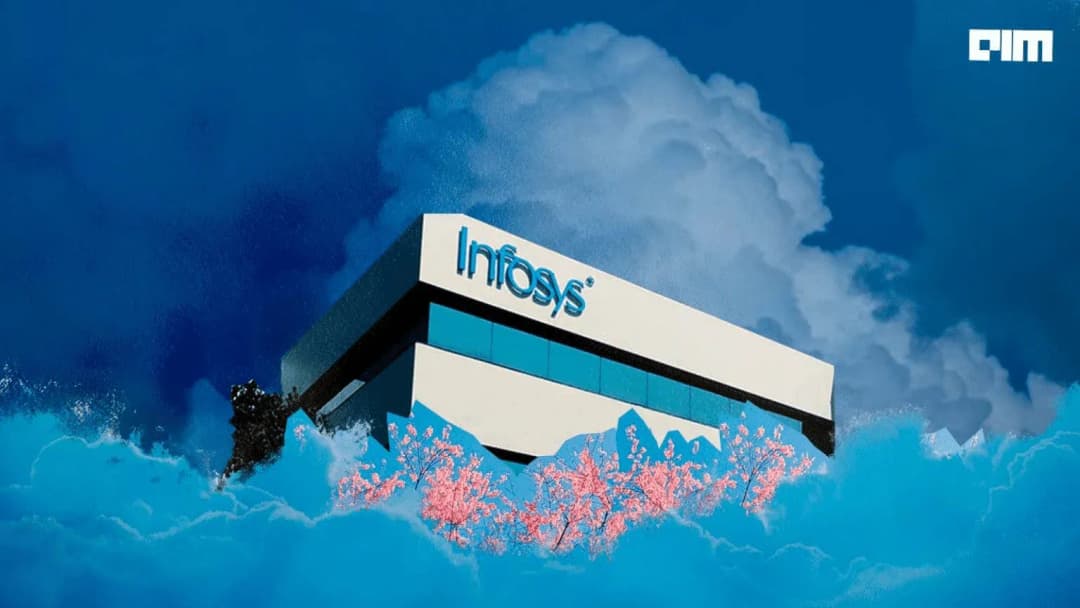
Infosys has won a long-term IT transformation mandate from Finland’s Valmet, underscoring growing enterprise demand for AI-led modernisation.
View

The alliance also aligns with Adani Group's broader vision of building 5 GW of green energy-powered AI-ready data centre capacity by 2035.
View

Between 2021 and 2025, Bengaluru-Karnataka generated $46 billion in startup exits, attracted $39 billion in venture capital funding, and recorded 190% ecosystem value growth.
View

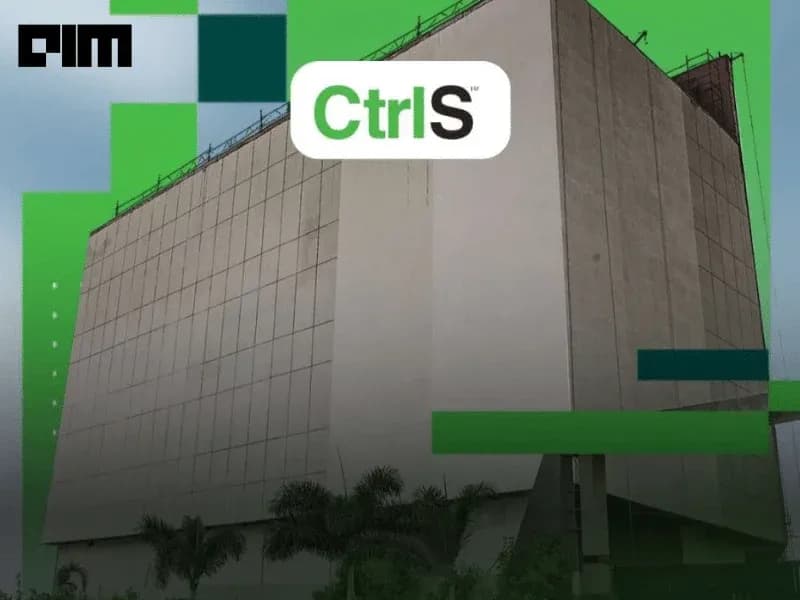
The partnership includes a ₹4,000 crore investment by CPP Investments for an 8.2% stake in CtrlS at a pre-money valuation of ₹44,914 crore (C$6.6 billion)
View

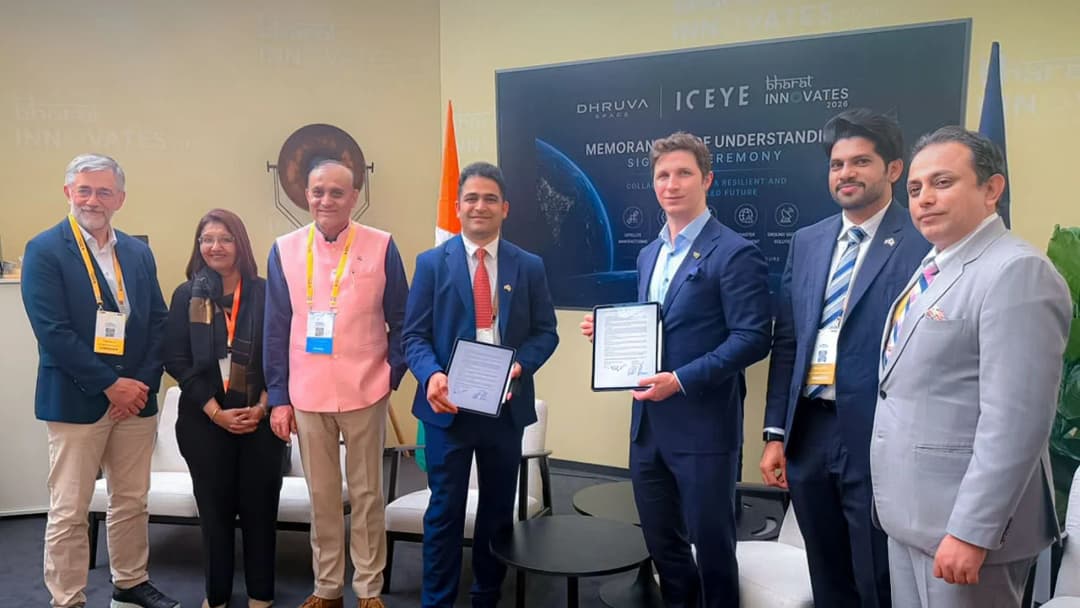
The partnership will examine joint production, data services, and ground infrastructure opportunities from India for global markets.
View

HCLTech will help Volkswagen Group's software arm e.solutions develop and scale next-generation infotainment and connectivity software.
View

Microsoft is also exploring a budget-friendly option with a refined version of the DeepSeek V4 AI model, which would be hosted on Azure to ensure data security.
View

The Fable episode has exposed how access to critical AI infrastructure can be disrupted overnight, raising questions about India’s readiness for a future built on foreign models.
View
View
View