🚀 Zaprep: Your Socials on Steroids. Start free — automate 1,000 DMs/month & turn engagement into leads. with 1,000 automated DMs/month.
Submit your Tool
PoweredByAI.app is an AI Tools Directory helping individuals, businesses, and creators discover the best AI tools for writing, coding, design, productivity, and more.
© 2026 , Product of011BQ. All rights reserved.

After adding Muse Voice for agentic AI-assistant, Meta is back with another interesting feature called Spaces, which can be used in the Muse app. Spaces basically work like feeds, bringing you information from the sources that you choose and in the format that you would like to see it in. Spaces within the app can also be organised within the Muse AI app to suit the user's requirements depending on what they prioritise at the given moment. Meta claims that Spaces can be used to track a variety of things and can even generate small games.
View

Meta introduced Muse, its new personal AI agent, at Meta Connect 2026 earlier this year. During the keynote presentation, the tech giant announced that Muse will initially be available only in the US, with plans to roll it out to other markets soon. The AI companion lives within different Meta products, like WhatsApp, and helps users send emails, book travel, and fill out forms. It also offers agentic capabilities and completes tasks in the background. While the company has yet to bring the Muse personal AI agent to India, its pricing and subscription tiers for the country have surfaced online.
View

Online publishing platform Medium on Mondaylaunched a new app, called TK,which aims to bring AI technology deeper into the writing process. The idea behind TK is to make it easier to turn ideas into written words by incorporating an AI assistant into the editor itself, allowing users to ask for help by typing “@TK” followed by their request or prompt. In publishing and journalism, the term “TK” serves as a placeholder used to mark where missing information can be added later. The “TK” stands for “to come,” but uses a “K” instead of “C” as there are few English words where the “tk” letter combination exists, making it stand out more easily in written text where it could be caught by proofreaders. InMedium’s app, TK takes on a new role as it tries to help users fill in the blanks. The company suggests the AI assistant could help answer questions that you might normally have to switch to another tab to quickly look up, like how many days are in a particular month. The app could also pull in bits of writing you had previously saved to the app when you were still fleshing out your ideas. In addition, Medium saysTKwill ship with particular skills for editorial feedback, headline feedback, and others that could match your draft to the style guide for Medium publications. Medium’s move to embrace AI in the early stages of writing could prove controversial at a time when the publishing and literary worlds have been reckoning with the role that artificial intelligence has played in the creation of new long-form prose.Multipleauthorshavelost book dealsover suspicions that they used AI technology to help them write, while other literary awards havecome under scrutinyafter winners weresuspected of writing with AI assistance. While writers have long used automated tools for proofreading and light grammatical edits, there is growing concern across the publishing industry that an AI assistant’s editorial “suggestions” can become the writing itself, instead of being reflective of the thoughts in the writer’s own mind. But because AI models were trained on human writing, there are alsoquestions around the reliability of AI detection toolsin terms of their ability to properly determine when something was written with AI, rather than with its assistance, versus not at all. TK leans into this debate, taking the side that these nuances will ultimately no longer matter in the end. Instead, the company celebrates what AI can bring to the world of writing, saying that “artificial intelligence makes writing more important, not less,” and proclaiming that “AI is a technology that has the power to amplify human intelligence and it uses the written word as a foundation.” Still, Medium concedes that AI does raise the possibility of low-quality content and blurring the line between what’s human-written versus AI-written. To address these concerns, TK allows authors to publish notes that transparently explain how AI was used in their writing. “This is a start of what we believe is required to publish in the AI era, which is to make the provenance of writing clear, transparent, and inspectable, right down to the prompting and source material,” Medium explained ina blog post about the launch. In addition to writing assistance, TK will help users remember and organize what they had previously written and suggest writing prompts. The app can also optionally connect to your own AI agent through TK’s MCP server or Claude skill, so the app can better understand your projects, your positions, and other ideas that could be stored in your agent’s memory. Meanwhile, the new app incorporates human feedback in a social layer, the company says, allowing writers to share their early drafts with others and get feedback. At launch, TK is available on the web, but a desktop app is on the roadmap, Medium says. The app can import and export Markdown, but it’s not a Markdown app itself. The writing in TK is also not encrypted, as the app is designed for collaboration, but users will be able to set access control permissions on their work. Medium, which is profitable, says TK will be a free tool for those with a Medium account.

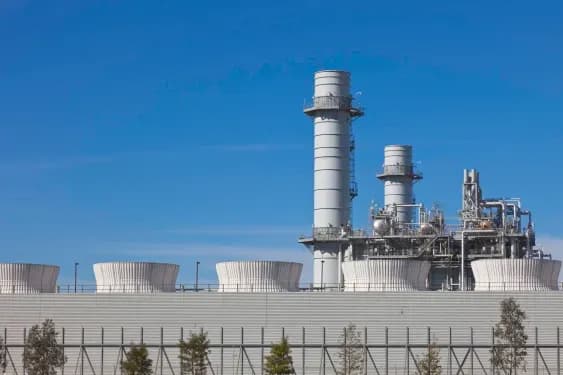
AI’s power crunch has become so acute that Anthropic, a company that has generally avoided buying physical infrastructure, is spending $3.4 billion on natural gas turbines. The AI company, which is planning to go public this year, is buying Caterpillar generators that equipment supplier OnePWR had originally ordered, according to aFinancial Times report. The generators are capable of producing up to 1.7 gigawatts of electricity. Historically, Anthropic has preferred to rent rather than buy. The company disclosed in its S-1 filing in May that it is paying SpaceX subsidiary xAI$1.25 billion per monththrough May 2029 to use xAI’s computing power. “We expect to enter into additional similar services contracts,” Anthropic stated in the filing, meaning more deals to rent computing power. But as demand for compute ramps up, the market for power has also grown increasingly uncertain, which may have forced its hand. The backlog for natural gas turbines stretches into the early 2030s, and queues to connect to the electrical grid can be just as long. Anthropic’s purchase looks like a last resort. According to the report, OnePWR ordered the turbines a couple years ago but couldn’t find financing to complete the purchase. Anthropic had planned to buy them from OnePWR but instead went directly to Caterpillar, the manufacturer. It’s not clear why OnePWR was unable to secure financing despite Anthropic’s apparent interest as a customer. Whatever the case, Anthropic likely wanted to keep the generating capacity to itself rather than give a competitor an opportunity to snap it up. AI companies have beenramping up their purchasesof natural gas equipment and supplies in recent years.Google,Amazon,Microsoft, andMetahave all announced plans to build massive natural gas power plants to power their data centers on-site, rather than drawing from the public grid. The binge has given asecond wind to fracking, the drilling method used to extract natural gas from underground rock. And if the buildout proceeds as planned, U.S. data centers alone could consumemore natural gas than Germany and Japan combinedby 2035. The reliance on natural gas also exposes hyperscalers to price fluctuations. One analyst expects that prices couldmore than tripleby the end of the decade in some markets. If that happens, Anthropic might have a serious case of buyer’s remorse.

Meta Superintelligence Lab released a new AI model on Monday called Muse Ember, the lab’s lightest and most cost-efficient AI model yet. In its release, Meta said Ember was “designed for complex reasoning execution and the work agents repeat all day: tool calls, coding subtasks, routing, extraction, and long document parsing.” Meta particularly emphasized Ember’s cost-per-task, usingArtificial Analysis’s composite benchmark scoreto show Ember as cheaper and smarter than competitors like Anthropic’s Haiku and OpenAI’s Luna. At 10 cents per million input tokens, Ember is significantly cheaper than frontier competitors like Haiku and Luna. Not only that, it’s cost-competitive with open source competitors like DeepSeek V4.1 Flash and GLM 5.3 Flash. Given the emphasis on low cost and accuracy at scale, Ember is designed to pair with a larger model like Meta’s Muse Wonder in an agentic harness. In the case of a customer-support agent, for instance, you might see a heavier model establishing rules for how to handle a particular issue, then sending a lighter-weight model to apply the rules across tens of thousands of cases. As Meta puts it in the announcement, “Muse Wonder plans, Muse Ember handles the volume.” With volume-heavy use cases in mind, Meta also trained Ember to work well across different types of media, including text, images, and audio. The result makes the model surprisingly flexible in what kind of inputs it can handle. As Meta puts it in the announcement, “agents can read screenshots, charts, and scanned documents, or work from voice memos, meeting recordings, and video without a separate model.” Ember is the fourth model released under Meta’s Muse brand, following the mid-weight Spark (released in April), Spark’s open source twin Glimmer (released in August), and the Wonder frontier model (released in October). The flagship consumer AI product, the Muse Agent, wasreleased in Septembertounexpected success, with new features likeSpacesandvideo chatrolling out earlier this month.
View

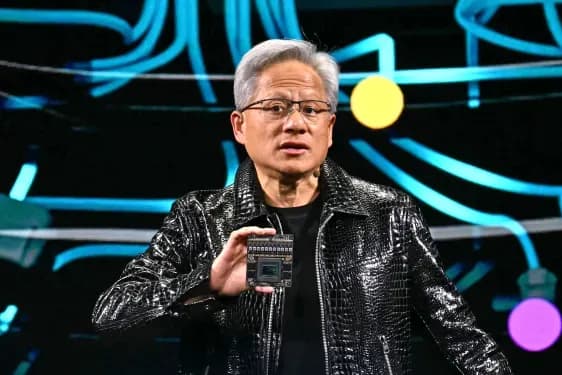
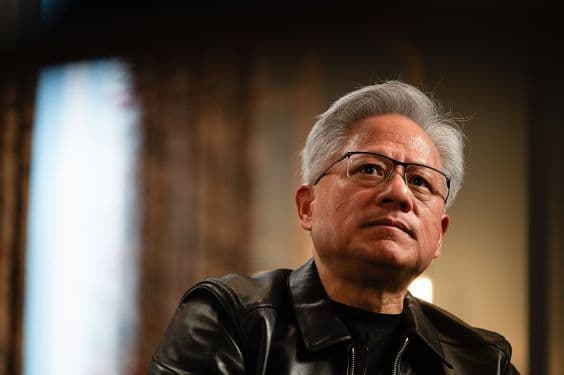
Nvidia CEO Jensen Huang has never been quiet about his belief that the U.S. should continue selling AI chips to China, rather than shutting the country off from the technology. The revelation that he had an affair with an alleged Chinese spy threatens to complicate that argument. The Financial Timesreported Friday on Huang’s relationship with Alice Huang, a former executive at Megaspeed, an Nvidia customer. Jensen Huangadmittedto the affair and apologized in a memo to the company on Sunday. U.S. intelligence officials believe Alice Huang was recruited by Chinese intelligence to gather information about the CEO and influence the company’s efforts to loosen chip export restrictions. Nvidia’s independent directors, working with outside legal counsel, areinvestigatingthe matter, andCongress is already demanding answers. The controversy comes at a sensitive moment for Nvidia. Historically, China has been a big market for the company. It has shrunk in recent years due to strict U.S. export controls and an aggressive push by Beijing for domestic alternatives. In the three months ended July 26, Nvidia recorded $7.9 billion in revenue from customers headquartered in China, roughly 8% of total revenue. Huang hasrepeatedly lobbiedthe U.S. government toexpand access to China, and some of his persuasion tactics have been successful. Huang met repeatedly with President Donald Trump and administration officials last year; afterward, the government reversed restrictions on Nvidia’s H20 chips and allowed exports of its more powerful H200 processors. On numerous occasions, Huang has publicly lamented export controls, calling them a “failure” at a conference last year and saying in May that it was “not wise” for the U.S. and China to create two distinct AI ecosystems. He has also warned that shutting Nvidia out of China’s compute market would enable the country to develop its own AI chips to challenge Nvidia internationally. China is already moving in that direction.Reuters reportedlast week that about 600,000 H200 chips are being held in Hong Kong, awaiting shipment to mainland China. Beijing is pushing AI companies to prioritize buying chips from Chinese companies instead. The idea that Huang needed any encouragement in the form of an attractive woman to push for greater access to China seems like a stretch, particularly because his lobbying efforts predate their reported meeting at an Nvidia event in early 2024. At the end of the day, Huang is a salesman trying to dominate one of the world’s biggest AI markets. Still, the allegations involving Alice Huang open new scrutiny of the company’s business relationships and could taint any assurances Nvidia offers that it can prevent sensitive technology from reaching unauthorized customers. Once made, rumors of questionable allegiances can be hard to shake. Secretary of State Marco Rubioreportedlywarned officials close to Trump earlier this year about Huang’s relationship with an alleged spy. Even if Nvidia’s investigation finds that Huang didn’t share secrets with his paramour, the question is whether he’ll be able to convince Washington that Nvidia can still responsibly do business with China. Nvidia did not respond to a request for comment.

Anthropic releasednew versions of its most advanced modelson Monday, with the launch of Mythos 5.2 and Fable 5.2. The company says the new models “show improvements in areas like coding, reasoning, and vision” and communicate more clearly with users. Notably, Anthropic is lowering the cost of Fable from $10 to $8 per million input tokens. As a result, Fable 5.2 is now cheaper than its primary competitor GPT-6 Astra. Anthropic says that the new version of Fable will return responses 30% faster across effort levels. Faster inference serving is available for double the price. Fable 5.2 is also compatible with zero data retention (ZDR) policies through theEnterprise Frontier Safeguards system, long a sticking point for many enterprise clients. It’s Anthropic’s first model release since the arrival ofa third-party report from the assessment group METR, which suggested the lab might be approaching recursive self-improvement (RSI) — or the ability for AI models to carry on model training independently. The METR report found internal models were speeding up Anthropic’s AI progress by roughly 2x, although many uncertainties remain. Still, Anthropic’s release notes significant ongoing challenges in accurately testing model capabilities. “Claude Mythos 5.2 and Fable 5.2 each voice suspicion that they are being evaluated more often than any of our recent models, which challenges our ability to assess how they will act in real-world settings. As these settings expand and capabilities increase with future models, we expect this challenge to grow.” Anthropic maintains that the new version of Mythos does not have the ability to act covertly against its user, a verdict that’s detailed further inMythos 5.2’s system card. “Claude Mythos 5.2 shows stronger covert capabilities than prior Claude models on several of our evaluations, particularly when its reasoning is hidden from the monitor,” the system card reads. “That said, we believe that low levels of absolute performance on our new covert evaluations support claims that rely on detection of harmful actions in high-stakes situations.” Fable 5.2 has been available to select parties in pre-release for some time, and Anthropic says the model has already “solved two open problems in theoretical physics, formalized Fermat’s Last Theorem, and supported numerous other research projects.” Also on Monday,AI startup Physical Superintelligenceannounced a new proof of the Aaronson‑Ambainis conjecture, a pivotal step in setting theoretical limits for quantum computing. Notably, the lab said the result was achieved by running “a non-public Anthropic model” within PSI’s own system. Anthropic did not confirm or deny whether Fable 5.2 was the model in question.

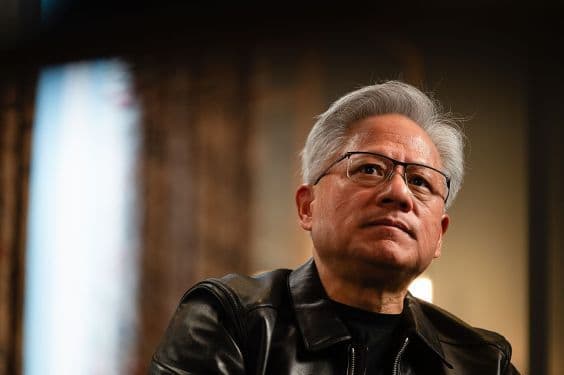
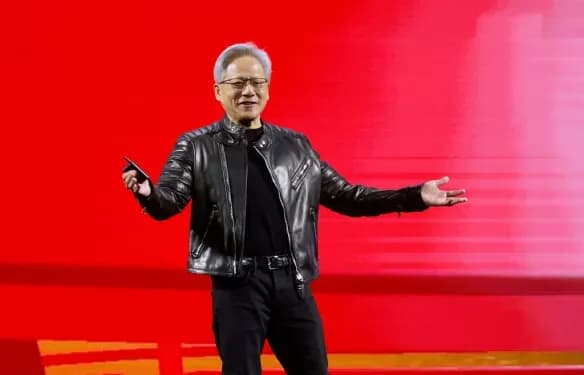
Nvidia CEO Jensen Huang has pulled out of the ElevenLabs Summit scheduled for this Wednesday in New York, ElevenLabs, the voice AI company, confirmed Monday. He has also dropped out of other speaking engagements, including theAnthropic CEO Forum. Nvidia is an investor in ElevenLabs. The withdrawals come after Huangadmitted to an extramarital affairover the weekend, and Nvidia opened an investigation into his relationship with a possible Chinese spy. “I owe my family and all of you an apology. I was unfaithful to my wife. My actions hurt her and our children. There is no excuse for what I did. I am deeply sorry,” Huang said in a memo to the company. The incident has rattled the AI industry, raising questions about Huang’sstaying poweras CEO and Nvidia’s own China ambitions.
View

Nvidia’s stock slid more than 4% on Monday, the first trading day after its board said it would investigate CEO Jensen Huang over his relationship with Alice Huang, an executive U.S. intelligence believes was spying for China. Securities lawyers were already moving. At least four firms, including Schall, Brown & Schwartz and Levi & Korsinsky, announced investigations Monday into whether Nvidia misled investors. Robert Bartlett, a Stanford Law professor and securities law expert, expects them to have plenty of company. “I would definitely wager that there’ll be a filing,” Bartlett said in an interview Monday morning, adding that he wouldn’t be surprised if a case had been filed by the end of the day. Plaintiffs’ lawyers have good reasons to be first in line; under federal securities law, the first complaint triggers a public notice, and investors then have 60 days to ask the court to be named lead plaintiff. A firm that files early gets a head start on signing up investors with large losses, as well as on shaping the story of the case. Bartlett was right, in fact. A case surfaced Monday afternoon in the Northern District of California, where Nvidia is headquartered. Rosen Law Firm, a New York-based plaintiffs’ firm that specializes in securities class actions, filed it on behalf of Mark Kistenmacher, a retail investor who made seven purchases totaling roughly $20,500 this year, according to a schedule attached to the complaint. (Rosen was lead counsel in a $250 million settlement with Alibaba and ranks among the most active filers of such cases.) The proposed class covers anyone who bought Nvidia securities between Oct. 9, 2025, and Nov. 8, 2026, and the suit names both Nvidia and Huang. The complaint accuses them of misleading investors about Huang’s ties to Megaspeed, the Singapore-based data center outfit where Alice Huang was considered a top exec, and it points to three statements as proof: Nvidia spokesperson John Rizzo’s late-October claim that Huang’s interactions with Alice Huang were “not unusual or unexpected,” the company’s even earlier claim that it found “no evidence of diversion” of its chips, and Jensen Huang’s Oct. 30 comment to Bloomberg that Nvidia’s dealings with Megaspeed were “normal and not unusual.” All three were false or misleading, the suit says, because Huang was having an affair with Alice Huang. Kistenmacher is asking for unspecified damages, interest and attorneys’ fees, and he wants a jury trial. While much remains unknown, the legal theory here doesn’t depend on anything the board’s investigation may turn up about Huang’s private life. When The New York Times first reported on Huang’s ties to Alice Huang last month, Rizzo really did tell the Times that the relationship was “not unusual or unexpected.” Rizzo separatelytold another outlet, The Hill, that “Megaspeed has been no different than many other regional cloud customers. Meetings with customers are part of a CEO’s job; Jensen talks with thousands of customer executives every year.” Of course, the world now knows that was not true. Worse, the Times reports that U.S. intelligence had been monitoring Alice Huang for more than a year. From a securities perspective, Bartlett said, the company’s earlier statement was “clearly a misleading statement.” And because Huang is CEO, Bartlett said, “his knowledge gets imputed to the company.” In other words, Nvidia is treated as having known what its chief executive knew. The Kistenmacher complaint makes the same argument. Bartlett predicted a “classic fraud on the market” claim, in which investors argue they paid prices that reflected false or incomplete public information, and lost money when the truth emerged. This early lawsuit relies on that theory, and Monday’s drop of $7.97 per share, or 4.27%, gives the attorneys involved a lot to work with. Damages in such cases are tied to the stock’s decline, and Nvidia is one of the most valuable companies in the world, so you can imagine a settlement could prove exceedingly expensive. That means a large payment from the company and its directors-and-officers insurers, but typically no personal consequences for the CEO or the board. It is also a civil matter, so Huang isn’t facing prison over it. The irony, as Bartlett noted, is that the suit is brought in the name of Nvidia’s shareholders, and shareholders ultimately pay for the settlement, directly or through insurance premiums. Bartlett sorted Nvidia’s wider exposure into buckets. The first is the securities fraud claim, which is the clearest immediate problem for the company and potentially for Huang. The second is governance: what the board knew and when. It’s possible directors were kept in the dark, but the board also has oversight duties, and once the Times began reporting on the Megaspeed connection, the company should have had reporting lines to bring a critical risk like this to directors. If it didn’t, or if directors didn’t act, board-level liability is possible. A third category, one that would change everything, would arise only if the board’s investigation finds Huang knew about the intelligence connection. That would be “a whole other ball game,” as Bartlett said. (The board said in a statement to the public Sunday that it has no reason to believe national security or Nvidia secrets were compromised.) There’s also the question of government action. The SEC can seek an officer-and-director bar for intentional securities-fraud violations, which Bartlett said is technically on the table. But he doubts the current SEC under Chairman Paul Atkins would have the appetite, given President Trump’s support for Huang. A roughly two-year clock after discovery of the facts would leave room for a future administration to act, but the window would be tight, and Bartlett posited that’s pretty unlikely when asked about it. It’s worth underscoring that neither law firm announcements nor this newly filed complaint is a sign of a strong case. Plaintiffs’ firms are quick to publish these notices when they see an opportunity. Which firm winds up leading the case is decided later by the court, and that decision usually depends on which investor has suffered the biggest loss. Kistenmacher said in his filing that he’s willing to serve as lead plaintiff, but the court will ultimately choose among the competing investors. No doubt they’ll materialize soon.

Six months before theNvidia spy scandal emerged, the New York-based short seller firm Culper Research had already raised questions about Nvidia CEO Jensen Huang’s unusually close relationship with Alice Huang, an executive at Megaspeed, a Singapore-based company that buys Nvidia chips. She is now suspected to be a Chinese spy. The Nvidia CEO admitted to anextramarital affairover the weekend, and the company has now opened a formal investigation into his relationship with Alice Huang (who shares his last name but is not related). U.S. intelligence officials believe she was recruited by the Chinese government to collect intelligence on Jensen Huang and influence his position regarding U.S. export controls on advanced AI chips. Culper’sMay 13 reportis resurfacing because it picked up on the connection between Jensen Huang and Alice Huang while investigating Megaspeed’s ties to Nvidia. NEW: We are short Nvidia$NVDA. We believe Nvidia has a significant China problem. Please see our full report and disclosures now available on our website, link in bio.pic.twitter.com/oTaJyL7S2R In particular, the report called the relationship between the two executives “uncomfortably close,” noting that the Nvidia CEO was spotted partying and socializing with Alice Huang on multiple occasions. The report even claimed that some Nvidia employees wondered whether they had a “special relationship.” Culper Research also theorized the China business that Nvidia lost to export controls had been rerouted through Southeast Asia, and that Megaspeed, a major chip buyer in the region, was secretly financed by Chinese tech giant Alibaba through shell companies. It pointed to financial records that showed Megaspeed’s total liabilities and equity had grown from $33 million at the end of 2023 to around $3 billion by the end of 2024, much of it in the form of refundable deposits from an unidentified source. Financial Times reported Mondaythat documents show Alibaba lent money to Megaspeed through subsidiaries. Culper is a short seller, so it stood to financially benefit from making these allegations, and those about possible illegal chip diversion have not been independently verified. Its report is availableon the webandwas posted to X back in May.

Nvidia CEO Jensen Huang hired Heller Inc., a crisis communications firm known for handling sex scandals, at least a year before he publicly acknowledged an extramarital affair with a woman suspected of spying for China,Wired reported. Heller Inc. founder Risa Heller has advised prominent men through personal scandals and sexual misconduct accusations, according to a2023 New York Magazineprofile. Her reported clients include former congressmanAnthony Weiner, celebrity chefMario Batali, and former New Yorker writerJeffrey Toobin. Wired also reported that Nvidia’s internal communications team was told to copy Heller Inc. on press inquiries about Huang shortly after an October 2025New York Times reportabout whether Nvidia was helping Chinese companies evade U.S. chip export restrictions. The Times reported that Megaspeed, a then little-known Singapore-based data center company with ties to China, had acquired nearly $2 billion worth of Nvidia chips. It described Megaspeed CEO Alice Huang, the woman later linked to Jensen Huang, standing next to him at a Taipei gathering of Nvidia customers. Heller and Nvidia didn’t immediately respond to requests for comment. On Sunday, Nvidia published astatementfrom Huang acknowledging an affair with a former Megaspeed executive, though he didn’t name Alice Huang. Nvidia’s board separatelyannouncedan independent investigation, citing reports that Huang “has been the target of a foreign intelligence effort.”
View

Launching a major tech IPO would seem risky right now, shortly after one of Nasdaq’s biggest sell-offs and amid revelations that a CEO central to the AI boom had an affair with a suspected Chinese spy. But that isn’t deterring Anthropic, which is moving ahead with its listing plans, according toThe Wall Street Journal. Anthropic plans to set a valuation range this week and begin trading on Thursday or Friday of next week, the Journal reported. Investors will look to Anthropic’s valuation to gauge the strength of the AI boom. Some institutional investors are now pushing for a valuation below the $1.5 trillion target discussed as recently as last week, a figure that was itself considerably below the $2 trillion floated a few months ago, the report said. OpenAI, Anthropic’s main rival, was reportedly valued at$1.25 trillionlast week after the ChatGPT maker raised $11 billion in fresh capital, short of the $20 billion it had initially sought.
View
View
View
View
View
View
View