🚀 Zaprep: Your Socials on Steroids. Start free — automate 1,000 DMs/month & turn engagement into leads. with 1,000 automated DMs/month.
Submit your Tool
PoweredByAI.app is an AI Tools Directory helping individuals, businesses, and creators discover the best AI tools for writing, coding, design, productivity, and more.
© 2026 , Product of011BQ. All rights reserved.

The new venture targets rising power demand from AI data centres and semiconductor manufacturing.
View

The solution aims to simplify NetBanking for businesses and consumers, with support from banks including SBI, HDFC Bank and ICICI Bank.
View

Genpact has introduced an AI-based solution built on Microsoft Azure to automate how consumer goods companies identify and resolve disputed deductions.
View

The selected firms will be responsible for evaluating existing government applications.
View

As micro-dramas gain popularity, platforms like Story TV and JioHotstar are using AI to analyse scripts, create visuals, localise content, and better understand viewer behaviour.
View

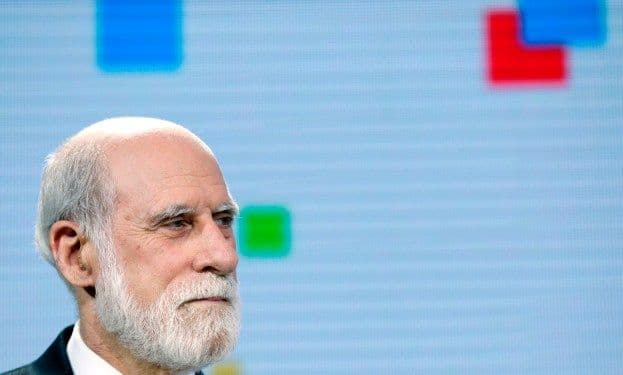
Vinton Cerf will step down from his role as Google’s chief internet evangelist next week, marking the conclusion of one of the most influential careers in technology history. While speaking via video feed at theOpen Frontier conferencehosted by the Laude Institute, Cerf was recognized by Dave Patterson, the UC Berkeley professor best known for co-developing RISC processor architecture. “Vint … has been at Google more than 20 years, and he is retiring a week from today, and so I think we ought to give him a round of applause for a relatively good career,” Patterson said, to cheers from the room. Google did not respond to a request for comment by publication time. Cerf, 83, and collaborator Robert Kahn are credited as being the architects of the networking protocols that became the internet we know today. His work developing and popularizing TCP/IP — the basic set of rules that lets different computer networks talk to each other — beginning in the 1970s has been recognized with numerous honorary degrees, the Presidential Medal of Freedom, anda Turing Award, among other honors. Since 2005, Cerf has served as vice president and chief internet evangelist at Google. (At this point, we can safely say the internet is fully evangelized, for good or ill.) Cerf was speaking on a panel alongside other computer scientists known for their work on durable open source projects, including Patterson; François Chollet, creator of the Keras deep-learning library and co-founder of Ndea; John Ousterhout, the Stanford computer scientist behind the Tcl programming language, who also co-founded Electric Cloud; and Matei Zaharia, who is Databricks’ co-founder and chief technologist. They offered advice about what it takes to build open source systems that survive — advice that’s increasingly relevant as founders bet on open infrastructure for the next wave of AI products. Much of the conference’s discussion focused on the problems with the centralization of advanced models in a handful of well-resourced labs, in contrast to the decentralized world of the open internet that made Cerf’s own protocols so durable. However, Cerf predicted that the rise of AI agents — software that can act autonomously and coordinate with other software — would push tech companies back toward standardized protocols. “The agentic model of AI, with multiple agents from multiple sources interacting with each other, is going to force composability, and a requirement for interoperability and standardization,” Cerf said. If he’s right, the companies that define those interoperability standards early could end up with outsized influence over how the agentic economy actually works — a dynamic not unlike the early internet protocol wars. While other panelists speculated that natural language communication between LLM agents would be sufficient, Cerf predicted formal standards would be required. “I don’t think English is going to be the best choice. There’s a flexibility in it, but there’s ambiguity, and I think precision for interagent interaction is going to be very, very important. An agent really needs to be sure the other agent understands what it is that they just agreed to do together,” Cerf said. “Remember the old telephone game where you wish you’d whispered in somebody’s ear and then by the time it got to 10 people away the message was totally different? Imagine a bunch of agents talking to each other in natural language, you know, that’s kind of terrifying.” In a more lighthearted moment, Patterson recalled meeting Cerf, known for his wardrobe of three-piece suits, as a grad student in the 1970s. “He’s always been the best dressed computer scientist I’ve ever met,” Patterson said. “My memory of Vint is that he came as a grad student with a shirt and tie in the ’70s.” “It absolutely is true,” Cerf said. “I even had a vest, and for some reason I always wanted to stick out, and instead of having long hair, and something in my nose, I thought just dressing differently was one way to do it.”
The draft framework on AI model risk management brings credit models, GenAI tools, and spreadsheets under a single governance regime.
View

Anthropic has also launched Claude Sonnet 5, making it the default model for Free and Pro users.
View

AWS will embed AI engineers within customer teams to build and deploy agentic AI systems, with deployment timelines shifting from months to days.
View

There’s a growing need for tools to help enterprises manage the complexities of AI-generated code, and investors like SenseAI Ventures are noticing.
View

The June 2026 report flags AI-driven investment and NBFI risks globally, while stating Indian banks remain stable and well-capitalised.
View

Wayve, a UK-based self-driving tech startup, is allowing its employees to sell a portion of their vested equity. The $85 million tender offer — essentially a structured opportunity for employees to sell shares back to investors — is being led by the company’s existing and new investors at the company’s latest valuation of$8.5 billion. That valuation was set in February when the nine-year-old company raised a $1.2 billion Series D led by Eclipse, Balderton and SoftBank Vision Fund 2, and included participation from Ontario Teachers’ Pension Plan, Baillie Gifford, Microsoft, NVIDIA and Uber. This is Wayve’s second employee liquidity event. The company previously held a tender offer alongside its$1.05 billionSeries C funding round in May 2024. Wayve’s offering is part of agrowing trendof AI startups. Rather than waiting years for an exit, companies are using tender offers as a retention tool, giving employees a reason to stick around rather than jump to a competitor — or start their own shop — the moment their options vest. Other startups that have recently completed employee tender offers includeDecagon, which builds AI agents that handle customer service for enterprises like Duolingo and Hertz;ElevenLabs, the AI voice-generation company behind much of the internet’s synthetic speech and dubbing tools;Linear, a popular project-management platform built for software teams; andClay, a sales and marketing automation tool that helps companies research and reach prospects. (Clay has run two tenders in the last nine months alone.) These startups are able to provide employee liquidity primarily because investors are eager to buy more of the equity in these high-growth companies, even at a premium, betting the businesses will be worth even more down the line. Wayve uses a self-learning approach to its autonomous driving. Instead of relying on the pre-built, high-definition maps most self-driving programs use, its software is an end-to-end neural network that learns to drive purely from data — closer to how a human picks up driving through experience, its founders argue. In pursuit of a “general-purpose” AI driver — one that could, in theory, work across countries, cars, and road conditions — the company has more than doubled its headcount to 1,200 employees over the past year. Wayve is targeting robotaxi pilot launches in partnership with Uber later this year, while separately planning to integrate its AI software into Nissan’s next-generation driver-assist systems starting in 2027.
View
View