🚀 Zaprep: Your Socials on Steroids. Start free — automate 1,000 DMs/month & turn engagement into leads. with 1,000 automated DMs/month.
Submit your Tool
PoweredByAI.app is an AI Tools Directory helping individuals, businesses, and creators discover the best AI tools for writing, coding, design, productivity, and more.
© 2026 , Product of011BQ. All rights reserved.

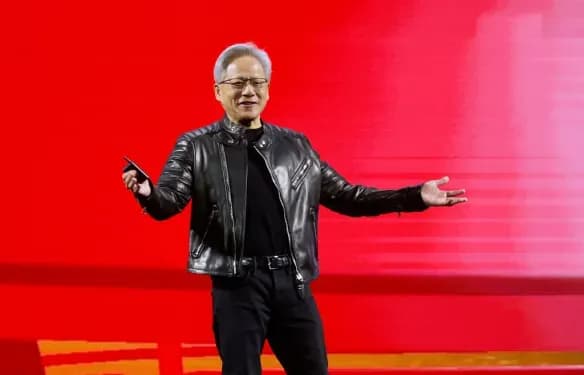
Nvidia’s stock slid more than 4% on Monday, the first trading day after its board said it would investigate CEO Jensen Huang over his relationship with Alice Huang, an executive U.S. intelligence believes was spying for China. Securities lawyers were already moving. At least four firms, including Schall, Brown & Schwartz and Levi & Korsinsky, announced investigations Monday into whether Nvidia misled investors. Robert Bartlett, a Stanford Law professor and securities law expert, expects them to have plenty of company. “I would definitely wager that there’ll be a filing,” Bartlett said in an interview Monday morning, adding that he wouldn’t be surprised if a case had been filed by the end of the day. Plaintiffs’ lawyers have good reasons to be first in line; under federal securities law, the first complaint triggers a public notice, and investors then have 60 days to ask the court to be named lead plaintiff. A firm that files early gets a head start on signing up investors with large losses, as well as on shaping the story of the case. Bartlett was right, in fact. A case surfaced Monday afternoon in the Northern District of California, where Nvidia is headquartered. Rosen Law Firm, a New York-based plaintiffs’ firm that specializes in securities class actions, filed it on behalf of Mark Kistenmacher, a retail investor who made seven purchases totaling roughly $20,500 this year, according to a schedule attached to the complaint. (Rosen was lead counsel in a $250 million settlement with Alibaba and ranks among the most active filers of such cases.) The proposed class covers anyone who bought Nvidia securities between Oct. 9, 2025, and Nov. 8, 2026, and the suit names both Nvidia and Huang. The complaint accuses them of misleading investors about Huang’s ties to Megaspeed, the Singapore-based data center outfit where Alice Huang was considered a top exec, and it points to three statements as proof: Nvidia spokesperson John Rizzo’s late-October claim that Huang’s interactions with Alice Huang were “not unusual or unexpected,” the company’s even earlier claim that it found “no evidence of diversion” of its chips, and Jensen Huang’s Oct. 30 comment to Bloomberg that Nvidia’s dealings with Megaspeed were “normal and not unusual.” All three were false or misleading, the suit says, because Huang was having an affair with Alice Huang. Kistenmacher is asking for unspecified damages, interest and attorneys’ fees, and he wants a jury trial. While much remains unknown, the legal theory here doesn’t depend on anything the board’s investigation may turn up about Huang’s private life. When The New York Times first reported on Huang’s ties to Alice Huang last month, Rizzo really did tell the Times that the relationship was “not unusual or unexpected.” Rizzo separatelytold another outlet, The Hill, that “Megaspeed has been no different than many other regional cloud customers. Meetings with customers are part of a CEO’s job; Jensen talks with thousands of customer executives every year.” Of course, the world now knows that was not true. Worse, the Times reports that U.S. intelligence had been monitoring Alice Huang for more than a year. From a securities perspective, Bartlett said, the company’s earlier statement was “clearly a misleading statement.” And because Huang is CEO, Bartlett said, “his knowledge gets imputed to the company.” In other words, Nvidia is treated as having known what its chief executive knew. The Kistenmacher complaint makes the same argument. Bartlett predicted a “classic fraud on the market” claim, in which investors argue they paid prices that reflected false or incomplete public information, and lost money when the truth emerged. This early lawsuit relies on that theory, and Monday’s drop of $7.97 per share, or 4.27%, gives the attorneys involved a lot to work with. Damages in such cases are tied to the stock’s decline, and Nvidia is one of the most valuable companies in the world, so you can imagine a settlement could prove exceedingly expensive. That means a large payment from the company and its directors-and-officers insurers, but typically no personal consequences for the CEO or the board. It is also a civil matter, so Huang isn’t facing prison over it. The irony, as Bartlett noted, is that the suit is brought in the name of Nvidia’s shareholders, and shareholders ultimately pay for the settlement, directly or through insurance premiums. Bartlett sorted Nvidia’s wider exposure into buckets. The first is the securities fraud claim, which is the clearest immediate problem for the company and potentially for Huang. The second is governance: what the board knew and when. It’s possible directors were kept in the dark, but the board also has oversight duties, and once the Times began reporting on the Megaspeed connection, the company should have had reporting lines to bring a critical risk like this to directors. If it didn’t, or if directors didn’t act, board-level liability is possible. A third category, one that would change everything, would arise only if the board’s investigation finds Huang knew about the intelligence connection. That would be “a whole other ball game,” as Bartlett said. (The board said in a statement to the public Sunday that it has no reason to believe national security or Nvidia secrets were compromised.) There’s also the question of government action. The SEC can seek an officer-and-director bar for intentional securities-fraud violations, which Bartlett said is technically on the table. But he doubts the current SEC under Chairman Paul Atkins would have the appetite, given President Trump’s support for Huang. A roughly two-year clock after discovery of the facts would leave room for a future administration to act, but the window would be tight, and Bartlett posited that’s pretty unlikely when asked about it. It’s worth underscoring that neither law firm announcements nor this newly filed complaint is a sign of a strong case. Plaintiffs’ firms are quick to publish these notices when they see an opportunity. Which firm winds up leading the case is decided later by the court, and that decision usually depends on which investor has suffered the biggest loss. Kistenmacher said in his filing that he’s willing to serve as lead plaintiff, but the court will ultimately choose among the competing investors. No doubt they’ll materialize soon.

View

Six months before theNvidia spy scandal emerged, the New York-based short seller firm Culper Research had already raised questions about Nvidia CEO Jensen Huang’s unusually close relationship with Alice Huang, an executive at Megaspeed, a Singapore-based company that buys Nvidia chips. She is now suspected to be a Chinese spy. The Nvidia CEO admitted to anextramarital affairover the weekend, and the company has now opened a formal investigation into his relationship with Alice Huang (who shares his last name but is not related). U.S. intelligence officials believe she was recruited by the Chinese government to collect intelligence on Jensen Huang and influence his position regarding U.S. export controls on advanced AI chips. Culper’sMay 13 reportis resurfacing because it picked up on the connection between Jensen Huang and Alice Huang while investigating Megaspeed’s ties to Nvidia. NEW: We are short Nvidia$NVDA. We believe Nvidia has a significant China problem. Please see our full report and disclosures now available on our website, link in bio.pic.twitter.com/oTaJyL7S2R In particular, the report called the relationship between the two executives “uncomfortably close,” noting that the Nvidia CEO was spotted partying and socializing with Alice Huang on multiple occasions. The report even claimed that some Nvidia employees wondered whether they had a “special relationship.” Culper Research also theorized the China business that Nvidia lost to export controls had been rerouted through Southeast Asia, and that Megaspeed, a major chip buyer in the region, was secretly financed by Chinese tech giant Alibaba through shell companies. It pointed to financial records that showed Megaspeed’s total liabilities and equity had grown from $33 million at the end of 2023 to around $3 billion by the end of 2024, much of it in the form of refundable deposits from an unidentified source. Financial Times reported Mondaythat documents show Alibaba lent money to Megaspeed through subsidiaries. Culper is a short seller, so it stood to financially benefit from making these allegations, and those about possible illegal chip diversion have not been independently verified. Its report is availableon the webandwas posted to X back in May.

Nvidia CEO Jensen Huang hired Heller Inc., a crisis communications firm known for handling sex scandals, at least a year before he publicly acknowledged an extramarital affair with a woman suspected of spying for China,Wired reported. Heller Inc. founder Risa Heller has advised prominent men through personal scandals and sexual misconduct accusations, according to a2023 New York Magazineprofile. Her reported clients include former congressmanAnthony Weiner, celebrity chefMario Batali, and former New Yorker writerJeffrey Toobin. Wired also reported that Nvidia’s internal communications team was told to copy Heller Inc. on press inquiries about Huang shortly after an October 2025New York Times reportabout whether Nvidia was helping Chinese companies evade U.S. chip export restrictions. The Times reported that Megaspeed, a then little-known Singapore-based data center company with ties to China, had acquired nearly $2 billion worth of Nvidia chips. It described Megaspeed CEO Alice Huang, the woman later linked to Jensen Huang, standing next to him at a Taipei gathering of Nvidia customers. Heller and Nvidia didn’t immediately respond to requests for comment. On Sunday, Nvidia published astatementfrom Huang acknowledging an affair with a former Megaspeed executive, though he didn’t name Alice Huang. Nvidia’s board separatelyannouncedan independent investigation, citing reports that Huang “has been the target of a foreign intelligence effort.”
View

Launching a major tech IPO would seem risky right now, shortly after one of Nasdaq’s biggest sell-offs and amid revelations that a CEO central to the AI boom had an affair with a suspected Chinese spy. But that isn’t deterring Anthropic, which is moving ahead with its listing plans, according toThe Wall Street Journal. Anthropic plans to set a valuation range this week and begin trading on Thursday or Friday of next week, the Journal reported. Investors will look to Anthropic’s valuation to gauge the strength of the AI boom. Some institutional investors are now pushing for a valuation below the $1.5 trillion target discussed as recently as last week, a figure that was itself considerably below the $2 trillion floated a few months ago, the report said. OpenAI, Anthropic’s main rival, was reportedly valued at$1.25 trillionlast week after the ChatGPT maker raised $11 billion in fresh capital, short of the $20 billion it had initially sought.
View

Otter.ai,the AI-powered note-taking tool, announced Tuesday that it’s expanding its multilingual capabilities, including a new multilingual transcription feature that can follow conversations as speakers switch between languages during the same meeting. The company is also adding support for 27 languages, its largest language expansion to date. Once the rollout is complete, Otter will support 31 languages in total, making the platform more accessible to international teams. The upcoming feature will automatically detect language changes and continue transcribing without requiring users to adjust settings. For example, a call could move from English to Korean to Portuguese, with Otter following the conversation throughout. The update aims to address a common challenge for global teams, where language differences can make meetings and collaboration more difficult. “Otter is breaking down language barriers so any company, no matter where they’re based, can build a system of record for the decisions for voice AI communication,” an Otter spokesperson told TechCrunch. Thirteen of the new languages are available now: Mandarin Chinese, Korean, German, Italian, Cantonese, Portuguese, Russian, Indonesian, Malay, Dutch, Turkish, Vietnamese, and Polish. The remaining 14 languages are coming soon and include Swedish, Danish, Finnish, Arabic, Hindi, Thai, Hebrew, Norwegian, Greek, Macedonian, Persian, Czech, Hungarian, and Romanian. The newly added languages run on Otter’s own speech models. The company told us it trained them using publicly available datasets and worked with native-speaking volunteers to review transcripts and check accuracy. The announcement comes as Otter continues to expand beyond transcription and into other workplace AI tools, following its$320 millionfunding from General Catalyst. It recently introducedWork Mode,which uses meeting history and connected apps to help users prepare for upcoming calls. For instance, the feature pulls information from previous customer conversations, outstanding action items, notes from teammates’ similar calls, and recent Google Drive files. Another recent addition is Live Assist, which provides real-time coaching during meetings. It analyzes the conversation and offers relevant suggestions based on what has already been talked about and what is happening in the moment.

TPU 8tx is built for confidential AI inference, allowing enterprises and governments to process sensitive data.
View

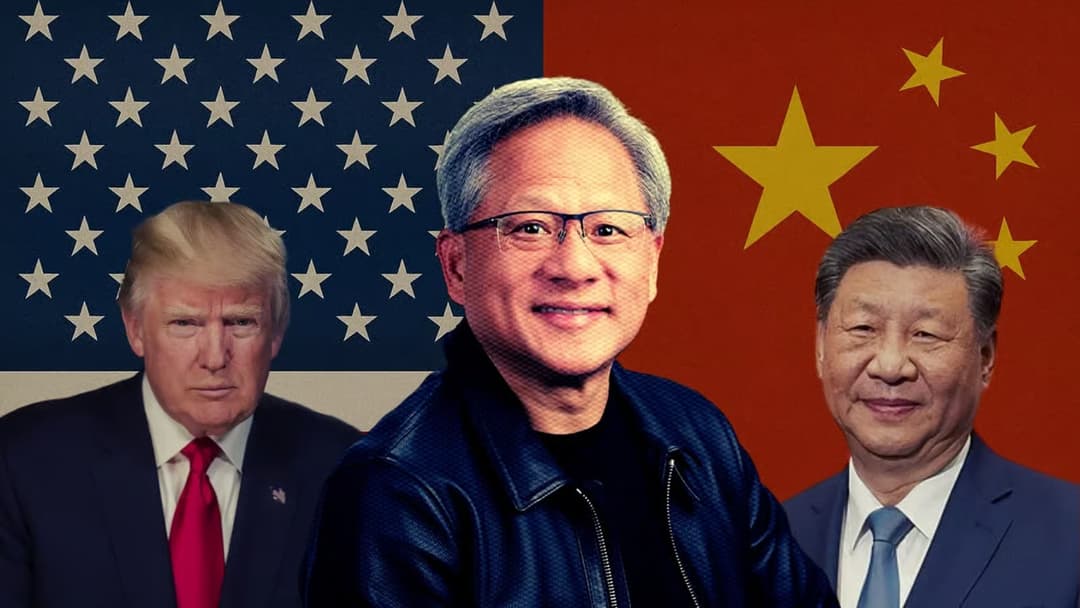
The US president believes NVIDIA CEO Jensen Huang didn’t have any knowledge of being targeted by Chinese intelligence.
View

The Power plan is listed at ₹1,799 and the Maximum tier at ₹8,999, although Meta has not confirmed an India launch date or the prices.
View

As AI changes engineering delivery, larger IT services firms are buying specialist capabilities. The challenge is turning those acquisitions into new business.
View

The expansion will place millions more teenagers under Instagram's Teen Account restrictions, even if they registered as adults.
View

Qantas will move some corporate services to Accenture teams in India as part of a technology overhaul that will introduce more automation and AI.
View

Gartner said its Value-Risk Flywheel will help CIOs align AI value with risk, using momentum and drag, with a governor at its centre.
View
View
View