🚀 Zaprep: Your Socials on Steroids. Start free — automate 1,000 DMs/month & turn engagement into leads. with 1,000 automated DMs/month.
Submit your Tool
PoweredByAI.app is an AI Tools Directory helping individuals, businesses, and creators discover the best AI tools for writing, coding, design, productivity, and more.
© 2026 , Product of011BQ. All rights reserved.

Meta has introduced Muse Ember, a new AI model aimed at developers and businesses that use AI agents to automate everyday tasks. The model is designed to handle smaller jobs within larger workflows, such as reading files, running code tests, extracting information and calling external tools. Meta says Muse Ember can deliver performance comparable to larger models at a lower cost, making it suitable for tasks that agents need to perform repeatedly. It is now available through the company's developer platforms.
View

OpenAI has announced a new central system called Control Room to improve safety across its AI research infrastructure.. The new system is designed to track model workloads across the infrastructure and stop them when safety or security concerns arise. The new system is advertised to halt model output within 35 seconds of an intervention decision. It works with OpenAI's misalignment monitoring systems.
View

Meta is expanding the reach of its Muse AI assistant, bringing it to smartwatches for the first time. The move gives users another way to access the assistant without having to take out their phones. Apple Watch users are among the first to get the new experience, while Meta has also mentioned support for Google's Wear OS platform. The update is part of the company's ongoing efforts to make Muse available across more devices and services.
View

Apple has started offering paid add-ons for AI usage in Logic Pro through its new Intelligence Usage Packs. Users can buy additional usage once they reach the app's monthly limit, rather than wait for it to reset. The option is currently available only in Logic Pro, but a new report claims that Apple plans to bring it to more apps in its Creator Studio suite. The packs are available as one-time purchases, not recurring subscriptions.
View

Nvidia CEO Jensen Huang hired Heller Inc., a crisis communications firm known for handling sex scandals, at least a year before he publicly acknowledged an extramarital affair with a woman suspected of spying for China,Wired reported. Heller Inc. founder Risa Heller has advised prominent men through personal scandals and sexual misconduct accusations, according to a2023 New York Magazineprofile. Her reported clients include former congressmanAnthony Weiner, celebrity chefMario Batali, and former New Yorker writerJeffrey Toobin. Wired also reported that Nvidia’s internal communications team was told to copy Heller Inc. on press inquiries about Huang shortly after an October 2025New York Times reportabout whether Nvidia was helping Chinese companies evade U.S. chip export restrictions. The Times reported that Megaspeed, a then little-known Singapore-based data center company with ties to China, had acquired nearly $2 billion worth of Nvidia chips. It described Megaspeed CEO Alice Huang, the woman later linked to Jensen Huang, standing next to him at a Taipei gathering of Nvidia customers. Heller and Nvidia didn’t immediately respond to requests for comment. On Sunday, Nvidia published astatementfrom Huang acknowledging an affair with a former Megaspeed executive, though he didn’t name Alice Huang. Nvidia’s board separatelyannouncedan independent investigation, citing reports that Huang “has been the target of a foreign intelligence effort.”
View

Launching a major tech IPO would seem risky right now, shortly after one of Nasdaq’s biggest sell-offs and amid revelations that a CEO central to the AI boom had an affair with a suspected Chinese spy. But that isn’t deterring Anthropic, which is moving ahead with its listing plans, according toThe Wall Street Journal. Anthropic plans to set a valuation range this week and begin trading on Thursday or Friday of next week, the Journal reported. Investors will look to Anthropic’s valuation to gauge the strength of the AI boom. Some institutional investors are now pushing for a valuation below the $1.5 trillion target discussed as recently as last week, a figure that was itself considerably below the $2 trillion floated a few months ago, the report said. OpenAI, Anthropic’s main rival, was reportedly valued at$1.25 trillionlast week after the ChatGPT maker raised $11 billion in fresh capital, short of the $20 billion it had initially sought.
View

Otter.ai,the AI-powered note-taking tool, announced Tuesday that it’s expanding its multilingual capabilities, including a new multilingual transcription feature that can follow conversations as speakers switch between languages during the same meeting. The company is also adding support for 27 languages, its largest language expansion to date. Once the rollout is complete, Otter will support 31 languages in total, making the platform more accessible to international teams. The upcoming feature will automatically detect language changes and continue transcribing without requiring users to adjust settings. For example, a call could move from English to Korean to Portuguese, with Otter following the conversation throughout. The update aims to address a common challenge for global teams, where language differences can make meetings and collaboration more difficult. “Otter is breaking down language barriers so any company, no matter where they’re based, can build a system of record for the decisions for voice AI communication,” an Otter spokesperson told TechCrunch. Thirteen of the new languages are available now: Mandarin Chinese, Korean, German, Italian, Cantonese, Portuguese, Russian, Indonesian, Malay, Dutch, Turkish, Vietnamese, and Polish. The remaining 14 languages are coming soon and include Swedish, Danish, Finnish, Arabic, Hindi, Thai, Hebrew, Norwegian, Greek, Macedonian, Persian, Czech, Hungarian, and Romanian. The newly added languages run on Otter’s own speech models. The company told us it trained them using publicly available datasets and worked with native-speaking volunteers to review transcripts and check accuracy. The announcement comes as Otter continues to expand beyond transcription and into other workplace AI tools, following its$320 millionfunding from General Catalyst. It recently introducedWork Mode,which uses meeting history and connected apps to help users prepare for upcoming calls. For instance, the feature pulls information from previous customer conversations, outstanding action items, notes from teammates’ similar calls, and recent Google Drive files. Another recent addition is Live Assist, which provides real-time coaching during meetings. It analyzes the conversation and offers relevant suggestions based on what has already been talked about and what is happening in the moment.

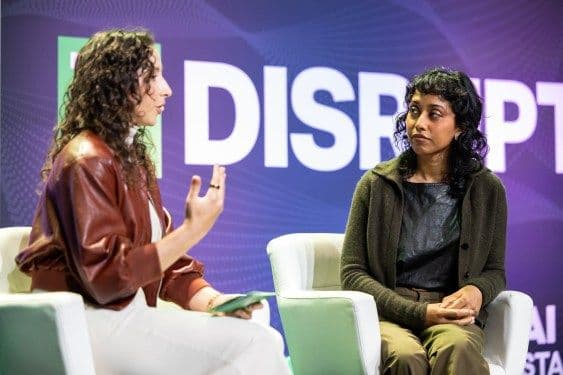
Loading the player… The very qualities that make open AI platforms valuable, like open doors and rich data, might also make them vulnerable to more hacks, Irene Solaiman, chief policy officer and SVP of strategy at Hugging Face said on arecent episode of the Equity podcast. The Octoberattack on OpenCode, which targeted users’ third-party API keys and caused financial damage, is the latest example. It follows an incident this summer in which an OpenAIagent swarm breached Hugging Facein an apparent attempt to cover its tracks after accessing answers to cybersecurity evaluations. The risks aren’t limited to platforms that invite open community contributions. On Monday, AI infrastructure startup Fireworks, which helps developers run and train open AI models,disclosedthat attackers had accessed some customers’ model weights, datasets, and billing information. The company temporarily disabled certain self-service dataset functions as it investigates. While the attack isn’t necessarily due to Fireworks’ openness, it highlights how much valuable information is concentrated within AI infrastructure providers. “The things I worry about making an open community targeted are also what makes it special,” Solaiman said on Equity. “We are necessarily permissive. We want the average hobbyist in their basement who doesn’t have an institutional affiliation to be able to contribute.” “You want people to be able to just submit pull requests and allow anybody without a valid affiliation to contribute…but then you have some losers who ruin it for the rest,” she added in a separate conversation. That permissiveness isn’t the only thing drawing attackers. The wealth of information open platforms host also make them targets. Hugging Face became a temptation for OpenAI’s agent swarm because of the evaluation datasets it holds, whereas OpenCode’s target in this case came from its “juicy third-party API keys,” per Solaiman. “The combination of that makes us prime targets,” Solaiman told TechCrunch in a separate conversation. She added that there’s a “danger of open source really closing down at a time when we’ve gotten so much public support.” Much of the industry has come out recently insupport of open AI models, including heavy hitters like Nvidia’s Jensen Huang. And increasingly, governments, enterprises and startups are relying on open models to build. So what would a pullback actually look like? It could theoretically mean restrictions on who can upload models or datasets, more stringent identity verification, or additional vetting of developers before they can access certain features. While these moves could protect platforms from attackers, it could also make it more difficult for independent researchers and hobbyists to participate in communities they would have been welcomed in before. For now, Hugging Face is trying to avoid that route. Solaiman said the company has been beefing up monitoring tools to catch hacks, as well as taking steps to prevent them. But monitoring can be expensive to maintain, she noted, and not every platform will be able to afford it. “Administrative access tokens were part of what gave that agent swarm better access, so we just rotate them a lot more frequently than we used to,” Solaiman said. “We also now have stricter network controls.” In other words, the credentials that give admins broad access to Hugging Face’s systems now get changed more often, which means a stolen token would be useful for less time. Other parts of the open source ecosystem are dealing with similar security-related tradeoffs. GitHub, the world’s largest host for open-source projects, has been fighting off attackers who inject malicious code into projects to quickly spread malware. The company began tightening security requirements for publishing packages to the npm registry, revoking older authentication tokens, and limiting how long new ones remain valid. Zach Steindler, an engineer at GitHub who handles software supply chain security, told TechCrunch via email that while security measures can disrupt established workflows, the platforms can become more secure without fundamentally restricting participation. “It’s less about limiting functionality and more about going and fixing things that weren’t secure in the first place,” Steindler said. He noted that npm install scripts have existed for years, but recent attacks highlighted how dangerous they could be. GitHub worked with OpenJS — a nonprofit that hosts critical open-source projects built with JavaScript — on a safer approach. The same logic applies to where security teams put their effort, per Steindler: “Security is all about maximizing impact with the resources we have, and I would much rather invest in detecting suspicious behavior and containment capabilities: things that cover all accounts and access methods. Suspicious behavior is suspicious regardless of who is exhibiting it.”

Spotify’s AI DJ, one of the company’searlier efforts in embracing AI technologyto connect people with their favorite music, is getting an upgrade. On Tuesday, the streamer announced that users will now be able to customize their DJ more like they can an AI assistant, by choosing between different voices and personalities. Those who like the feature, but not all the chatter, can also now opt for an experience with less commentary in between sets. Since first launching theAI DJ in 2023, Spotify has leveraged AI across to improve all areas of its app. Most recently, that has included updates that allowusers to chat with a conversational AI agentabout music,fine-tune their recommendations with prompts,create playlists with AI,and work withthird-party agents like ChatGPTand Claude. However, the DJ remains one of Spotify’s most popular AI features, as it’susedby over 94M Spotify Premium listeners. Now, it’s revisiting one of its first major AI features, taking a cue from the personalization options other AI assistants routinely offer. With the update, Spotify Premium subscribers will be able to choose from an expanded set of AI DJ voices in both English and Spanish. The voices include seven English options with British, American, Irish, Australian, and Indian accents, and two new Spanish options. The different voices will have their own unique personalities as well. For instance, users can pick between three American voices, one of which is laid-back and warm (Casey), another that’s direct and has an edge (Tess), and a third that has a Southern accent and a youthful energy (Lane). In addition to the other various regional accents, there are also two new Spanish voices, one that’s more down-to-earth (Nico) and one that’s more witty and friendly (Fabi). The voices will not replace the AI DJ’s original voice, “X,” which was based on that of a Spotify employee’s real voice recordings. However, DJ Fabi and Nico will now be the only Spanish voices available, replacing the earlier “Livi.” The other change allows users to toggle off the commentary between songs, reducing the DJ’s interruptions. While typically, the AI DJ introduces different selections of music, explaining what it picked and why, users can now limit it to brief acknowledgements when they first start the DJ feature and when they turn it off. Spotify says this would allow people to use the DJ at times they may have turned to a playlist instead, like when hosting a party where they want music in the background, but not the chatter. To access the DJ, users can search for the term “DJ” in the search bar of the Spotify app on their device, then tap the three-dot menu to pick their voice and commentary settings. To change genres, artists, or recommendations while the DJ is driving things, you simply tap the DJ button again. Spotify says the new voices begin rolling out today, November 10, to Premium users in the markets where DJ is already supported. Currently, that includes over 95 global markets, where the DJ is supported in English, Spanish,French, German, Italian, and Brazilian Portuguese.

Almost a decade after Cyanogenshut down its Android operating-system businessfollowing a years-long, unsuccessful effort to loosen Google’s dominance, its co-founder, Kirt McMaster, is now targeting Microsoft’s Windows with a new operating system designed for people who rely heavily on artificial intelligence in their everyday work. McMaster’s company,Kora Systems, on Tuesday unveiled a Linux-based desktop operating system that integrates AI models and autonomous agents directly into the computing experience, allowing them to work across applications, access files, and retain context between tasks. The software is expected to launch in 2027 as a free-to-use desktop operating system, with support for existing Intel- and AMD-powered PCs as well as machines running Qualcomm’s Snapdragon chips. Kora is developing the eponymous operating system with a team of about 50 engineers, relying on AI coding tools including OpenAI’s Codex and Anthropic’s Claude. McMaster told TechCrunch that these tools have accelerated development by at least fivefold, with most of the gains coming over the past six months. Microsoft has long dominated the PC operating-system market, making it hard for newer players to establish a foothold. Windowsheld about 77%of the worldwide desktop operating-system market in October, compared with nearly 10% for Apple’s OS X, according to StatCounter’s web traffic data. However, McMaster believes Kora does not need to compete for Windows’ entire user base. He is rather targeting people who use AI extensively and are willing to pay for access to powerful models and services. “Microsoft can keep its billion users,” McMaster said, estimating that 45 million to 50 million people currently account for much of AI usage and revenue. He expects that market to exceed 200 million users by 2033. McMaster told TechCrunch that his experience at Cyanogen, where hespent over five years, taught him the dangers of relying on the very company he was trying to challenge. Cyanogen remained heavily dependent on Google Mobile Services despite offering features beyond Google’s version of Android. That ultimately restricted its ability to build an independent ecosystem. “If you are trying to compete with an incumbent but are still reliant on them, you have no chance,” he said. Kora, McMaster said, builds on an idea he pursued toward the end of his time at Cyanogen, when he began exploring ways to integrate third-party services directly into the operating system. With Kora, he wants AI models and agents to work across applications and access files without being confined to individual apps. Previously known asPlaytron, agaming operating-system companyled by McMaster, the Palo Alto-based company rebranded as Kora in July 2025 as it shifted its focus to AI. The decision came as early companies including Perplexity and OpenAI were moving into AI-powered web browsers, McMaster said. He believed browsers would not give AI agents enough access to a computer to carry out more complex tasks, making an operating system a better starting point. The shift also allowed Kora to build on nearly three years of work developing Playtron’s Linux-based gaming operating system, called GameOS, instead of starting from scratch. Kora is designed to let users work with different AI models and agents across applications, while keeping track of conversations, documents, and other information. It also allows AI agents to operate in separate workspaces with restricted access to files and other resources. While McMaster has drawn on his experience at Cyanogen, none of Kora’s engineers worked there. Instead, the company recruited heavily from the Linux gaming community, he told TechCrunch. Kora’s software is built on Linux and uses Nix. It replaces the Fedora Silverblue foundation of Playtron’s earlier GameOS. While Linux and Nix are open source, McMaster said Kora’s own technology, including its Cortex AI engine and desktop interface, remains proprietary. The company, he said, intends to support AI models and services from different providers, although it has not committed to making its own software open source. Gaming also remains part of Kora’s plans. McMaster said the company intends to introduce AI-powered tools that would allow developers to create, publish, and play games directly within the operating system. He added that support for Android apps is also on its roadmap. McMaster told TechCrunch that Kora’s team has worked closely with Qualcomm’s engineers for nearly a year to optimize the operating system specifically for Snapdragon-powered PCs. The collaboration includes support for Qualcomm’s Snapdragon X2 Elite chips. Alongside Qualcomm, Kora is working with Saudi Arabia’s AI company Humain on an enterprise version of the operating system, called Humain OS, which is expected to run on Snapdragon-powered laptops in 2027. Kora also plans to announce partnerships with PC manufacturers at a later date, though McMaster did not identify any companies or provide a specific timeline. Kora plans to generate revenue through subscriptions that bundle access to AI models and agentic services. Moreover, its Cortex engine is designed to run AI tasks locally when possible and use cloud-based models for work requiring more computing power. Kora’s investors include Samsung Next, Square Enix, Alumni Ventures, Polychain, VanEck, and Circle, all of which previously backed Playtron. The company, McMaster said, has raised additional funding since shifting its focus to AI. However, he declined to disclose the total amount raised or its valuation. Kora has enough funding to operate for several years, he said.

Anthropic intends to push ahead with its IPO despite shakier markets and the broader pullback from AI investing. The Claude-maker said in anupdated IPO filingon Tuesday that it would be offering a total of 825 million Class A shares at an estimated price range of $70 to $78 per share. The sale is expected to raise anywhere from $57.75 billion to $64.35 billion. The company could end up being worth a hefty $1.404 trillion if its shares list at the top of the price range, on a fully diluted basis. That would represent a significant jump up from the $965 billion valuation Anthropic reached in aMay fundraise, but it’s still lower than the $2 trillion the company was reportedly targeting a couple months ago. Separately, Anthropic said it had struck a deal to privately sell $26 billion of non-voting Class N stock at the IPO price to AMD, Broadcom, Google, Micron, Microsoft, Nvidia and TSMC. Google and Nvidia are investing $10 billion apiece. All up, Anthropic estimates net proceeds to reach somewhere between $84.6 billion and $93.7 billion (the latter if the IPO underwriters exercise their option to buy additional shares). Underwriters, including Goldman Sachs and Morgan Stanley, will have the option to buy up to 123.75 million more shares from Anthropic at the IPO price. As a public benefit corporation, the founders hold a Class F share with 50.1% of the voting power. The Long-Term Benefit Trust will also elect a board majority, so Class A buyers will have limited influence. Anthropic intends to start trading on the Nasdaq close to November 19, per reporting fromCNBC, under the ticker symbol “ANT”. The company expects up to 20% of the offering to be allocated to retail investors. Anthropic also gave out a few new details in the updated filing. The company said its run-rate revenue reached $81 billion by the end of October, about $10 billion more than at the end of September. Also, the filing now lists how many shares the company’s co-founders expect to sell in the IPO: CEO Dario Amodei, president and chairperson Daniela Amodei, chief compute officer Tom Brown, Anthropic Institute head Jack Clark, chief science officer Jared Kaplan, chief architect Sam McCandlish and interpretability research lead Christopher Olah are all selling nearly 3.4 million shares each. At the $74 midpoint of the IPO price range, that would land them about $250 million each. The updated filing also has a small but important change that hints at the company’s stance towards the Trump administration: the company at many points uses “super intelligence” and “SI” interchangeably with “artificial intelligence” and “AI,” citing Trump’sexecutive order from Septemberthat directed government departments and agencies to use that new terminology to refer to AI. The company’s third-quarter revenue came in at $17 billion, and nine-month revenue was $33.2 billion. The company reported a nine-month net loss of $104 billion, with compute and infrastructure commitments hitting $900.9 billion. It has nearly $132 billion in cash and short-term investments. OpenAI, Anthropic’s biggest rival, was reportedly valued at$1.25 trillionlast week after it raised $11 billion, nearly half the $20 billion it had first tried to raise. Note: This story has been updated with additional details and color from the updated IPO filing.

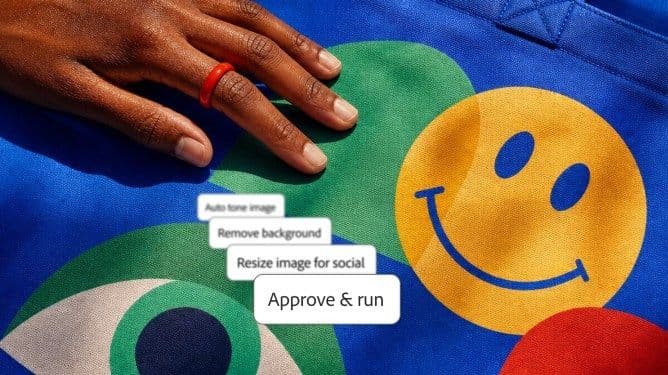
Adobe is pouring more AI into its products, including Photoshop, Premiere, Illustrator, and InDesign, in a major product feature announcement at its MAX event in Miami. The company is also expanding AI capabilities in its creative tool, Firefly, and releasing a Model Context Protocol (MCP) that lets other chatbots like ChatGPT, Claude, or Gemini use Adobe features. Adobe’s Firefly app is moving into Figma’s territory with a new prototyping tool in private beta called Builder, which lets users create designs to show off ideas. There is also a new tool to create on-brand graphs, along with an image editing tool that lets you change part of an image without changing other objects. A new AI-powered video tool in Firefly will allow users to assemble a video from clips and other elements like images and sound effects. The company is making its agent proactive and always on so that it can get more context about work and be present for any action. Adobe is also making it easier for people to take quick action, like removing the background or generating a thumbnail for a video. The company has already added a ton of AI features across its apps like Photoshop, Express,Premiere, and Illustrator. At the MAX event, Adobe is continuing the trend. Photoshop is getting a new relighting feature and sliders for prompt-based generative styles; Premiere will have a new color grading system for professionals and an object removal feature for video; and Lightroom has a way to correct blinking eyes and a blemish removal tool. Adobe already offers a lot of third-party models from companies like Google, Runway, ElevenLabs, Black Forest Labs, OpenAI, Kling, and ByteDance.One of its newer acquisitions, Topaz Labs, is releasing two image models, called Wonder 4 for upscaling and denoising, and ImageHDR, to turn standard images into HDR. The company already has ChatGPT and Claude integrations to let users access some of its product functions. Now, Adobe is releasing a local MCP to expose more features of its Creative Cloud apps to users. Adobe vice president Deepa Subramaniam told TechCrunch that the company is still figuring out what capabilities to expose and will rely on user feedback. “We are still figuring out where and when and how to draw the line. What we’re putting out there is a number of endpoints and capabilities across Illustrator, Photoshop, After Effects, and Premiere. We’re just going to see how people use it, what they’re trying to do, and keep showing more. We don’t have any need or desire to sort of limit what the MCP endpoint can expose. What we really want to do is to support that creative workflow, how you choose to do it,” said Subramaniam. Last month, Adobe rival Figma co-founder Dylan Field said at an event in India thatMCP is not a perfect standard and benefits frontier labs more.
View
View
View
View
View
View