🚀 Zaprep: Your Socials on Steroids. Start free — automate 1,000 DMs/month & turn engagement into leads. with 1,000 automated DMs/month.
Submit your Tool
PoweredByAI.app is an AI Tools Directory helping individuals, businesses, and creators discover the best AI tools for writing, coding, design, productivity, and more.
© 2026 , Product of011BQ. All rights reserved.

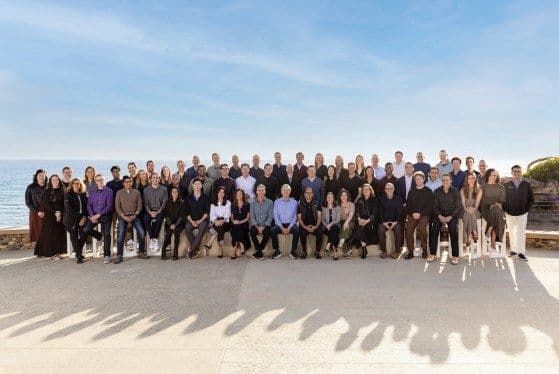
Norwest, a firm backed solely by Wells Fargo, has raised a $4 billion fund as it sets out to invest more in AI. This is the eighteenth fund for the 65-year-old multi-stage investment firm, and its largest to date. The fund will be invested across various sectors and multiple countries, notably the United States, India, and Israel. But the big story here is AI, and Norwest’s plans to expand its investment in this area. Norwest said Thursday it aims to capitalize on AI startups developing products and services across core industries such as consumer, healthcare, and technology. The investment firm, which has backed Plaid, Spotify, Uber, and Vuori, said it will continue to expand its investments in physical AI, voice AI, agentic cybersecurity, and aerospace. If that sounds like a broad approach, it is intended to be, Jeff Crowe, a senior managing partner at Norwest, told TechCrunch. “We’re taking a broad approach to AI because its impact is broad,” Crowe added, as AI is not limited by industry, geography, or application. “Just as digital transformation did, AI transformation has the potential to touch most layers of enterprise, consumer, and healthcare solutions: networking, enterprise IT and applications. Adapting to an agentic environment means applying AI broadly across products and services that solve problems.” Crowe added that the firm is particularly excited about early-stage companies building AI-native application and infrastructure, physical AI, domain-specific models, and cybersecurity solutions. Some of the firm’s recent investments reflect this strategy. For instance, the firm invested in Coval, which builds tools to test and evaluate AI agents, and Generalist AI, a startup that has developed AI foundation models for robots. Since the launch of its seventeenth fund, a$3 billionraise that closed in 2024, the firm has made more than 87 investments.
View

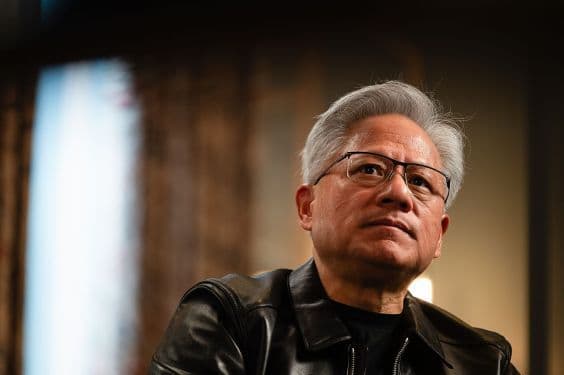
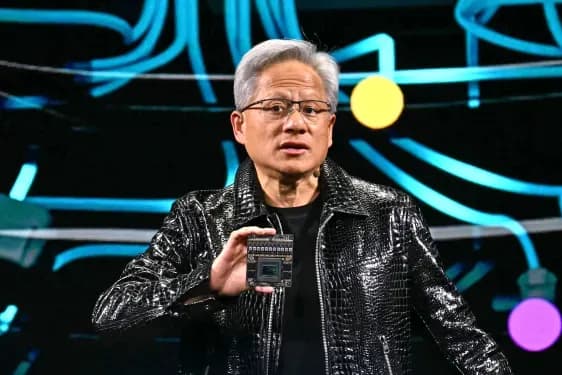
The Nvidia Board of Directorsannouncedon Thursday morning that the company’s co-founder and CEO of 33 years, Jensen Huang, has resigned as president, CEO, and member of the board, effective immediately. This is a shocking twist for one of the most valuable companies in the world, which designs the chips that make the AI boom possible. Few people would have predicted this turn of events even just a week ago, as Huang has been so central to Nvidia throughout the company’s existence that he never even established asuccession plan. But Huang has now been ousted afterreports that he had affairswith both an alleged Chinese spy and one of his direct reports at Nvidia. While the company conducts a more thorough search for Huang’s successor, Nvidia CFO and Executive Vice President Colette Kress has taken over as interim CEO. But beyond her name and job title, what do we know about the person who will now lead a company worth about $3.8 trillion? According toNvidia’s website, Kress has worked at the company since September 2013. Before that, she spent three years as an SVP and CFO of Cisco’s Business Technology Operations Finance organization. She also worked at Microsoft for 13 years, where she spent four years as CFO of the Server and Tools division. She holds a finance degree from the University of Arizona and an MBA from Southern Methodist University. The California-based 59-year-old has a very limited social media presence — onLinkedin, she has commented some well wishes on former colleagues’ posts about their retirement. But as CFO, she’s been a regular presence on Nvidia’s earnings calls, making her a familiar figure for analysts covering the company. According to Forbes’ list of America’s Richest Self-Made Women, Kress’ net worth is estimated to be about $1.2 billion. HerForbes profileadds that she initially joined Nvidia in part because her two sons endorsed the company for its role in the video game industry, which it was best known for at the time. “Nvidias strength has always come from its people, and together with our leadership team, I am committed to building on the extraordinary foundation Jensen created over the last 33 years,” Kress said in astatement. “We will continue advancing the work that has made Nvidia a leader in accelerated computing and AI, and execute on the opportunities ahead. Our focus remains on serving our customers, partners, developers and shareholders.” Nvidia is slated to report its quarterly earnings on Tuesday, when we will likely hear more from Kress about her plans for the company’s immediate future.

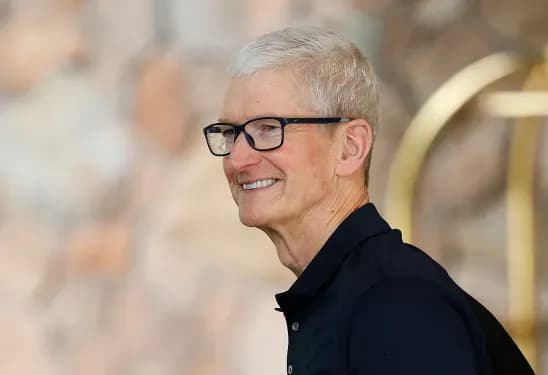
In the wake of the industry-shaking news ofNvidia CEO Jensen Huang’s resignationon Thursday, U.S. President Donald Trump is floating the idea that former Apple CEO Tim Cook should take over the position. In aposton Truth Social, Trump wrote that “only one man” could take Huang’s place: Tim Cook of Apple. “A Legend replaces a Legend!,” he wrote. Cook stepped down as Apple’s CEO on September 1, 2026, after15 years running the company, but he’s still very much involved with Apple. WhileJohn Ternus took over as Apple’s CEO,Cook transitioned into the role of Executive Chairman of Apple’s board of directors, which sees him continuing to engage with global policymakers and manage international relationships, including Apple’s relations with China. Trump is not the only one to suggest Cook as a replacement for Huang.Jeffrey Sonnenfeld, Senior Associate Dean for Leadership Studies at Yale School of Management, who studies CEO leadership and corporate governance, pennedan op-ed in Time on Wednesday, suggestingCook should be among the potential candidates. He wrote that Cook has “an unparalleled track record of succeeding a bigger-than-life founder,” in reference to Cook taking over from Apple founder Steve Jobs. Whether or not Trump agrees with this opinion, or is simply blasting off an idea that hopped into his mind, is anyone’s guess. “Tim Nvidia,” however, doesn’t quite have the same ringas “Tim Apple” does.
View

Nvidia CEO Jensen Huang’s confession that he had an affair (and reports ofanother one with a direct report) thatled the board to oust himon Thursday isn’t just your run-of-the-mill salacious billionaire CEO sex scandal. In this case, one of his lovers is suspected by theU.S. government of being a spy for China. She’s also an executive of a Singapore-based neocloud that is suspected of smuggling Nvidia chips to China. These affairs show undeniably poor judgment by Huang and, I’d argue, unchecked hubris on many levels. Such choices are not only a betrayal of his wife of 40 years, they’re also a liability for his company. Sleeping with any Nvidia partner is bad enough, but he also chose one in a tinderbox of a geopolitical situation. Even if Alice Huang’s company wasn’t suspected of helping Chinese firms evade chip restrictions (and he was somehow unaware of this), it was still exploiting a legal loophole by renting out powerful AI infrastructure to Chinese companies. It’s those potential national consequences that may land him in a hellscape of ongoing public humiliation. Republican committee chairs are alreadysummoning him to testifyin closed-door sessions about the security ramifications. Will Democrats, who are set to take over key committees when the new Congress convenes in January, also haul him in to testify on the Hill? No one knows yet, but Huang has flaunted his close relationship with President Trump. Remember when Trump called him while he wason stage at the All-In Summitin September? Nvidia also donated $25 million to Trump’s ballroom, adeeply unpopular projectwith American voters. Several Democratic lawmakers have alreadyvowed to investigatethe money behind it. In other words, he is a billionaire close to Trump. He was — until Thursday — the face of AI and data centers (also a deeply unpopular political topic with voters), and he has publicly admitted to having an affair with an alleged Chinese spy. Even though he’s no longer CEO, that seems too juicy a target for Democrats to ignore. Beyond whatever may be coming, Huang’s influence has been lost right when he was using it to push the tech industry in a number of directions. These areas have now lost their biggest champion. Huang has been the biggest, loudest advocate for open weight AI models in the tech industry and among government policymakers. Nvidia not only offers its own open-weight models, it also offers a lot of other open source tech for agents, AI security and more. It has even agreed toacquirethe biggest site that hosts them, Hugging Face, for $12.9 billion. (That deal is supposed to close in the first half of next year, pending regulatory approval.) In July, when Anthropic and OpenAI were reportedly urging the Trump Administration to ban Chinese open-weight models, Huangorganized a letter of supportfor open-weight models generally (if not Chinese models specifically), signed by hundreds of tech companies. Open-weight models give enterprises choice in the market and reduce costs. Without Huang, the next biggest advocate for them is perhaps Microsoft’s Satya Nadella, but he’s not out there organizing the industry to speak up. Both OpenAI and Anthropic revealed incident after incident this year as their AI agents hacked into others’ networks or performed other misdeeds. Huang loudly proclaimed the AI industry still didn’t need regulation and would deal with safety itself. As the industry mulled over what they should do (auditors? a FINRA-like board?), Huang rallied the tech industry again. Nvidia got over100 companies to sign on to his Open Agent Safety Platform,a largely open-source effort to solve the epidemic of misbehaving AI agents. Naturally, this efforthasn’t instantly solved the problem, and now the top spokesperson for self-regulation via technology solutions is out of his position of influence. Huang has also been among the loudest voicesinsisting that AI is an engineered systemthat creates products, and so can be controlled like any other engineered system. This viewpoint counters the AI doomers and even the big AI labs themselves, which sometimes position their models as on the verge ofconsciousness (Anthropic)or asalien minds (OpenAI). While Huang deals with the fallout of his actions, the loudest voice of this counter-narrative is, for the foreseeable future, silenced. Huang also just convinced a long list of PC makers to buy into his long-time dream of providing CPUs (the main processor chips) for them. In this age, when most Americans have not experienced AI beyond a chatbot,he orchestrated a new line of high-end AI PCsgeared for running agents locally. These new PCs are due out this holiday season, and they may sell well for their intended targets: creators, developers, and others already savvy with agents. But now that Huanghas become a meme for cheatingon his wife with an alleged spy, he’s perhaps not the best choice to help market these devices as a cool alternative to the Mac mini. Huang demolished his reputation right as bond underwriters (lenders) and bond buyers are pretty much over AI build-out related debt. Of roughly $80 billion in data center bonds issued this year, nearly half were rated high-risk “junk,”Forbes reports. Undeterred, Huang has been coming up with ways to continue financing the boom and keep his company’s revenues growing. Certainly, he’s authorized a mind-boggling number of so-called circular deals, where Nvidia buys stakes in companies to fund their expansion so they can buy chips. By some accounts, the company had committed to $750 billion in such deals as of July,Bloomberg reported.In August, Nvidia got even bolder, agreeing tobackstop $105 billion in financing for an OpenAI data center in Ohio,CNBC reported. Huang also convinced a whole new set of financiers to pony up. In August, he announced that deep-pocketed PE firms Apollo, BlackRock, Blackstone, Brookfield, Goldman Sachs and KKRhad committed up to $500 billion for data center build outs. He promised them that the data centers’ Nvidia GPUs could be used as collateral because Nvidia was guaranteeing the chips would retain value. Huang sold a vision of Nvidia as “investable infrastructure” with a long resale cycle, like airplanes. Then he made the rounds with the financial press, as he often did, to pitch his vision. Now, however, Wall Street is concerned that Nvidia’s stock will crash andtake their portfolios, and possibly the economy, with it. Nvidia has lost its top salesperson and the AI industry has lost its top hype man. Even if Huang somehow comes back into the public eye to champion AI again, every interview and meeting will be about his sex life, choices, and national security — not his vision for the industry. We’ll have to wait and see how Nvidia navigates the scandal Huang heaped onto it, but now that the company is finally in its post “founder mode” era, and hunting for a new CEO, it’s doubtful it has the cache to push the industry the way Huang was.

Ex-Nvidia CEOJensen Huanghas agreed to testify before Congress, House Foreign Affairs Committee Chairman Brian Mast said on Thursday, according to reports fromBloombergandNBC News. Huang, who stepped down as CEO following reports of an alleged affair with a woman suspected of spying for China, agreed to testify Wednesday after several senior lawmakers threatened to subpoena him. Huang has agreed to testify before Congress by Thanksgiving, which falls later this month. The development comes after House Republicans Mast, John Moolenaar, and Rick Crawford sent Huang a letter on November 4 requesting thathe appear before their committees. Moolenaar chairs the House Select Committee on the Chinese Communist Party, Mast chairs the House Committee on Foreign Affairs, and Crawford chairs the House Intelligence Committee. “Jensen and I have been very at odds as some of you already know on export controls, but Nvidia is a very important company to the United States of America,” Mast said to reporters. “I don’t want to see anything hurt in Nvidia, but he has some very serious questions to answer.” The testimony will take place behind closed doors, though Mast said he expects the briefing to be recorded on video and transcribed.
View

Anew iOS appcalledPhota Labsgives users access to a personal AI photo assistant that turns everyday snapshots into images that look like they were taken by a professional photographer, all while preserving the authenticity of the image. Rather than giving consumers yet another photo-editing tool, Phota Labs aims to use advances in AI to automate the editing process so it’s easier for anyone to get access to better photos. The a16z-backed startup was founded by Cecilia Zhang and Zach Xia, who met at Adobe while working on computational photography products, including Project Indigo, Lightroom, and Photoshop. The duo saw a gap in the editing tools on the market and believed that although editing tools can be powerful for enhancing photos, they aren’t very effective at fixing a photo that wasn’t captured well in the first place. Phota Labs changes that by focusing on fixing the shot itself while preserving the natural appearances of those in the image. “Phota is your personal photo assistant that can make great photos for any moment you want to keep before you even ask, which means that it’s a very proactive experience,” Zhang told TechCrunch in an interview. “Think of it almost like a photographer or virtual photographer who looks over your camera roll and tries to understand what’s happening and how they could have taken that photo for you on the spot for that scene.” The idea is to use AI to transform photos, whether that’s turning a wide-angle group photo into a tighter portrait or transforming a selfie into a regular shot. Users can choose from different photography styles that determine how AI transforms their images, ranging from subtle edits that preserve the original lens and composition to more dramatic transformations that introduce effects like fisheye lenses, alternative angles, and entirely different perspectives. While some people turn to ChatGPT and other generative AI tools to enhance or edit images, these tools can often alter a person’s appearance, especially when working with blurry photos because they don’t know what that person actually looks like. “For Phota, we built our own tech,” Zhang said. ”We built this personalization technology that actually learns about people’s identity and is able to preserve them in any transformation we do to a photo.” Images edited with Phota Labs feature invisible watermarks that identify them as altered by AI when shared on social platforms. The startup is initially targeting people who take tons of photos and like to share them on social media, but don’t want to deal with the tedious process of editing photos. Over time, the founders envision a broader audience, from retirees looking to create beautiful photos for their grandchildren to parents who want to share polished family albums with friends and relatives. “We have this obsession with authenticity,” Xia said. “I think there’s so much value in connecting AI with real moments and making sure those photos are not perfect, in a sense. That’s why we spend a lot of research into understanding personal context, into building this identity model because we want to make sure the photos are authentic. They’re just better photos of the same moment, rather than saying, ‘Oh, this is an AI image’.” Xia said beta users were excited to see better versions of moments they had actually lived and saw the results as photos of real memories rather than AI-generated images. The founders found that users were taking more photos because they knew Phota Labs could enhance them later. “We’re turning something that’s unusable into something that people want to print,” Zhang said. “People who just love photos but never really got into editing can now experience professional quality that could never have been possible. So, I think that meant so much to us. There’s so many cherished moments for photos, and we really want them to be actually meaningful and something that you can remember.” In terms of funding, the company raised a $5.6 million seed round led by a16z last year. Phota Labs is launching as afree appto build an initial user base before exploring a freemium model. The startup also plans to launch an Android app in the future.

SoftBank might not be the first to invest in a hot trend, but when it does, it goes big. Witness its $30 billion bet on OpenAIin early 2025or its announcement in February that its SB Energy subsidiary would spend $33 billion on a 9.2-gigawatt natural gas power plant. If you can’t be first, be biggest, I guess. That philosophy apparently spilled over into procurement, where orders were also supersized. Starting about two years ago, SoftBankreportedlyput down deposits on more than 13 gigawatts of turbines, almost 50% more than it needed. The decision to over-order undoubtedly helped secure turbines and speed up SoftBank’s projects. “SB Energy did not have a choice except to overbook turbines in the future if they wanted some turbines right away,” Peter Gardett, CEO ofNoreva, told TechCrunch via email. The energy world was caught off guard by the swiftness and magnitude of AI’s rising power demands. Queues for turbine orders now extendinto the early 2030s. As natural gas was shaping up to be a go-to power source for the AI boom, CEO Masayoshi Son bet that by deploying his investment firm’s significant war chest, he could corner a portion of the market. If the AI world wanted power for its data centers, it would have to come to him. Now, that bet appears to have fizzled. SoftBank announced a$7.1 billion quarterly losson Tuesday, with over half of that stemming from losses related to power-generating equipment. The investor had paid turbine manufacturers nonrefundable deposits to secure orders, and now it considered much of those worthless. The move was also a costly bit of price discovery, Gardett said. Rather than overpay and potentially still be short of turbines, SoftBank overpaid and over-ordered. “This charge is just that price discovery finally happening,” Gardett said. The magnitude of that misplaced bet — over $3 billion — reflects some of the electricity mania that has overtaken the AI world. Faced with years-long waits to connect to the grid, many hyperscalers and developers have turned to natural gas as a sort of energy security blanket, something that is proven and familiar. As AI data centers spend more time in operation, their operators are getting a better feel for what’s required to keep them operating. Natural gas might seem like a safe bet, but there are still risks, including winter curtailments when supplies dip and demand spikes, Brent Nelson, senior managing director of markets and strategy atAscend Analytics, told theEquity podcastWednesday. In light of that, Nelson said the grid might still be their best bet. Most data centers would be best served by a grid connection, albeit a smaller one than they might normally request. To make up for the shortfall, large batteries are a cost-effective choice, Nelson said. They’d help shave peak loads or ride out requests from the utility to curtail electricity use. Data center operators might be coming to that same conclusion, leading the natural gas market to develop more slowly than SoftBank expected. SoftBank’s natural gas-related losses are unlikely to have a domino effect, leading to mass cancellations of gas power plants. AI’s power demand appears to be too large for that. For now, natural gas is riding high, though SoftBank may have found its ceiling.

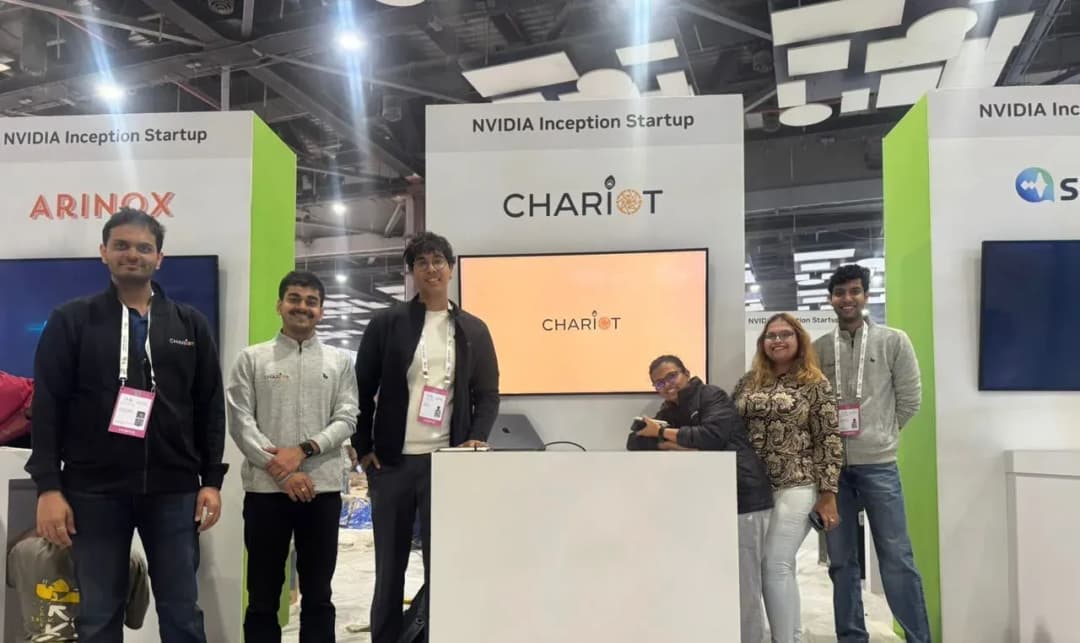
Chariot-1-TTS-Multilingual supports code-mixing, instant voice cloning and contextual speech generation, as the IndiaAI Mission-backed startup develops speech models for multilingual applications.
View

Netweb is betting on AI infrastructure, with new initiatives spanning agent security, GPU optimisation, and sovereign computing.
View

LTM's AI-QEM technology uses classical post-processing to address device-specific errors, with tests involving quantum circuits of more than 100 qubits.
View

Exponentia.ai has been certified as a "Best Firm for Data Scientists" by Analytics India Magazine (AIM), reflecting its commitment to fostering strong workplace culture, cutting-edge agentic AI work, and measurable business outcomes for enterprises.
View

LatentView Analytics has been certified as a Best Firm for Data Engineers by Analytics India Magazine based on internal employee feedback. The recognition highlights the firm's focus on cloud-native architecture, enterprise AI enablement, and a supportive engineering culture.
View
View
View
View
View