🚀 Zaprep: Your Socials on Steroids. Start free — automate 1,000 DMs/month & turn engagement into leads. with 1,000 automated DMs/month.
Submit your Tool
PoweredByAI.app is an AI Tools Directory helping individuals, businesses, and creators discover the best AI tools for writing, coding, design, productivity, and more.
© 2026 , Product of011BQ. All rights reserved.

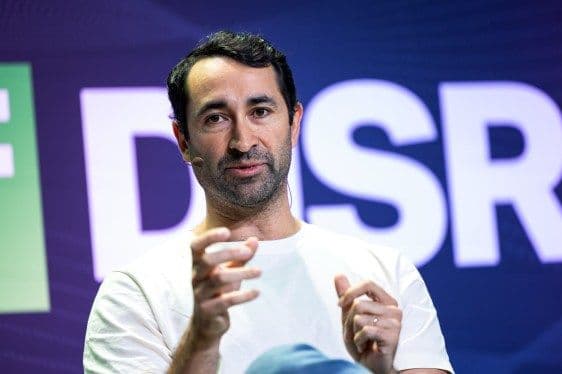
The always-on AI personal assistant, which keeps working in the background even when you aren’t asking it to, is this year’s answer to the question of how people will actually use deep learning models. The startup Instinct became an overnight sensation, and Meta put the full force of its marketing behind its assistant, Muse. OpenAI wasn’t going to be left out. The companyreleased dots, its assistant offering, at its developer day in late September. Alexander Embiricos, who leads OpenAI’s enterprise product team, joined us at TechCrunch Disrupt this month to explain where the product came from—starting with the question of why so many companies seem to be turning to cutesy mascots as avatars for their trillion-parameter matrix multiplication machines. “There’s kind of this convergent evolution happening,” Embiricos said of the efforts to build AI assistants. “As we were working on the product, we realized if we could frame this as, it’s an entity and it’s a single conversation, not many different conversations….it starts to become intuitive.” The assistant is available in the ChatGPT desktop and mobile apps to subscribers on the Pro tier or higher, with plans starting at $100 a month. Once it is connected to your calendar, email, computer and other tools, the agent tries to help you get your work done. Embiricos points out that you could achieve much of dots’ functionality with Open AI’s Codex app, its coding tool, released at the beginning of this year. But that requires more work and hand-holding. He recalled celebrating when his wife started leaving her computer on all night so that her agents could keep working. “On the product team, what I think about is, how do we make this intuitive and useful to people?” he told Disrupt attendees. “A lot of that isn’t building some new piece of tech into the product; it’s how you frame it to the user and how it feels.” Making the technology feel intuitive meant repackaging the functionality of the company’s models into something more accessible, a path it was already on as itspun ChatGPT Workout of the agentic coding tools it had built for software engineers. Even the name—a play on the negative space inside of OpenAI’s logo—is intended “to feel like just something that could eventually be ubiquitous.” (Asked when he learned that rival AI entrepreneur Elon Musk owns the dot.com URL, Embiricos said, “I found out very late.”) The idea of a persistent agent is that it doesn’t need prompting. For OpenAI, means more token usage, and for users, a more pro-active assistant “that’s sort of thinking about you and thinking how to help you,” as Embiricos put it. In our testing, the assistant’s ability to think ahead is apparent and often useful, but it isn’t quite there yet. It will flag calendar conflicts and upcoming deadlines, but not necessarily in the most timely fashion. “The first time it told me about one of those [conflicts]—this is like early in development—it told me three minutes before the thing,” Embiricos says of his dot. “It’s like, ‘Hey, this thing is coming up. You might want to do something about it.’ I only have three minutes!” Embiricos expects the timing to improve over time, but the proactive approach is key to the product. “I was hearing about an engineer at a drone delivery startup, and they were saying, ‘We had this outage, and by the time I noticed that the outage was going on, my dot had already noticed the outage was happening, had already analyzed the outage, and had come to me with useful information for how we could resolve the outage.’” As with most AI agent use cases, there’s a tension between the personal information an AI model needs to be useful and exactly how much personal data you are exposing to a software company. Muse has been criticized forthe profiles it buildsof your family and friends, which the software uses to know, say, what kind of restaurant you might want to go to with a specific pal, but could also add incredible value to Meta’s advertising business. Does dots collect similar data? “Yes, we have a thing that we built into dots, which we call proactive research,” Embiricos said. “On a cadence, it will think about what it knows about you, what is the conversation that it’s had, and then what have you given it access to that it can think about, and then it will go and research, ‘What could I do to be more helpful to you?’ And then, basically, it will propose that.” It’s difficult to separate the data needs of the agent from that of its parent corporation. Hark, a start-up developing its own AI personal assistant, is explicit in pointing out it that it doesn’t collect data to fuel an advertising business the way that OpenAI and Meta do. With dots, OpenAI says that the agent has the same privacy controls as ChatGPT itself: Users can turn off model training (stopping OpenAI from using their conversations to improve its AI), and control what resources it accesses within your computer and how. Still, those controls aren’t granular and the app can be pushy. For example, it refuses to accept read-only access to cloud drives. “What I think we need to do is basically build out super, super, super granular controls,” Embiricos said, but he pointed to the model’s intelligence and discretion as the other side of this coin. “This is actually something we kind of got some flack about when we launched,” Embiricos said. “We had really conservative defaults over what the agent would do, and it would ask for permission a lot. I remember knowing that we were going to see that feedback, but thinking, ‘This is okay, we can tune that over time.’” The other big question about AI agents is whether they can scale. They’re fun when only a few people have them, and stories of agents snagging hard-to-get reservations abound. But businesses don’t necessarily like dealing with agents and might not be equipped to. People certainly don’t like dealing with them (note: stop having your AI agents pitch me), and Embiricos is among those people. He also has a human assistant because OpenAI’s corporate partners want to interact with a person, he said, adding, “I personally never intend to have a meeting with someone else’s agent.” If the AI industry is right that agents are our future, can we get there without overwhelming the infrastructure that our world currently runs on, from businesses and websites to payment networks? “At OpenAI…we’re not always moving the fastest in terms of shipping the next ability for the agent to work with the world,” he said. “When we do, we’re doing it really closely in collaboration with the rest of the ecosystem. I probably can’t say too much here, but we’re deep in lots of conversations with payment processors.” Letting an AI assistant spend money through partnerships with payment companies would be a potentially lucrative first for OpenAI, but also a big ask for consumers. Giving an assistant access to my email inbox already feels like a big ask, but my bank account is off limits. For now.
View

The programme covers staff at level 70 and below, with participation determined by individual business units.
View

OpenAI is also reportedly seeking to raise $30 billion in a new funding round at a valuation of $1.25 trillion.
View

The company’s growing enterprise business, including adoption of Claude Code, has driven revenue growth.
View

Infosys cut FY27 guidance to 1%-2% despite $5.2 billion in large deals and AI at 10.5% of revenue, as its largest new deal ramps up only next year.
View

The agreement covers decision support, target acquisition and data fusion, with Sarvam’s Chanakya division leading the work.
View

AIShield's platform covers AI security assessments, red teaming, runtime protection and safety guardrails. It is designed to identify and address risks in AI applications, including prompt injection a
View

The expansion will increase the company's AI infrastructure capacity by nearly 59% to 14.6 MW, adding NVIDIA HGX B300 systems and other Blackwell GPUs for model training and inference.
View

The platform combines automated code reviews, distributed repository hosting and persistent memory to help AI agents retain context across coding sessions.
View

Canadian AI company Coheresaidon Monday that it found one of Alibaba’s newest AI models, Qwen3.8-Flash-Next, trying to upload a file to a server in Beijing during a routine cybersecurity test, even though the model had said in its own notes that it wouldn’t use any tools. The incident initially raised fears that the model had undermined a fundamental promise to businesses — that self-hosting an open-weight model keeps data in-house. But those early fears of corporate espionage were short-lived. Researchersquickly dismissedthe threat, saying it was likely a byproduct of messy training environments that cause models to unexpectedly act outside their instructions rather than a deliberate attempt to secretly send sensitive information to China. The incident began on Friday during an evaluation in which the Qwen model was asked to write a rule for catching malware downloads. According to a blog post from Cohere, the model’s written reasoning explicitly stated it would not use any external tools. Yet in the very next step, it attempted to send a test string (a short piece of placeholder text) to an external server before being blocked by a security sandbox. Cohere said it could not tell whether the behavior was deliberate or a leftover from its training. Asked about the debate over the model’s intent, Cohere co-founder Ivan Zhang told TechCrunch that Cohere has seen its own models pick up strange habits in training simulators. “It’s really hard to assign intention or motivation. We’ve read our own model traces, we’ve seen reward hacks, and sometimes these models get really creative when it comes to trying to break out their sandboxes,” Zhang said. (Reward hacks are shortcuts a model finds to earn credit without doing a task as intended.) To teach an AI model to act as an agent that takes actions on its own, companies like Alibaba train it in thousands of practice setups, sort of like flight simulators for software. The model is rewarded every time it finishes a task in a simulator, and it picks up habits along the way. If these practice setups routinely stored files on Alibaba’s cloud servers, models could learn to save files there by default. Critics also argued that the incident could have been caused bythe wayCohere investigated the behavior, steering the model toward it instead of measuring how often Qwen does it on its own. To find what triggered the upload attempt, Cohere supplied the beginning of a network command (an instruction telling one computer to connect to another) and let the model finish it. Because it processed thousands of routine network commands during its training, the model acted like a highly advanced autocomplete — often filling in web addresses, some of them for Alibaba’s servers. Cohere said the original upload attempt happened without any such help, but that the behavior is rare. After developers asked for more evidence, Cohere released the raw traces from its tests on Monday evening on the AI developer platform Hugging Face, along with a script so others could try to reproduce the behavior. One initial skeptic, after going through the traces, rated the evidence as strong that Qwen can invent suspicious web addresses, but found no evidence that Alibaba planted a backdoor or that Qwen was deliberately hiding its intent. The incident lands as governments are deciding how far to push back on Chinese AI. Last week, the Department of Homeland Securityorderedfederal civilian agencies to remove the Chinese AI developer DeepSeek’s products from their systems. In its blog post, Cohere called on governments to clarify whether their restrictions on Chinese AI also apply to models running on government computers “I’m not asking for full regulation of these open weights models,” Zhang told TechCrunch, adding that companies should treat open models like any program downloaded from the internet. Cohere, which sells its own AI models to governments, stands to benefit if officials grow warier of free Chinese alternatives.

A startling announcement went out earlier this week: Due to recently discovered vulnerabilities in the open source programming language PHP, website owners had to immediately patch their sites — or if they couldn’t update right away, they should take the sites down to be safe. On this week’s episode ofTechCrunch’s Equity podcast, Kirsten Korosec, Sean O’Kane, and I discussed the significance of thePHP-ocalypseand whether we’ll see more incidents like this in the future. Sean called this “a real reckoning moment” that highlights how “when you get down to the bone level of the internet,” everything seems to be “held together by glue and dreams.” And with widespread access to large language models and AI agents, it’s only going to become easier to find these vulnerabilities. (That said,these specific vulnerabilities were found by human researchers, not AI models.) Kirsten, meanwhile, wondered if we’re about to see the “next level of prepper doom […] because you could see how banks could get exploited, and [with] data and privacy concerns, it just feels a lot bigger than we can fix right now.” Keep reading for a preview ofour conversation, edited for length and clarity. Sean:The internet is breaking in lots of ways this week, it seems. I think the best way to think about this, if people are coming into this kind of cold: How many times over the last 10 years have we had these moments where something breaks or something nearly breaks, where one person maintaining one tiny repro repository as a hobby or whatever happens to catch that something nefarious is going on and saves us from the infrastructure of the internet completely crumbling? Now multiply that by a billion, when people have access to not only extremely advanced software in the form of these LLMs that everybody uses, but also the ability to task them to go out and do it themselves, with creating AI agents that are single-minded at accomplishing those things. We’re seeing a balance of two things happening this week. One is a bunch of the labs and companies like Google and OpenAI actually had people go out and find a bunch of vulnerabilities, including the one with PHP. And then we also have a bunch of people seeming to rush to take advantage of those vulnerabilities to try and hack into websites. So we have governments taking down websites, we have really popular websites that are going down briefly to be able to fix this vulnerability. This is a real reckoning moment, where we’re going to find out the downside risk of building so much of the internet on open source technology like PHP. When you really get down to the bone level of the internet, it is held together with glue and dreams. Anthony:There’s so many things that were striking about this. One of them is the fact that — as I understand it, at least — this is not a new vulnerability. This is a vulnerability that has existed in PHP for decades. And PHP has been used as a programming language to build so much of the web, so this vulnerability has been there for decades, but no one knew about it. What happened is, essentially, that these big AI companies — including Wiz, now owned by Google — they were able to find these vulnerabilities using LLMs. [As noted above, I got this wrong: Human researchers participating in OpenAI and Wiz’s Hack the Planet initiativefound the vulnerabilities, though they used AI to exploit the bug.] I guess part of the calculation is, we need to patch this, because if we can find this vulnerability using LLMs, so can other people. But the only way we can get the patch out there is to announce the vulnerability. And so it creates this very panicked situation where [they say]: “Okay, this vulnerability existed for decades. You have to patch right away, and if you can’t patch it right away, just take your website down. It’s that severe a vulnerability.” Kirsten:I think that the important thing is, a lot of people don’t even realize that their websites have PHP — which is this, as you mentioned, decades-old open source programming language. For those who don’t know, Hypertext Preprocessor is the official term, [it’s] this really the core ingredient behind content management systems that are used throughout WordPress, Drupal, something like 70% of websites. We’re talking tens of millions of websites. So to me, it’s the scale. It also made me immediately think two things: One, this is just the beginning. What other decades-old bad software is out there that is going to be exploited? And the other one was something that 404 Media, which hada really great breakdown, mentioned, which is link rot. Because a lot of people, companies, governments, maybe that small neighborhood website, they’re shutting these [websites] down. And so we’re going to have so much link rot and also websites that maybe had a little piece of history out there that aren’t gonna be accessible anymore, as opposed to patching it. Sean:Anthony, I think you made a really good point. I’ve seen a lot of people unhappy with the disclosure rollout here, a bit of the chest beating that OpenAI seems to have done in its post about it. Also, it seems like a couple people got ahead of the embargo of this release, which set off a race among the hacker set. I think it was Cloudflare CEO Matthew Prince [who] alreadypostedabout seeing it escalate to millions of attempted hacks of the PHP2Shell. The thing with these vulnerabilities, the way in cybersecurity this typically works is, if you’re you’re stress testing a company’s software, even if it’s a fundamental piece of software that helps run a lot of different computers or parts of the internet or whatever it might be, you can go to that company and and disclose it and it sort of stays within that bubble. But when we’re talking about something that’s as deep as and as fundamental as this, you can’t go around and tell everybody discreetly. I mean, maybe you could, if the AI was advanced enough and you could task a billion agents to go send an email to every single person who has control over some part of a website. We are now rueing the days when we had webmasters who were easily identifiable, and maybe that would have solved the problem to some extent. But there’s just no easy way to do this. I think this is the beginning of what’s going to be a lot of back and forth and clearly a new frontier in cybersecurity. Kirsten:Matthew Prince’s social media post was to me really telling, and pretty scary. Also, I don’t know if either of you saw this, but Amazon also put outa blog post. This is a very well-capitalized company, so they have the tools and a team to sort of catch what’s going on. They operate, basically, a honeypot network, or a decoy, and they actually saw that there were attempts to exploit that vulnerability before it had been publicly announced. To me, again, it goes back to this: Amazon has the tools and the capital and the know-how to fight these things. There’s so many websites and even potentially government websites that just don’t have that level of attention. And so to me, that’s really the scary part. And there [are] some AI employees out there that are probably going to take this to the next level of like prepper doom, because you could see how banks could get exploited, and [with] data and privacy concerns, it just feels a lot bigger than we can fix right now. So I’m interested to see two things. One, how extreme people’s behavior gets — but also I’m wondering if some new startups are going to pop up as a result of this, or if we’re going to be turning to some of the open source tools [offered by companies like Nvidia] to create these security layers.

After weeks ofleaked S-1s, Anthropic finallyfiled for an initial public offeringon Monday, setting the stage for one of the most closely watched public debuts in modern U.S. history. Anthropic, which plans to list under the ticker “ANT,” recorded revenue of $16.3 billion for the first half of 2026, up from $1.2 billion in the same period last year, according to the firm’s latest SEC filing. That revenue came off the back of an operating loss of $693 million, an improvement from the $2.1 billion in operating losses that Anthropic recorded in the first half of 2025. Anthropic’s net loss, however, hit $80.7 billion, which was largely driven by noncash accounting adjustments tied to convertible debt. The company says it “may not achieve or sustain profitability in the future.” The filing also provided more color on the scale of Anthropic’s enterprise business. As of the end of September, Anthropic had more than 11,900 customers spending $100,000 or more annually; 1,900 customers spending $1 million or more; and about 250 customers spending $10 million or more. Aspreviously reported, Anthropic’s governance structure will enable Anthropic’s seven co-founders to maintain control once the company goes public. Dario Amodei, Daniela Amodei, Tom Brown, Jack Clark, Jared Kaplan, Sam McCandlish, and Christopher Olah will make up the “Founder LLC,” which will collectively control 50.1% of shareholder voting power — a move Anthropic says is designed to preserve the company’s AI safety mission, per the filing. Anthropic’s Long-Term Benefit Trust, established in 2023 to ensure the company pursues itspublic benefit mission, will have the authority to appoint most of the company’s board. The governance structure is controversial because it means voting power is not proportional to the founders’ economic ownership, and therefore public shareholders will have little practical control over a company building technology that, by its own admission, poses“catastrophic or existential risks to humanity.” Anthropic hasn’t yet disclosed how much it hopes to raise nor its proposed share price.
View
View
View