🚀 Zaprep: Your Socials on Steroids. Start free — automate 1,000 DMs/month & turn engagement into leads. with 1,000 automated DMs/month.
Submit your Tool
PoweredByAI.app is an AI Tools Directory helping individuals, businesses, and creators discover the best AI tools for writing, coding, design, productivity, and more.
© 2026 , Product of011BQ. All rights reserved.

U.S. data centers use 17 to 19 billion gallons of water to cool their hot-running chips each year — and that number is expected to triple in the next five years, according to The Water Foundation. That’s an expensive and politically tricky proposition for investors throwing billions of dollars at the challenge of scaling up AI. One way to use less water is to do a better job monitoring the cooling fluids, a task that currently involves sending samples away to a laboratory for tests in a multi-day process. Omen AI was founded in 2024 to solve that problem. The company is building a real-time sensor to determine whether valves were failing, or if bacteria growth in the system threatened to choke off water flow. After raisinga $31 million Series Ain June, Omen is now acquiring competitor Aquatic Labs in a $16 million cash-and-stock deal. The deal came together after Omen founder Zach Laberge was introduced to Aquatic Labs’ CEO Allan Adams by an investor in the filtration space. Both startups were building real-time water sensors with complementary technology: Omen’s sensors looked for elements in the water, while the Aquatic Labs sensor tests its alkalinity. Putting those two technologies in the same sensor creates a “much richer picture of the water and the fluid,” Adams told TechCrunch, while uniting their vision of automating what had previously been a slow, manual process. The combination unites two classic species of founder: Laberge dropped out of high school to pursue his first company, which did similar fluid analysis for large construction machines that depend on hydraulics. Adams was an academic, trained as a physicist, who spent much of his career developing advanced ocean sensing technology as an MIT professor and Woods Hole Oceanographic Institute researcher before starting his company. Now, with Adams as the company’s chief science officer, the combined teams are working to integrate both technologies into one sensor, which they expect to have on the market by early next year. Omen’s initial sensors will be monitoring chips pulling in 250 to 300 MW of power by the end of the year, worth about $5 to $7 billion, Laberge told TechCrunch, with the hope of being installed on the equivalent of 1 GW of chips by the end of 2027. The added value is in uptime: If the fluid system gets out of whack, data center operators typically choose to dump the water rather than risk damage to their expensive equipment. That means shutting down operations until the fluid system is restored, which costs a lot of money. Monitoring lets data center operators use the same fluid for longer, and minimize the costs of a clean up. Adams hopes to see their technologies have an impact outside of data centers as well, telling TechCrunch that “water goes into data centers, and then it comes out and gets dumped into municipal water, and you want that whole process to happen in a way that’s as safe and responsible as possible — and that means you got to measure stuff.” AI companies once estimatedas much as $4 trillion would be spent on AI infrastructureby 2030, but some investors havegrown skeptical of the buildout, sending hyperscaler stocks plummeting in recent days. Omen’s team isn’t worried about shifting sentiment though, since their work comes after a data center has been built. “We’re working customers on stuff they’re building today or have already built, and so it doesn’t really affect us because all of those projects were financed 12 months ago,” Laberge said. “Our view is, if there’s tightness, this is still going to be the biggest market in human history, even if you sliced it in half.”
View

Over Halloween weekend, some Grok Bot users awoke to something especially spooky: their weekly usage limits were unexpectedly maxed out, even if they hadn’t been using SpaceX’s agentic AI overnight. Some users reported on X that theirusagejumped from as low as50% to 100%. SpaceX CEO Elon Musk confirmed in an X post on Sunday that this was not a glitch. “The cost of serving Grok Bot was unsustainably high relative to revenue,” hewrotein a reply to a question from a user. He has not addressed the issue on his main feed, but has continued boasting that Grok Bot can help youbuy giftsfor your family. The cost of serving Grok Bot was unsustainably high relative to revenue Grok Bot has been positioned as a success story for the newly public SpaceX, which said in afilinglast month that AI now makes up 52% of company income. Its renamed “Super Intelligence” division actually turned a profit of $431 million, which is a rarity in the AI industry. Its profit would’ve beenhigherif not for $1.2 billion of one-time costs related to its acquisition ofCursor. Musk recently referred to Grok Bot as having “thefastest growthof a product that I’ve ever seen in my life.” Musk has not yet shared how subscribers’ usage limits will be impacted moving forward.
View

Here’s a question straight out of sci-fi: What if AI could predict what you were going to do before you decided to, even in a completely new situation? Israeli startup42AIsays it is developing a “behavioral world model” that can do just that, and it has just come out of stealth with $62.5 million in seed funding. The company is initially running its predictive system at a handful of financial brokerages, where it says the model can help predict how individual traders will respond to volatile conditions. “Behavior is not deterministic; it’s constantly probabilistic,” 42AI’s CEO and co-founder Amit Gal-Or told TechCrunch when I asked him to justify his company’s tall claim. He argues that people have underlying psychological tendencies that influence their decisions even when their circumstances change, and that’s what the startup is trying to measure and convert into data that the model can understand. “A week from now, you might be a different person, but your tendencies will always play out in certain areas to a probability or distribution,” his co-founder and CTO Ehud Ezra added. And that, the company argues, is what the model does: show theprobabilityof a person making a certain decision. 42AI says the model tries to figure out people’s internal motivations instead of extrapolating patterns based on their previous actions. To do that, 42AI examines how people react to seemingly unrelated events. For an investor or trader, for example, such events might include completing KYC processes, onboarding, support calls, money transfers, or trading stocks. “When the person is talking to support or sales in the initial process […] we’re looking at the sentiment, we’re looking at the voice, we’re looking at a lot of interactions that they’re doing, how many times do they call, and so forth,” added CTO and co-founder Ehud Ezra. “And all of those data points are going into the model. Later on, you have the interactions: how you buy and sell, and when, and we’re looking at the market at that stage.” “So we’re trying to look at how they’re looking at the world. In a world model, every individual is the world,” he added. The company then converts those observations into mathematical representations of traits, which are then fed into a transformer-based world model that lays out probabilities for possible decisions under different circumstances. (The company uses a separate language model to generate explanations for its predictions). Ezra said the model is trained to preserve a person’s underlying tendencies during simulations. So if someone is usually risk-averse, but the model suddenly treats them as a risk-taker, “the target is off,” he said, explaining how the model’s training rewards are structured. 42AI spent three years developing this approach, combining psychological research with neuroscience and genetics, as well as advice from experts in psychology and PTSD, and Dan Shechtman, who was awarded the 2011 Nobel Prize in Chemistry. Gal-Or said the team first studied thousands of people via psych assessments and behavioral scenarios, before adding government and biobank datasets covering more than 2 million people. Its customer datasets have since expanded to cover almost 30 million people, he said. In live deployments, the model analyzes customers’ existing records, including transactions and support calls. Gal-Or pointed out the system doesn’t need personally identifiable information, arguing that “the model never knows who the person is.” However, it seems the company still creates individual behavioral profiles from linked customer activity. In predicting market trades, 42AI claims its model achieves 98% accuracy, but Gal-Or clarified that this is more a measure of whether trading flows fall within a predicted range, not if each trade was predicted correctly. He also said the model consistently achieves an F1 score of 0.8 to 0.85 for predicting trading direction and volume. (F1 score is a metric in machine learning that measures how well a classification model can balance correct predictions against false alarms and missed events). And it’s not like the model can work everywhere, given it’s still a machine in a box. “There’s a natural ceiling because you really don’t have access to everything that a person experiences,” Gal-Or said. Ezra explained that the system’s accuracy also suffers when it misses important situational context, like if someone chooses to change their trading choices based on advice from a friend or a colleague. Gal-Or said 42AI is working with 10 large brokerages, who are using it to manage liquidity, margin requirements, and hedging exposure. The company is onboarding more customers, he said, and is generating more than “seven figures” in revenue, though he wouldn’t specify a number. Customers pay the startup a flat fee, or a percentage of the value the platform helps them gain. He claimed one brokerage generated approximately $30 million in additional value through dynamic hedging. The $62.5 million seed funding came from the founders and Infinity Group over three years, and wasn’t entirely raised from external investors, Gal-Or said. Infinity was founded by his father, Amir Gal-Or, who is also 42AI’s chairman and a co-founder. 42AI now plans to raise more money. Beyond finance, 42AI is now exploring applications for its model in gaming, fraud prevention and cybersecurity, and one day wants to use it to help robots and AI agents understand people. But that may be a ways off yet: Ezra acknowledged that the model needs to be trained on rules and context for each new domain. And like with all AI tools, there’s a potentially troubling side to 42AI’s technology: if a brokerage can anticipate what its customers may do, what’s to stop someone from using that knowledge to their own benefit? Ezra admitted that this was “a valid concern” when I raised it, and the founders pointed to regulations, monitoring and an internal ethics committee, though they didn’t explain what, if anything, would stop their customers from using the technology to gain an advantage over the very people it’s profiling. Gal-Or, however, was confident that the technology could help address such risks. “We are very proud that actually we are part of the solution; we are the solution to this problem,” he said.

The certification recognises how data science teams work across the company and global client programmes.
View

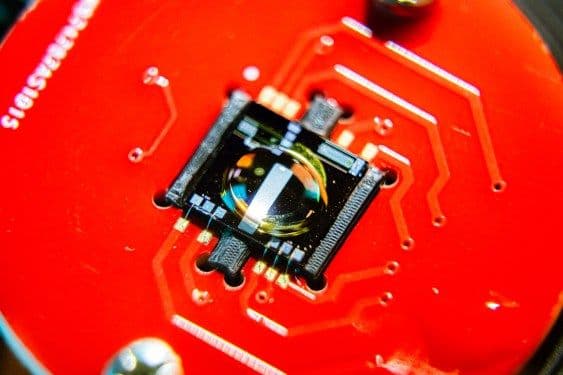
The prototype generated its first AI response using an onboard TPU, as Google prepares to test the hardware against radiation and thermal stress.
View

NeuroDX’s Sphota claims 50x greater training data efficiency and 4.5x better memory efficiency than a comparable Liquid AI model.
View

Ostara Advisors says deep-tech, energy storage and green financing will lead India's climate-tech investment in 2027.
View

The right test management solutions help teams organise testing, track execution, maintain traceability, and improve software quality across the development lifecycle.
View

ADNOC will use GPT models for operational decision-making, while Abu Dhabi is piloting AI-powered food import compliance checks.
View

Anthropic attributed the latest quarter’s operating loss of $567 million, partly to its reliance on short-term computing capacity.
View

AI tools have transformed many lives, for better or worse. The water-thirsty and energy-hungry data centres are allegedly drying up groundwater and other freshwater reserves, while also consuming copious amounts of electricity to stay powered on. Recently, OpenAI's CEO also sparked a controversy by saying that RAM sticks belong to the AI data centres, calling those powering personal devices a “waste”. This particular aspect has created a shortage of DRAM and NAND chips in the market, pushing up the prices of most consumer electronics. Now, AI is also seemingly changing the way users write. According to a report, writers are changing their writing styles, fearing false plagiarism accusations.
View

OpenAI could be working on a Google Health integration for ChatGPT on Android, which may allow users to connect their health and fitness data to the AI chatbot. The feature could help it analyse information collected through smartwatches and fitness trackers, offering insights based on users' health records. It may also be able to access historical health data and identify patterns over time. The integration has not been officially announced and is not currently available.
View
View