🚀 Zaprep: Your Socials on Steroids. Start free — automate 1,000 DMs/month & turn engagement into leads. with 1,000 automated DMs/month.
Submit your Tool
PoweredByAI.app is an AI Tools Directory helping individuals, businesses, and creators discover the best AI tools for writing, coding, design, productivity, and more.
© 2026 , Product of011BQ. All rights reserved.

While much attention has focused on the updated financials Anthropic revealedin its revised S-1Aon Monday, (revenue is soaring, but so are expenses), the AI lab dropped another little bombshell in the fine print. The filing seems to warn that the company is on the cusp of creating a model capable of recursive self-improvement (RSI). RSI is the point at which AI grows so good at training itself that it spawns a dramatic acceleration of AI capabilities. To the AI doomers, RSI represents the cataclysm from which there is no return, in which AI builds itself into something powerful enough that it slips beyond human control and may be indifferent to the damage it causes while achieving its goals. To AI enthusiasts, RSI, or some version of AI reliably using itself to improve, represents the technology’s promise, where it becomes a tool of unimaginable productivity, scientific discovery, and more. Anthropic seems to believe that RSI is both a promise and a peril. It says in the S-1 that it uses AI in its R&D, but it cautions: “Using AI to help build more capable AI could also pose a considerable safety risk, particularly if it sharply accelerates the pace of progress. This is one of the areas covered by our Responsible Scaling Policy, which sets out our plans to monitor and mitigate the risks as we approach what has been termed ‘recursive self-improvement.’” When the termRSI became popular earlier this year, many believed it was a buzzword or, at best, a goal too hard to achieve, define, or prove. But on Monday, Anthropic added new statements to its Risk Factors section, saying 1) it has already used AI to develop new models whose leaps in capability it didn’t recognize at the time, and 2) it may soon meet its own internal definition of RSI (bold emphasis ours, below): In addition, our increasing use of AI systems to accelerate our own research and development may cause the capabilities of our models to advance more rapidly than our ability to develop, validate, and implement corresponding safety, alignment, and security measures. As a result,we have in the past not identified, and may in the future not identify, a significant acceleration in our rate of development until after it has occurred. For example, our internal estimates and our expectations regarding future models, rather than our current models,indicate that we may imminently meet our Responsible Scaling Policy’s definition of “dramatically accelerated progress attributable to AI.”We have not designated any of our current models as exceeding this threshold, and we continue to assess the underlying data. However, Anthropic also said in the filing that none of its models have crossed this RSI threshold yet and that it is promising to keep humans in the R&D process for the foreseeable future. “We do not anticipate being able to safely use Claude to fully autonomously design and build successive generations of frontier models without meaningful human supervision or understanding, if and when that becomes technically possible. Accordingly, we are considering updates to our Responsible Scaling Policy to keep humans in control of frontier model development at Anthropic.” Skeptics mightpoint outthat an S-1 functions as both disclosure and marketing, and that claims of being close to a model so powerful that it can build itself could fall into the latter category. Nevertheless, there’s no question that Claude’s capabilities, especially in terms of coding, math, and cybersecurity, have grow in leaps and bounds this year. If Anthropic thinks the possibility of RSI is close, maybe we should believe it and act — perhaps govern — accordingly.

View

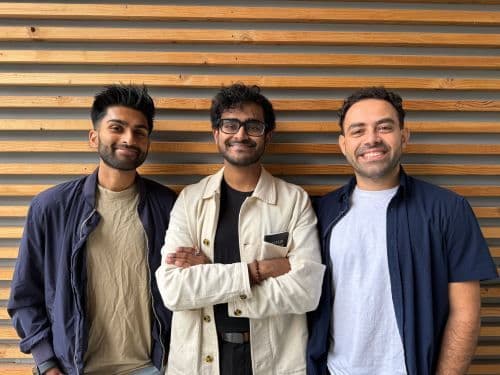
Whether developed by OpenAI or Anthropic or built on open source alternatives, current AI models share a critical limitation: They don’t learn from their mistakes without further training. Businesses adapting these models for specialized fields, such as law and finance, typically get around this by fine-tuning general models. However, that often requires hiring internal research teams or relying on expensive consultants, commonly known as forward-deployed engineers (FDEs). Trajectory, a startup founded about a year ago by three Stanford classmates with experience at Google DeepMind and Apple, wants to automate that process, allowing AI models to learn from feedback and continuously improve at specialized tasks. The 18-person company just announced that it raised $45 million in a Series A round at a $300 million valuation, led by Sequoia, with participation from Nvidia, Bessemer Venture Partners, and Bain Capital Ventures. Trajectory co-founder Ronak Malde compared foundational models to a very smart PhD student who’s always starting a new job. “But what the economy values is someone who worked on the job for 30 years,” he told TechCrunch. The startup aims to solve this problem through an approach known as continual learning. Businesses using Trajectory can start with an open source AI model and connect the platform to their applications, allowing it to collect feedback on how the model performs. Trajectory then uses that information to retrain the model, helping it improve at specialized tasks over time. With Trajectory, lawyers, doctors, and other specialists can improve the models near automatically themselves, Malde said. That capability could make deploying specialized AI faster and cheaper. Companies like Harvey and Rogo are already using Trajectory’s platform to post-train open source models, helping them perform more like experienced lawyers or financial analysts by learning from previous tasks, such as reviewing a particular type of legal contract or valuing a company using a specific methodology. Trajectory’s other customers include Decagon, Mercor, and Nvidia. The startup is now making its post-training platform publicly available. The people using Trajectory decide “what good looks like for their organization and can turn that into improvements for their model,” Malde said. Trajectory’s approach to continual learning shares some similarities with recursive self-improvement (RSI), the idea that AI systems can improve their own capabilities. But co-founder Michael Elabd argues that keeping humans involved in the training process makes Trajectory’s approach safer, since autonomous self-improvement could lead to unintended or even dangerous outcomes. Trajectory isn’t the only startup trying to automate post-training. It considers Thinking Machines Lab, founded by former OpenAI CTO Mira Murati and the company behind the fine-tuning platform Tinker, a direct competitor, along with Applied Compute, which was valued at $3.25 billion last month, andPrime Intellect, which helps companies build and train their own AI agents. Malde believes the startup’s biggest advantage isits team. He was among the handful of researchers Google DeepMind acqui-hired from Windsurf. Elabd also worked at DeepMind, while Trajectory’s third co-founder, Arjun Karanam, previously worked on generative foundation models at Apple. The startup has also recruited researchers and product designers from OpenAI, Stripe, and Netflix. Why does design matter so much to a company focused on AI training? Karanam says the startup has developed an interface that makes post-training more accessible to its nontechnical customers.

Y Combinator CEO Garry Tan has, in the past,jokingly admittedthat he’s suffered from “cyber psychosis” and sometimes barely sleeps because he’s so excited to be working with his AI agents. On a new episode of Walter Isaacson’s podcastThe Builders, set to publish on Tuesday, Tan put a price tag on his passion. “I spend about maybe $100[,000] to $200,000 a year on tokens,” he told Isaacson. He uses agents for countless work projects and coding tasks and has freely shared his set of 23 Claude Code skills,called gstack, on GitHub — an effort to help teach others what agents can do, he said. On the one hand, he uses his agent the way many people use AI: to help him research Isaacson’s podcast and prep for the kinds of questions he might be asked. On the other, his agent also helps him run his life. “It’s read all of my email and all of my Dropbox. It’s read, like, all of my Apple Notes, even my therapy notes going back 20 years,” he said. He describes using AI agents as getting help with “almost anything that you do in your day-to-day life, and for it to do it somewhat more autonomously. Think of it as a Jiminy Cricket on your shoulder at all times. Like, almost anything you want to do, it knows you, and it’s there to help. And it will actually sort of run ahead and say, ‘What about this?’ Or it’ll help you see around corners.” As an early OpenClaw adopter who is now a power user, Tan says one thing he’s learned is not to treat AI agents like traditional software. Some people are so worried about “repeatability and safety that they actually trade off all of the beautiful parts of working with an AI agent, which basically can be so similar to a human,” he said. For instance, Y Combinator is also using an agent that is “rebuilding the way we operate at YC,” he said. “We now have an internal AI agent, for instance, named Stray Light that kind of has a personality, and then it has a company brain. Like it actually has the total context of every founder we’ve ever backed, anyone who’s ever emailed us, like all the applications.” Tan, who is, naturally, an avid lover of technology (as anyone running Silicon Valley’s famed startup accelerator would be), believes personal AI agents will eventually become mainstream, if one major problem is solved: Costs have got to come down. “It’s too expensive right now,” he said, adding that he knows the amount of money he spends on AI agents is “a crazy privilege that not everyone can do.” But freebie agents controlled by Big Tech maybe aren’t the answer, either. When discussing the future he’d like tech to build, and how Meta as a social media company has impacted us, he said, “This is a huge company that controls the algorithm, and we all wish that they didn’t at some level,” he said. “So you could imagine a personal AI that you control, that you program.”

Apple’s services business remains at record levels, but it’s facinggrowing pressure. The central part of that business, Apple’s App Store, has faced regulatory pressure and a slump in mobile gaming, which havehurt services growth. However, on Monday’s earnings call, Apple signaled that it may look to boost services revenue through third-party apps. What does that mean, exactly? Unfortunately, it’s not entirely clear. When discussing how AI could potentially “contribute to revenue growth over time,” Kevan Parekh, Apple’s chief financial officer, said: “On the product side, you know, we feel AI offers a compelling reason for customers to upgrade and switch in order to get the latest capabilities, and we also feel there’s opportunities across third-party apps and partnerships as well as first-party opportunities.” Parekh did not elaborate on what sorts of opportunities might be available via third-party apps. However,Reuters reportedMonday that investors are wondering whether Apple could profit by distributing third-party AI agents through the App Store and taking a cut of the revenue they generate. Regulatory and legal changes have cut into App Store commission revenue in some markets, even as Apple’s services business as a whole continues to grow. Third-party estimates in August, for example, suggested the company had seenan 18% dropin U.S. commission revenue, with declines also in Brazil and Japan after those countries introduced new regulations. Apple has traditionally controlled payments within its app marketplace tightly, taking a cut of all App Store transactions. But alawsuit by Epic Gamesultimately forced the company to allow apps to redirect users to outside payment systems. Other legal challengesthroughout the worldhave further hampered the business. During the earnings call, Parekh referenced Apple’s App Store woes and returned to the idea that the company’s service business could expand into new territory. “We’ve also seen some factors that impacted the performance of the App Store, and during the September quarter, the performance on the App Store was similar to the prior year, and we had a record number of paid subscriptions with double-digit growth for third-party apps on the App Store,” Parekh said. “At the same time, we did see some headwinds in mobile gaming that we’ve talked about before, and expect to see those continue into the summer quarter.” Parekh added: “As we move ahead, we expect services growth to to be between 8 to 9% [in the December quarter]. This outlook contemplates our best estimates on sequential headwinds, primarily from third-party licensing and the additional half percentage point of foreign exchange I just mentioned.” TechCrunch has reached out to Apple for more information and will update this story if it responds.

The certification recognises how data science teams work across the company and global client programmes.
View

The prototype generated its first AI response using an onboard TPU, as Google prepares to test the hardware against radiation and thermal stress.
View

NeuroDX’s Sphota claims 50x greater training data efficiency and 4.5x better memory efficiency than a comparable Liquid AI model.
View

Ostara Advisors says deep-tech, energy storage and green financing will lead India's climate-tech investment in 2027.
View

The right test management solutions help teams organise testing, track execution, maintain traceability, and improve software quality across the development lifecycle.
View

ADNOC will use GPT models for operational decision-making, while Abu Dhabi is piloting AI-powered food import compliance checks.
View

Anthropic attributed the latest quarter’s operating loss of $567 million, partly to its reliance on short-term computing capacity.
View

Google Pay is testing a new fashion and lifestyle shopping feature in India, bringing personalised recommendations, virtual try-on and visual search to its payments app. The pilot lets users browse clothing and fashion trends, see how select items look on them and find similar products using images. Google is currently testing the experience with a limited number of users and has not announced when it will reach a wider audience.
View
View
View
View