🚀 Zaprep: Your Socials on Steroids. Start free — automate 1,000 DMs/month & turn engagement into leads. with 1,000 automated DMs/month.
Submit your Tool
PoweredByAI.app is an AI Tools Directory helping individuals, businesses, and creators discover the best AI tools for writing, coding, design, productivity, and more.
© 2026 , Product of011BQ. All rights reserved.

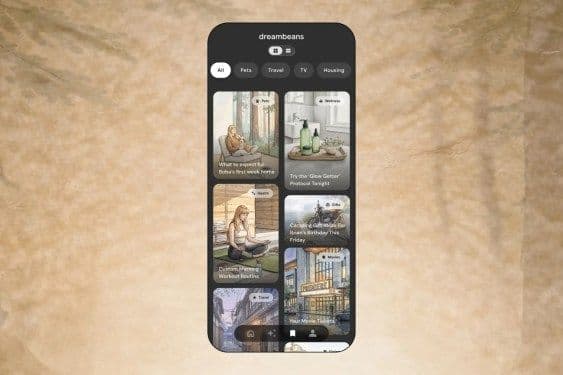
Google has launched itsexperimental AI app Dreambeansin India, its first market outside the U.S., as the company looks to tap the world’s second-largest internet market to bring personalized visual stories drawn from users’ digital activity to a broader audience. On Monday, Google expanded Dreambeans, available on Android and iOS, to India with support for 13 local languages, including Hindi, Punjabi, Tamil, Telugu, and Bengali, alongside English. The launch comes less than two months after Google made the appavailable to all eligible U.S. usersaged 18 and older. Introducedin June, Google’s Dreambeans uses information from connected Google services, including Calendar, Gemini, Gmail, Photos, Search, and YouTube, to proactively generate personalized, illustrated stories about users’ interests and everyday lives, without requiring them to enter a prompt. The app initially featured static, AI-generated illustrations, but Google recently added a feature that uses its Veo video-generation model to even animate images in select stories. Google said it chose India as Dreambeans’ first international market because of strong interest from Indian users seeking access to the app and the widespread use of its services in the country. India stood out for its high overlap of users across Gemini, Gmail, and Google Photos, Google product manager Gozde Oznur said during a press briefing. Dreambeans has recorded nearly 55,000 downloads in the U.S. since its June debut, according to estimates from market intelligence firm Sensor Tower shared with TechCrunch. About 63% of those downloads came in September, when Google opened the app to all eligible U.S. users aged 18 and older. However, downloads dropped 84% month over month to about 5,500 in October. In the first 30 days after Google opened Dreambeans to all eligible U.S. users, the app recorded an estimated 29,000 downloads, compared with 7.4 million for Meta’s Muse, 2.8 million for ChatGPT, 362,000 for Grok Bot, and 155,000 for Claude during their respective first 30 days after launch, Sensor Tower estimates show. However, unlike those general-purpose AI apps, Dreambeans focuses on generating personalized stories instead of responding to a broad range of user queries. Even though Dreambeans supports many widely spoken Indian languages, users can select only one language at a time for their generated stories. The app can draw on information across Google services in multiple languages, but it cannot currently generate stories that mix languages, Oznur said during the briefing. That could limit Dreambeans’ appeal in India, where many people regularly switch between languages, including Hindi and English, often mixing the two in what is commonly known as Hinglish. Dreambeans’ dependence on information from users’ Google accounts also raises questions about privacy and data access. The app usesGoogle’s Personal Intelligence technologyto draw on connected services and personalize its AI-generated stories. Those services can contain sensitive personal information that some users may not want to share with an AI app just to receive personalized content. Users can choose which Google services to connect to Dreambeans and disconnect them at any time, Oznur said. They can also delete their Dreambeans data from within the app. Moreover, Oznur asserted that information deleted from the underlying connected services is also removed from Dreambeans’ personalization system. Users, Oznur said, can tell Dreambeans to avoid certain subjects, including business-related information, and the app will try to adjust its stories accordingly. She added that Dreambeans is available only to personal Gmail account holders, not enterprise users, and that generated stories are visible only to the account holder. Dreambeans’ proactive approach also carries the risk of surfacing memories that users may find upsetting. Oznur acknowledged that Dreambeans could generate stories involving people who have died, for instance. She said users can tell the app to stop showing certain subjects, comparing the feature to controls in Google Photos that let users limit which memories appear. Oznur told reporters that Google is exploring ways to make Dreambeans more actionable, moving beyond personalized stories and recommendations to help users act on the app’s suggestions.
View

Apple’s AI-powered “Audio Intelligence” technology for the Apple Watch is rolling out into beta testing on Tuesday, initially for developers in the iOS 27.3 update, after first being announced at the company’sSurprise and Shine hardware eventin September. The technology includes a set of four opt-in AI features that allow Apple Watch Series 12 wearers to detect important sounds, identify songs, catch up on conversations, and take notes. The news was announced via a press release sent out via Apple in India, but the update has not yet rolled out in the U.S. market as of this morning. The sound recognition feature will help deaf and hard-of-hearing users identify important sounds like sirens, alarms, or doorbells from their watch, while the song recognition feature taps into Apple’s Shazam app to detect music playing in the background and identify the song name and artist. However, the more potentially controversial features are those that listen to human conversations: Live Rewind and Siri Recaps. Given the backlash to AI recording devices, like Meta’s AI glasses and other AI wearables, Apple has attempted to carve out a space where the features can be useful to Apple Watch owners, while still respecting the privacy of those around them. With Live Rewind, the idea is to let you go back in time to see what someone just said, in case you missed it. For instance, if someone was giving you verbal directions or reading a long list of specials at a restaurant, you could double-press on the Watch’s digital crown to see what was said in the last 15 seconds as a text snippet displayed on the watch face. You can view this snippet and then do nothing, and it will disappear permanently. Or you can save it tothe stand-alone Siri appthat shipped with iOS 27 for later access, which might be helpful if you’re trying to remember someone’s name or take a quick note from a fast-paced presentation. Apple says that users will also be able to tap an “Ask Siri” option that appears below the text snippet if they have questions about something that was said — like a technical term they don’t understand, or perhaps some sauce option the waiter mentioned that they’re unfamiliar with, among other things. When you double-press the digital crown, an audible chime appears and an animation displays on the watch. This is meant to signal to people through the combination of the gesture, sound, and visual display that you’ve recorded something that was said. These snippets will be deleted automatically after 30 seconds if you don’t save them. The other option, Siri Recaps, takes this ambient listening technology even further by allowing Apple Watch owners to take high-level notes of their conversations. Importantly, Apple says it’s not identifying speakers, saving the raw audio, or providing word-for-word transcriptions. Instead, the feature summarizes a conversation with a short sentence and some bullet points that identify key points. For instance, depending on the topic, the bullet points might include things like important dates or deadlines, pricing or payment plan information, and other factual information. Apple suggested the feature could be used in scenarios like work meetings, parent-teacher conferences, personal training sessions, or other places where you may need to remember what tasks you have to complete or things that were said. Essentially, it’s supposed to mimic a user’s ability to jot down their own notes — without adding emotion or tone. This could be helpful particularly at times when you aren’t able to write up your own notes, either because your hands are full or you’re trying to concentrate on whatever’s being said at the time. The recaps won’t record conversations when you’re listening to music with your headphones or using their noise cancellation features. At the end of the day, you’re prompted to review your saved Siri Recaps when the feature is enabled, and then choose which, if any, you want to save. These notes can be saved to your Notes app or even exported to your Journal app, if they’re more personal in nature. If you do nothing, the recaps will delete themselves within seven days. This reminder to review the Siri Recaps you’ve recorded also appears when you first unlock your Apple Watch in the morning. Users can opt to enable the Siri Recaps manually, or they can configure a schedule, such as only having the recapping take place while at work, or making sure that they never run at night. Even if they’re running on a schedule, you can still turn off the recapping feature at any time from the Control Center. Apple notes that Siri Recaps has been designed to omit sensitive information like government-assigned identifiers, financial and authentication data, certain personal identifiers, and any language that would promote self-harm. The Audio Intelligence features for the Apple Watch Series 12 and Apple Watch Ultra 4 rely on a combination of Apple’s hardware, software, and services. This includes the S11 chip, built-in microphone, and the Apple Intelligence models that run on the iPhone, as well as Apple’s Private Cloud Compute. The always-on processor includes a secure enclave — a hardware-protected memory space that can’t be accessed by the rest of the operating system — where a dedicated audio buffer processes the raw audio. This allows the audio to be processed without it actually being accessible to anyone, including Apple. The audio is only accessible to the paired iPhone through a secure pairing mechanism between it and the watch. To work, lightweight AI models on the S11 chip on the Apple Watch detect if there’s a conversation happening that the wearer is a part of, which is then transferred to the secure enclave on the iPhone. On-device processing on the iPhone turns the audio into condensed text, meaning the text of the conversation with the filler words removed. This condensed text is then encrypted and sent to Apple’s Private Cloud Compute (PCC) to create the recap of the conversation that is sent back to the phone. (The recap and any summarizations used to create it are deleted from PCC immediately afterwards.) The recaps you can then access on your iPhone are only accessible to you, not to Apple. And they’re encrypted when they’re synced between your multiple Apple devices. Similarly, Apple Watch transfers audio to the iPhone for processing to create the 15-second snippets for Live Rewind. Apple says none of these features should impact the battery life of your watch or phone. The features will later roll out to the public beta for broader testing before becoming publicly available to all. Post updated to indicate that the updates have not yet rolled out in the U.S.

Tomorrow is it!TechCrunch Founder Summit, presented by Fidelity Private Shares, brings founders and investors together at Boston’s SoWa Power Station for a full day focused on building what comes next. Secure your ticket savings before prices increase when doors open at 9 a.m. ET. Whether you’re attending solo, bringing a co-founder, or rallying your team, there’s a deal for everyone: Don’t wait until doors open.Lock in your savings now. One day to tackle the questions founders carry all year: Founder Summitputs those questions at the center of the day.Explore the full agendato get to know the scaling experts leading the sessions. Head to theBuild Stagefor tactical lessons around fundraising, distribution, teams, and pitching. Use theImpact Stageto think about product-market fit, scale, enterprise relationships, and long-term growth. Go deeper in smallerroundtable conversations. Watch founders put their stories to the test during the live pitch competition. Use the Braindate networking app to connect one-on-one or in small groups with people who want to talk about the same problems you do. Then keep the conversation going at the closing reception. You can read founder advice online all year. Tomorrow is about asking the question yourself. Meeting the person. Hearing the answer firsthand. Finding the idea you can take back to your team the next morning. If Founder Summit has been sitting on your calendar as a maybe, this is your final call. TechCrunch Founder Summit, presented by Fidelity Private Shares, takes place tomorrow, November 4, at SoWa Power Station in Boston.Register now and save on your passbefore doors open tomorrow at 9 a.m. ET.
View

You can learn a lot from a great founder session. But sometimes the conversation that changes what you do next happens five minutes after it ends. And with the event happening tomorrow, there is another reason to make sure you are in the room: the format is designed to help founders learn in different ways throughout the day. On November 4,TechCrunch Founder Summit 2026brings founders and investors together at SoWa Power Station in Boston for one day of practical learning, candid conversations, live pitching, smaller roundtables, and networking. Register now to save up to $100 on your pass, plus get a second for free. Or save up to 30% ongroup bundles. TheBuild Stagefocuses on the decisions founders make while they are still shaping, testing, and growing the business. These sessions get into the mechanics behind building a company, from distribution and fundraising to team building and pitching. Hunter WorlandofNEAopens the conversation on why distribution can become a startup’s next competitive advantage, especially when strong technology alone is not enough to win customers. Kristen CraftofFidelity Private Sharesbrings a current view of fundraising trends, helping founders understand how the capital environment is shifting and what that means for the way they approach their next raise. The stage also gets tactical about building high-performing teams and sharpening the story you tell investors, customers, and potential hires. Dave BalterofTrue Venturesand Edisyl takes on a deceptively simple question: Does your pitch earn the next conversation? The value of theBuild Stageis straightforward: these are lessons founders can take back to their companies immediately. If the Build Stage is about creating momentum, theImpact Stageis about what happens once that momentum becomes real. This is where founders can step back and think about bigger decisions around product-market fit, scaling, enterprise relationships, leadership, and long-term growth. Steve Fredette, president, co-founder, and director ofToast, brings the perspective of building and scaling one of Boston’s most recognizable startup success stories. Rudina Seseri, founder and managing partner ofGlasswing Ventures, explores the tension every founder eventually faces: when to scale and when hitting the brakes may actually protect the business. Kent BennettofBessemer Venture Partnerstackles product-market fit before scale, helping founders think more critically about whether the signals they are seeing truly justify the next phase of growth. Chase Garbarino, CEO and co-founder ofHqO, brings the conversation home with the Boston Founder Playbook and a perspective on building ambitious companies outside the Bay Area. TheImpact Stageis valuable because it creates space for founders to get out of the weeds for a moment and ask whether they are scaling the right things, in the right way, at the right time. Main-stage sessions can give you perspective.Roundtablesgive you room to get specific. Founder Summit’s smaller roundtables are built around highly focused problems that many founders are actively solving right now, from entering difficult verticals and building enterprise trust to creating lean teams and opening doors with major customers. Chirag ShahofDefine Venturesdigs into what happens when your first vertical is also one of the hardest to enter. A technical session with Shishir Tewari ofProcore Technologiesmoves the AI conversation from broad hype to the practical challenge of reducing hallucinations with better enterprise context. Merve KitapciofADIN.AIgets highly specific about enterprise selling and what it takes to land major global customers before Series A. Andy TangofDraper Associatesopens a different kind of founder conversation: what if you are building something the market does not even have a name for yet? Linden TibbetsofIFTTTexplores how AI may change the assumptions founders make about team size, productivity, and what a smaller company can realistically accomplish. The value here is participation. Instead of simply hearing how someone else approached a problem, founders can bring their own questions, compare experiences with the people around the table, and leave with ideas that are much closer to their actual business. Founder Summit also gives attendees the chance to see what happens when founders put their stories in front of investors in real time. During So You Think You Can Pitch?, founders make their cases in front of investors, includingDave Balter,Chirag Shah, and Simran Suri of Maveron. This is one of the most interactive parts of the day because it turns advice about pitching into something founders can actually watch: what gets an investor’s attention, where a story loses momentum, and which questions come up immediately. For anyone preparing to raise, sell, recruit, or simply explain their company more clearly, seeing those reactions live can be incredibly useful. The Networking Lounge powered by Braindate gives attendees another way to connect intentionally throughout the day. Schedule a one-on-one conversation. Join a small group. Find someone who wants to talk about the exact challenge you are working through. Hear a session on product-market fit, then find another founder working through the same issue. Watch the pitch competition, then compare notes with someone preparing for their own fundraise. Hear the Boston Founder Playbook, then meet other founders doing exactly that. Braindate helps turn the content into conversation. The day wraps up with a closing reception presented by Fidelity Private Shares, giving attendees time to keep the conversations going without rushing to the next session. That matters because some of the most useful connections at an event happen after you have already shared a room, a question, or a conversation earlier in the day. Founder Summit is not built around one type of conference experience. The Build Stage gives founders practical lessons they can apply now. The Impact Stage creates room for bigger growth and leadership decisions. The roundtables let you ask questions and go deeper. The live pitch competition puts founder storytelling to the test. Braindate makes networking intentional. And the reception gives those conversations somewhere to continue. That mix is what makes the day valuable. TechCrunch Founder Summit 2026takes place November 4 at SoWa Power Station in Boston. There is still time to join us in Boston. Current Founder Summit passes include breakout sessions, roundtables, Braindate networking, the Expo Hall, and access to session materials after the event. Even better, buy one pass now, and you can get a second pass free. Bring your co-founder. Bring a partner. Bring the person you will be texting session takeaways to all day anyway.Get your pass, bring someone with you for free, and join the founder community in Boston.

Apple is adjusting its App Store policies to make it more difficult for minors to use online dating apps or AI companions that engage in “sexual or romantic content,” the tech giant shared in anannouncementto developers on Monday. The new rules follow other changes the company has made to better protect minors, which include therollout of its age assurance technologyglobally andmore parental controls and child safety features. While most major dating services typically restrict their platform to adults, Apple’s new policy will require all apps offering dating or romantic relationship features to carry an 18+ rating. Starting November 16, developers will be required to include new content descriptors to ensure their app’s age ratings reflect its features, the company said. It’s perhaps more interesting how this rule could impact AI companion apps, or those where such functionality is one of many features. Often targeted at younger people, Character.AI, Replika, and other AI apps let people create AI companions, including friends, lovers, boyfriends and girlfriends, and other fantasy characters. xAI last year alsolaunched3D animated AI companions that allowed users tounlock NSFW capabilities. As of last summer, top AI companion apps across the Apple App Store and Google Playhad been downloaded 220 million times globally. In addition to “dating and relationships,” apps will also need to indicate if they are sharing the real-world locations of a user with another person or group as part of their functionality. Any app doing so raises obvious privacy concerns, especially if the user wasn’t aware that their location was being shared. The company noted that in Brazil, apps that provide location-sharing features for families can request an official rating from the government’s Ministry of Justice and Public Security (MJSP/Ministério da Justiça e Segurança Pública), instead of being required to list them with the A16 rating, as the local law requires.
View

Googleannouncedon Tuesday that it plans to disable AI tools for K-12 students next year unless school administrators explicitly turn them on. The tech giant says the change follows consultations with schools, teachers, leading researchers, and policymakers. As a result, Google is revising its approach across Gemini, NotebookLM, Gemini in Classroom, and Google Search. The decision means that schools choosing to restrict AI altogether will no longer be able to access Google Search, as AI features are now integrated into the search engine. Chris Phillips, vice president for education at Google, toldThe New York Timesthat “Search and AI are deeply integrated,” which means that if a school chooses to restrict AI altogether, students “will not have access to search, and they’ll see a message from their school that indicates it’s not available.” The change raises an issue for schools. Although teachers may not want students to use AI Overviews in Google Search to conduct research or complete assignments, they likely still want them to be able to have access to the search engine to find sources and other learning materials. However, Google Search and its AI features are now inseparable. Given the dominance of Google’s suite of apps in classrooms and the widespread use of Chromebooks, the decision underscores the company’s influence over the education sector. Schools that want to continue to have access to Google Search will have to accept its AI features. “We’ll share more specifics with schools in the coming months ahead of the changes rolling out so they have time to prepare and enable a smooth transition,” Phillips wrote in ablog post. “Our goal is simple: provide school leaders the control and confidence to use AI products in classrooms as they see fit.” Google announced the upcoming change alongside the launch ofGuided Learningin schools. The tool, which was unveiled earlier this year, sort of functions like an AI tutor, as it’s designed to help users build a deep understanding instead of just getting answers. The launchcomes amid concernsthat AI chatbotsundermine the learning processbecause they spit out direct answers.
View

There’s a lot of mystery around the finances of major AI labs, and as Anthropic inches towards it IPO, we’re starting to get some answers. In particular, the company is finally disclosing more about the economics of compute, and how much of Anthropic’s skyrocketing revenue is being lost to compute costs. Ina new filing on Monday, Anthropic released data that showed those margins on compute actually getting worse. The filing was an update tothe S-1 released last week— but where that filing’s financial disclosures only covered through June 30th of this year, the new data extended to disclose results through an extra quarter, to September 30th. Broadly, Anthropic had a good quarter: revenue reached $17 billion, up from $11.5 billion in the previous quarter, suggesting durable growth. But the operating loss grew at the same time, thanks in large part to growing compute costs. Looking at the compute margins makes the picture even worse. In the new quarter, compute took up 58% of the company’s revenue, up from 48% the quarter before. At a moment when the company could win over IPO investors by showing margins improving, they’re getting worse. A chart in the filing shows this even more clearly, tracking the company’s revenue for every dollar spent on compute. Since the start of 2025, it’s been steadily growing, peaking at just over 2x this past quarter, then falling back down to 1.72x Many indications imply that this shift in compute margins is more of a blip than a long-term problem, but it still tells us important things about the business of running a major lab. Trying to keep up with demand, Anthropic’s compute bill shot up to $10 billion for the quarter, including, as the filing notes, “$5.0 billion of compute under short-term commitments, which currently costs significantly more than comparable compute procured under our multi-year commitments.” Basically, demand was growing so fast that Anthropic had to scramble for compute, which meant paying higher rates. Some of those deals have already played out in public. Anthropichas been paying SpaceX$1.25 billion a month for compute, alongside multi-billion dollar deals withNscale,AkamaiandVolta. In the parlance of the industry, these are neoclouds rather than hyperscalers — smaller outfits that offer more flexible compute deals at higher rates. Anthropic’s margins got worse in Q3 because of deals like these, and there’s no sign they’ll be able to do without them anytime soon. As the new filing puts it, “We expect compute and infrastructure expenses to increase in absolute dollars and remain our largest operating expense for the foreseeable future as additional committed compute becomes available to us under multi-year arrangements with CSPs, and as we continue to invest in additional compute.” Anthropic is still trying to lower its compute costs. In particular, the company talks quite a bit about its efforts to build its own compute base under a project it calls “Anthropic Direct.” But with demand growing so fast, those efforts aren’t going to be able to keep pace, and the neoclouds will continue to be the best option they have. In a sense, these are champagne problems. As long as revenue is growing at nearly 50% a quarter, few investors will worry about high compute costs — and the moment demand slows down, investors may be comforted by a compute picture that has gotten a lot sunnier. But it’s a reminder of how much AI labs still depend on the trillion-dollar infrastructure buildout — and how vulnerable they are to hiccups in that process. It’s easy to imagine the data center buildout slowing down over the next year if bond markets get skittish or local opposition gets more intense. There’s not much Anthropic can do to address either of those risks, and either one would make a messy compute picture a whole lot messier. In the meantime, the future of Anthropic and other labs will be at the mercy of compute prices.

Netflixannouncedon Tuesday that it’s rolling out a new “AI Discover” tab where users will be able to experiment with new ways to find their next watch. The first experimental feature launching under the tab will allow users to get recommendations based on what they’re currently in the mood for. Users can choose from curated themes featuring clips from shows and movies, based on their mood, viewing preferences, how much time they have, or what’s new and trending. Themes include “something light,” “scare me,” “family movie night,” “quick watches,” and more. The addition of the new tab suggests that Netflix wants to make its growing library easier to navigate while shifting discovery away from an experience where users are endlessly scrolling through titles toward a more personalized and AI-powered experience. Netflix says AI Discover is powered by a new intelligence layer it’s been building that responds to what users tell the platform in real-time and keeps learning. Once users pick a theme, they’ll see matching recommendations. They also have the option to select more specific themes so they can keep searching until they find something they’re interested in, or choose the “something different” option to start over. Each title features a “Tune Your Recommendations” button beside “Play” and “My List” to allow users to save recommendations they like or exclude titles they don’t want suggested again. “There’s more to enjoy and discover on Netflix than ever, but what sounds right for a quiet night in may look different for family movie night or a few spare minutes,” Netflix wrote in ablog post. “We’ve spent years refining how you discover, with recommendations tailored to your tastes, from what you Thumbs Up to what you add to ‘My List.’ Now, AI Discover joins the mix as a new way to explore.” Netflix describes AI Discover as its “test kitchen,” where it will “try out new recipes for discovery.” The company says users’ feedback will help it decide which features to keep or improve before bringing them over to the main Netflix experience. AI Discover is starting to roll out in the U.S. to users who use Netflix in English on supported TVs. The company plans to bring the new tab to additional users in the coming weeks. If users have access to the new feature, they’ll see a “Discover” button with a red gem icon and a “New” label in the top navigation bar on their TV.

The offering combines specialised agents and conversational assistants for system administration, observability and optimisation, with human oversight.
View

Coforge's 18-year relationship with Pega underpins the launch, adding another offering to its customer experience portfolio.
View

The company will use the capital to expand its AI team and develop its Large Logistics Spatio-Temporal Model, which it uses to improve delivery allocation and reduce idle time for riders.
View

The divide is visible in the difference between the resources available to urban and rural students.
View
View
View
View
View