🚀 Zaprep: Your Socials on Steroids. Start free — automate 1,000 DMs/month & turn engagement into leads. with 1,000 automated DMs/month.
Submit your Tool
PoweredByAI.app is an AI Tools Directory helping individuals, businesses, and creators discover the best AI tools for writing, coding, design, productivity, and more.
© 2026 , Product of011BQ. All rights reserved.

Apple is adjusting its App Store policies to make it more difficult for minors to use online dating apps or AI companions that engage in “sexual or romantic content,” the tech giant shared in anannouncementto developers on Monday. The new rules follow other changes the company has made to better protect minors, which include therollout of its age assurance technologyglobally andmore parental controls and child safety features. While most major dating services typically restrict their platform to adults, Apple’s new policy will require all apps offering dating or romantic relationship features to carry an 18+ rating. Starting November 16, developers will be required to include new content descriptors to ensure their app’s age ratings reflect its features, the company said. It’s perhaps more interesting how this rule could impact AI companion apps, or those where such functionality is one of many features. Often targeted at younger people, Character.AI, Replika, and other AI apps let people create AI companions, including friends, lovers, boyfriends and girlfriends, and other fantasy characters. xAI last year alsolaunched3D animated AI companions that allowed users tounlock NSFW capabilities. As of last summer, top AI companion apps across the Apple App Store and Google Playhad been downloaded 220 million times globally. In addition to “dating and relationships,” apps will also need to indicate if they are sharing the real-world locations of a user with another person or group as part of their functionality. Any app doing so raises obvious privacy concerns, especially if the user wasn’t aware that their location was being shared. The company noted that in Brazil, apps that provide location-sharing features for families can request an official rating from the government’s Ministry of Justice and Public Security (MJSP/Ministério da Justiça e Segurança Pública), instead of being required to list them with the A16 rating, as the local law requires.
View

Googleannouncedon Tuesday that it plans to disable AI tools for K-12 students next year unless school administrators explicitly turn them on. The tech giant says the change follows consultations with schools, teachers, leading researchers, and policymakers. As a result, Google is revising its approach across Gemini, NotebookLM, Gemini in Classroom, and Google Search. The decision means that schools choosing to restrict AI altogether will no longer be able to access Google Search, as AI features are now integrated into the search engine. Chris Phillips, vice president for education at Google, toldThe New York Timesthat “Search and AI are deeply integrated,” which means that if a school chooses to restrict AI altogether, students “will not have access to search, and they’ll see a message from their school that indicates it’s not available.” The change raises an issue for schools. Although teachers may not want students to use AI Overviews in Google Search to conduct research or complete assignments, they likely still want them to be able to have access to the search engine to find sources and other learning materials. However, Google Search and its AI features are now inseparable. Given the dominance of Google’s suite of apps in classrooms and the widespread use of Chromebooks, the decision underscores the company’s influence over the education sector. Schools that want to continue to have access to Google Search will have to accept its AI features. “We’ll share more specifics with schools in the coming months ahead of the changes rolling out so they have time to prepare and enable a smooth transition,” Phillips wrote in ablog post. “Our goal is simple: provide school leaders the control and confidence to use AI products in classrooms as they see fit.” Google announced the upcoming change alongside the launch ofGuided Learningin schools. The tool, which was unveiled earlier this year, sort of functions like an AI tutor, as it’s designed to help users build a deep understanding instead of just getting answers. The launchcomes amid concernsthat AI chatbotsundermine the learning processbecause they spit out direct answers.
View

There’s a lot of mystery around the finances of major AI labs, and as Anthropic inches towards it IPO, we’re starting to get some answers. In particular, the company is finally disclosing more about the economics of compute, and how much of Anthropic’s skyrocketing revenue is being lost to compute costs. Ina new filing on Monday, Anthropic released data that showed those margins on compute actually getting worse. The filing was an update tothe S-1 released last week— but where that filing’s financial disclosures only covered through June 30th of this year, the new data extended to disclose results through an extra quarter, to September 30th. Broadly, Anthropic had a good quarter: revenue reached $17 billion, up from $11.5 billion in the previous quarter, suggesting durable growth. But the operating loss grew at the same time, thanks in large part to growing compute costs. Looking at the compute margins makes the picture even worse. In the new quarter, compute took up 58% of the company’s revenue, up from 48% the quarter before. At a moment when the company could win over IPO investors by showing margins improving, they’re getting worse. A chart in the filing shows this even more clearly, tracking the company’s revenue for every dollar spent on compute. Since the start of 2025, it’s been steadily growing, peaking at just over 2x this past quarter, then falling back down to 1.72x Many indications imply that this shift in compute margins is more of a blip than a long-term problem, but it still tells us important things about the business of running a major lab. Trying to keep up with demand, Anthropic’s compute bill shot up to $10 billion for the quarter, including, as the filing notes, “$5.0 billion of compute under short-term commitments, which currently costs significantly more than comparable compute procured under our multi-year commitments.” Basically, demand was growing so fast that Anthropic had to scramble for compute, which meant paying higher rates. Some of those deals have already played out in public. Anthropichas been paying SpaceX$1.25 billion a month for compute, alongside multi-billion dollar deals withNscale,AkamaiandVolta. In the parlance of the industry, these are neoclouds rather than hyperscalers — smaller outfits that offer more flexible compute deals at higher rates. Anthropic’s margins got worse in Q3 because of deals like these, and there’s no sign they’ll be able to do without them anytime soon. As the new filing puts it, “We expect compute and infrastructure expenses to increase in absolute dollars and remain our largest operating expense for the foreseeable future as additional committed compute becomes available to us under multi-year arrangements with CSPs, and as we continue to invest in additional compute.” Anthropic is still trying to lower its compute costs. In particular, the company talks quite a bit about its efforts to build its own compute base under a project it calls “Anthropic Direct.” But with demand growing so fast, those efforts aren’t going to be able to keep pace, and the neoclouds will continue to be the best option they have. In a sense, these are champagne problems. As long as revenue is growing at nearly 50% a quarter, few investors will worry about high compute costs — and the moment demand slows down, investors may be comforted by a compute picture that has gotten a lot sunnier. But it’s a reminder of how much AI labs still depend on the trillion-dollar infrastructure buildout — and how vulnerable they are to hiccups in that process. It’s easy to imagine the data center buildout slowing down over the next year if bond markets get skittish or local opposition gets more intense. There’s not much Anthropic can do to address either of those risks, and either one would make a messy compute picture a whole lot messier. In the meantime, the future of Anthropic and other labs will be at the mercy of compute prices.

Netflixannouncedon Tuesday that it’s rolling out a new “AI Discover” tab where users will be able to experiment with new ways to find their next watch. The first experimental feature launching under the tab will allow users to get recommendations based on what they’re currently in the mood for. Users can choose from curated themes featuring clips from shows and movies, based on their mood, viewing preferences, how much time they have, or what’s new and trending. Themes include “something light,” “scare me,” “family movie night,” “quick watches,” and more. The addition of the new tab suggests that Netflix wants to make its growing library easier to navigate while shifting discovery away from an experience where users are endlessly scrolling through titles toward a more personalized and AI-powered experience. Netflix says AI Discover is powered by a new intelligence layer it’s been building that responds to what users tell the platform in real-time and keeps learning. Once users pick a theme, they’ll see matching recommendations. They also have the option to select more specific themes so they can keep searching until they find something they’re interested in, or choose the “something different” option to start over. Each title features a “Tune Your Recommendations” button beside “Play” and “My List” to allow users to save recommendations they like or exclude titles they don’t want suggested again. “There’s more to enjoy and discover on Netflix than ever, but what sounds right for a quiet night in may look different for family movie night or a few spare minutes,” Netflix wrote in ablog post. “We’ve spent years refining how you discover, with recommendations tailored to your tastes, from what you Thumbs Up to what you add to ‘My List.’ Now, AI Discover joins the mix as a new way to explore.” Netflix describes AI Discover as its “test kitchen,” where it will “try out new recipes for discovery.” The company says users’ feedback will help it decide which features to keep or improve before bringing them over to the main Netflix experience. AI Discover is starting to roll out in the U.S. to users who use Netflix in English on supported TVs. The company plans to bring the new tab to additional users in the coming weeks. If users have access to the new feature, they’ll see a “Discover” button with a red gem icon and a “New” label in the top navigation bar on their TV.

The offering combines specialised agents and conversational assistants for system administration, observability and optimisation, with human oversight.
View

Coforge's 18-year relationship with Pega underpins the launch, adding another offering to its customer experience portfolio.
View

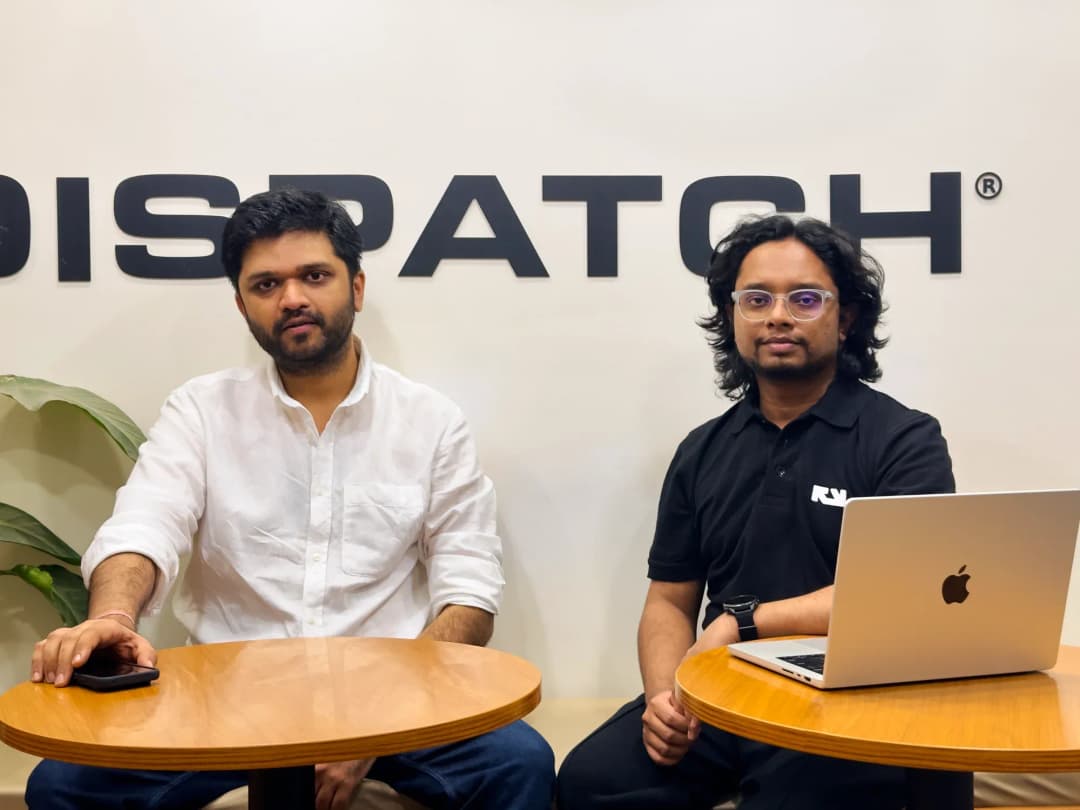
The company will use the capital to expand its AI team and develop its Large Logistics Spatio-Temporal Model, which it uses to improve delivery allocation and reduce idle time for riders.
View

The divide is visible in the difference between the resources available to urban and rural students.
View

CFO Kevan Parekh also confirmed that India contributed to Apple’s best fiscal year for iPhone upgrades.
View

The platform has not only added 4 million CPU cores and 160 PB of internal storage, but it is also rebuilding core Git primitives by decoupling compute from storage.
View

The platform provides a single API to access open AI models, including NVIDIA Nemotron, Sarvam, DeepSeek and Qwen, through NVIDIA GPU infrastructure hosted in India.
View
Enmovil's expansion addresses the need for AI across complex supply chains, where solutions must fit unique customer workflows and operational limits.
View
View
View