🚀 Zaprep: Your Socials on Steroids. Start free — automate 1,000 DMs/month & turn engagement into leads. with 1,000 automated DMs/month.
Submit your Tool
PoweredByAI.app is an AI Tools Directory helping individuals, businesses, and creators discover the best AI tools for writing, coding, design, productivity, and more.
© 2026 , Product of011BQ. All rights reserved.

Nothing is scheduled to launch its first “AI-native” device next month. The company recently started teasing the debut of the unspecified device, while keeping its name and product category under wraps. The upcoming device will mark the UK-based tech firm's entry into a new AI-powered hardware market, which currently has AI pendants, AI pins, AI smart glasses, and dedicated AI-backed companions. However, Nothing has already confirmed that its AI-native device will be different. Now, a company executive has revealed the design of the upcoming AI hardware, which appears to be a metal box with LEDs and a physical button.
View

Anthropic announced the expansion of Claude's capabilities beyond its existing chat and coding tools. According to the company, users will be able to access new ways for teams to create and work with data. Among the notable additions are Claude Sheets, Claude Whiteboards, and Claude Data, which allow users to build spreadsheets, organise ideas, and create interactive dashboards with the chatbot. Further, Anthropic is also upgrading interactive connectors, which let users access third-party applications without leaving Claude.
View

Google announced the rollout of Gemini 4 Carbon on Tuesday. Following its release last month, the Mountain View-based tech giant is expanding access to developers and enterprises through paid plans. Meanwhile, Google AI Ultra subscribers can also use it across select products, including the Gemini app and AI Mode in Search. Compared to Gemini 4 Argon, Carbon is claimed to be capable of handling more demanding, multi-step tasks by spending more time reasoning and verifying its output.
View

OpenAI has announced Businesses in ChatGPT, a new feature that allows companies to manage their business information on the platform. It includes a Business Hub where businesses can claim their profiles, update details and check how people engage with them on ChatGPT. The company has also introduced Business Agents, which can answer customer questions about products and services. The tools are currently in beta, although access to Business Agents is initially restricted to eligible businesses in the US.
View

OpenAI launched GPT-Live earlier this year, in July, as the Sam Altman-led AI giant's latest voice model. Since its introduction, the US-based company has witnessed a notable spike in its usage. Now, the ChatGPT developer has announced that it will be retiring the Advanced and Standard Voice models next month, as most users have transitioned to the new GPT-Live voice model. However, the chatbot will retain user conversations with the Advanced and Standard models. While ChatGPT Voice will no longer be powered by the two speech-to-text and turn-based voice models, select functionalities will remain based on one of the models.
View

Adobe and Google are adding more features from their respective platforms to each other's services as part of an expanded partnership. Adobe apps will be available across more Google products, while Google's AI models will make their way into several Adobe tools. The two companies are also working on new AI-powered editing features for Photoshop. Announced at Adobe Max 2026, the collaboration covers Google Workspace, Gemini, Gemini Enterprise and AI Mode in Google Search.
View

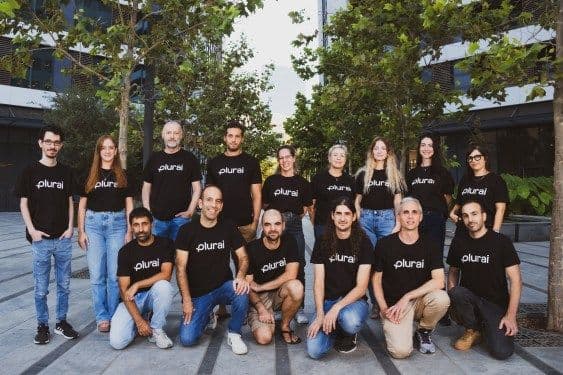
AI agents are all the rage, but they’re not quite as capable as their purveyors would have you believe. Efforts to benchmark agents doing complex tasks show that they aren’t typically reliable enough to function without close supervision. LiveBench 2.0showsClaude Fable 5.2 and ChatGPT-6 Astra succeeding on 82.9 and 75.6 out of 100 tasks, respectively, andan effortby the AI infrastructure company EON to test agents in a simulated corporate environment found the most successful model tested, Claude Opus 4.8, performed tasks at 76.8% accuracy. Now, a startup known as Plurai wants to boost those numbers with the same techniques that put self-driving cars on the street: Simulations using synthetic data based on a company’s own digital systems, meant to prepare models to tackle difficult edge cases. Co-founders Ilan Kadar and Elad Levi previously worked for Nexar, which develops autonomous driving technology. Kadar worked with Waymo to simulate and evaluate its end-to-end deep learning driving software. “The moment that we saw the wave of AI agents, we saw the same pattern: That it is very easy to build a demo, but [hard] to get something that will be reliable and cost effective,” Kadar told TechCrunch. “Since we saw the same pattern, the same pitch was that we want to build this simulation layer.” On Wednesday, the startup said it had raised $13 million in seed funding to make that happen. The round was led by Team8, with participation from U&I, Velocity, and Mercer. Like the end-to-end models trained to drive cars, AI agents are probabilistic systems operating in unpredictable environments. When pressed by customers, agents tasked with booking travel can ignore spending policies. Or, when tasked with querying one database, agents can reliably provide an answer, but combining information from multiple datasets tends to gum up the works. A long conversation with a customer service bot can overwhelm an agent with too much context and lead to wrong turns. To fix that, Plurai creates a digital twin of the company’s electronic systems, including the knowledge base and tools that an agent will have access to in production. It then maps all the possible flows of the agents and uses that graph to prepare the model with evaluations and fixes for possible edge cases. The platform works alongside existing agentic tools like Claude Code, Codex, Copilot, and Cursor. However, Kadar says the company’s real promise is using the data it gathers to post-train small, open-weight models tailored to individual customer needs. Tests performed in cooperation with Nvidia and Nebiusshowedthe company’s models outperforming midtier frontier models at lower costs. “We can take a large language model, we can take the task, decompose it into a smaller task using the simulation, train [an open-weight] model, and using the simulation, verify that the quality is higher or comparable to the frontier model, and an order or two orders of magnitude cost reduction,” he said. Reah Miyara, a Google DeepMind researcher who backed Plurai as an angel investor, said the company’s edge comes from understanding failure modes in production, and generating synthetic data to tune models. As businesses try to optimize their AI expense, Plurai’s approach could prove a real advantage, since IT leaders are seeing that “frontier-capable models are out of distribution with my specific data, and the cost of these things isn’t sustainable in the long term,” Miyara said. Plurai hopes analogies between AI agents in physical and digital environments can prove predictive: While powerful general AI models are imbuing robots with fascinating capabilities, they aren’t yet reliable enough to be deployed widely. Meanwhile, robots powered by AI models built for specific tasks are in the field right now, working for customers and gathering valuable real-world data. “My view is that no matter how smart OpenAI and Anthropic model will be — and they will be much smarter — they will not know your business and your policy,” Kadar said.

Databricks on Wednesday unveiled an updated version of its AI agent Genie, which can now perform multistep jobs that take extended work to finish. It does this through an ontology that Databricks built to give Genie the context it needs from the information that customers store on the Databricks platform. Corporate leaders can now assign the agent a wide range of tasks, and it will complete them unsupervised, the company says. To prove the point, Databricks CEO Ali Ghodsi showed me how he uses it internally. Instead of a product demo, he fired up his actual agent and walked me through his most recent chats and charts. He showed me how it analyzed the parts of an employee satisfaction survey where the company didn’t score well, and how it helped him rate (and discard) fixes for those low scores that some executives suggested. He showed me how it summarized a big sales pitch to a prospect that went poorly — including the features the prospect said it needed before buying. It also prepped him for a podcast interview by reviewing his previous appearances and developing likely questions. While we talked, he even had it tell him what he should say to me. (And its advice on that wasn’t bad.) The fascinating part was that Ghodsi was using Genie to find the stuff that he’s now unlikely to hear as the big boss. It was a source of unvarnished truth about what wasn’t going well that he needed to address. “Have you heard of Dunbar’s number? The magic number is 150,” he said when I pointed this out. Named for British anthropologist Robin Dunbar, it’s theoretically the maximum number of people with whom humans can maintain stable relationships. In a small startup, a CEO knows everyone, has direct relationships with them, and they feel safe to tell him negative info straight up. With 12,000 employees, Ghodsi is the first to admit he can’t know everyone. At that size, a salesperson isn’t likely to confess a disastrous sales call to the CEO. An HR manager isn’t likely to confess that their idea for increasing employee satisfaction will probably fail. “Anyone who has more than 150 employees, which is a lot of companies, a lot of people can get value out of this,” he said of AI agents generally and his product, Genie, specifically. Ghodsi’s own use of Genie (often called dogfooding, from the phrase “eating your own dogfood”) is one reason why Databricks is now pitching it as an always-on agent for business leaders. He says he also uses it in his personal life, rather than a security-questionable alternative like OpenClaw or Instinct or Muse. He believes Genie can do for the business side what AI, agents, and harnesses (the software that wraps around an AI model and lets it use tools) are doing for programmers. As for the risk that agents will ratchet up corporate AI costs, Ghodsi has an answer for that, too. He said costs can be controlled through Databricks’ Unity Gateway product. It allows companies to set usage limits and to swap in less expensive open-weight models.

OpenAI is bouncing back from the doldrums it experienced earlier this year. The company’s quarterly revenue crossed $10 billion for the first time, thanks to strong demand for its recent AI models,Bloomberg reported, citing anonymous sources. If true, that would represent an almost 50% jump from the $6.7 billion in sales the companyreportedlyrecorded in the second quarter. That would also mark a sizable increase in its revenue growth rate, which was previously said to be about 18% between the first and second quarters of the year. OpenAI’s profitability picture also appears to have improved, with its adjusted operating margin narrowing from -150% in the second quarter to -109% in the third quarter, the report said. OpenAI, one of the first to commercialize AI models, wasn’t exactly struggling to continue growing its top-line expansion — 18% growth on top of $5.7 billion in quarterly revenue is massive by any measure, especially compared to most software businesses. But it was seeing those gains be trumped by its archrival Anthropic, which has taken the lead in capturing the enterprise market for AI models and recentlyreported Q3 revenue of $17 billion. OpenAI’s broader focus helped it attract a large user base and gain popularity early on, and it says it hasover a billion users, but it’s reasonable to assume most of those are free users or subscribers to its cheapest plans. Still, the company lagged Anthropic in catering to enterprises, a market where the Claude maker has pulled ahead, at least in terms of revenue growth. OpenAI has recently benefited from a combination of tighter pricing, discounts, improving models, and a greater focus on building more enterprise-focused products and AI agents that can help people complete tasks. OpenAI has now reached an annual revenue run rate of $50 billion, according to Bloomberg. Meanwhile, Anthropic, which isseeking a $1.4 trillion valuation in an IPO likely to happen soon, said yesterday that its annual revenue run rate had increased by $10 billion within a month to $81 billion as of the end of October. (Note that OpenAI and Anthropic calculate their annualized revenue differently: Anthropic counts sales made by its cloud partners, while OpenAI only reports its share of some sales through its partners.) None of those figures are small, of course, but the companies are also competing with models from Meta, Amazon, Microsoft, and Google, as well as a plethora of cheaper but still highly capable models from open source AI labs, especially those from China.

The AI industry is still reeling from Nvidia CEO Jensen Huang’s honeypot scandal, but some in the industry see it as an issue that’s much larger than one man. The Chinese government has been active in economic espionage for decades, and with semiconductors at the center of the AI boom, there’s intense pressure to infiltrate any company involved. At the same time, many of the executives getting rich off that boom have made themselves easy targets. As CEO of investment intel firm Heron Intelligence, Nate Singer has a unique view into the problem. His firm works on corporate due diligence: Essentially, making sure companies know the relevant dirt before making a major acquisition or executive hire. And while the Nvidia case is particularly severe, Singer says there are lots of similar cases in the semiconductor industry that have stayed under the radar. “We’ve got former employees talking about behavior at senior executive levels,” Singer told TechCrunch, saying executives are “really crossing lines that should not be crossed.” Ina widely circulated LinkedIn post, Singer detailed one case in which a CEO’s wife made an unexpected board room appearance, “screaming about her husband and another company exec flying around in the corporate jet with a couple young ladies (who also turned out to be state-sponsored actors).” It’s an alarming story, but an unfortunately common one. Singer says he’s seen at least three reports of similar cases, and suspects many more have gone unreported. “There’s a lot more than this one woman,” Singer said. “They are embedded in these companies.” Semiconductor companies are already big targets for international trade secret theft. There have beendozens of prosecutionsfor similar cases in recent years, includinga case involving the fabrication powerhouse TSMCin 2007. In 2017, four executives atan unnamed “Bay Area semiconductor equipment manufacturer”were charged with stealing trade secrets for use at a competing company in China. According to the indictment, the technology in question “related to the high-volume manufacturing of semiconductor wafers to be used in lighting and electronic devices, such as flat screen televisions and smart phones.“ Any sexual elements in such cases rarely become public, in part because of the severe consequences for executives and their companies. But according to Singer, the ongoing threat has become a kind of open secret in the industry. “There are a lot of senior people in the industry that know this is happening, and are effectively condoning it,” he told TechCrunch.

Congress is gearing up to subpoena Nvidia CEO Jensen Huang to answer their questions about his affair withan alleged Chinese spy,Bloomberg reports, citing two House Republicans. The report comes a week after House Republicans Brian Mast, John Moolenaar, and Rick Crawfordsent a letter to Huangasking him to appear before their committees for a joint, closed-door briefing in regards to his relations with Alice Huang, the Megaspeed executive and suspected Chinese spy. House China committee Chairman Moolenaar said Wednesday on Fox Business that Huang has until the end of the day to respond to the request. If he doesn’t agree to the briefing, he’ll likely be subpoenaed, said Moolenaar. Mast, who chairs the House Foreign Affairs Committee, on Wednesday said his committee is preparing a subpoena for Huang to send if he doesn’t respond. Nvidia did not immediately respond to TechCrunch’s request for comment.
View

Fractile, a British startup developing AI chips, has raiseda $720 million Series Cbacked by Britain’s Sovereign AI Fund with hopes of “ensuring the U.K. has a greater stake in the hardware that will underpin its future economy,” its governmentstated. Alongside the likes ofAxelera,Etched, andOLIX, this makes Fractile one of the top-funded startup players in the race for purpose-built AI chips. Such chips are one of several avenues being explored to reduce the cost of inference — aka using increasingly demanding AI models in production. However, Fractile seeks to go beyond hardware with a full-stack approach that also includes a machine learning compiler to maximize the speed at which LLMs will get executed on its chips. As a result, the company frames itself as a frontier AI company, and its latest round led by Thrive Capital, Founders Fund, Lightspeed Venture Partners and Redpoint was priced accordingly. According to the British government, the valuation was “over £5 billion” — quite possibly $7 billion, a figure reported bothby the Financial Timesanda Reuters source. Still, Fractile’s main differentiator will arguably be its hardware design. After apivot, its approach now revolves on DRAM, the most common type of RAM, but stacked on top of each chip in such a way that it is hoping will bypass the usual tradeoff between memory and capacity. This tradeoff has become more problematic with the rise of agentic AI, as companies seek to perform longer chains of tasks with large models without compromising on speed. As compute struggles to keep up, hopes are high for AI chips, despite their limited availability to date. In aLinkedIn post, Fractile CEO Walter Goodwin wrote that “there is still a lot of work ahead” for the company, and that the new funding will enable the startup to “ship [its] first chips and systems next year.”
View
View
View
View
View