🚀 Zaprep: Your Socials on Steroids. Start free — automate 1,000 DMs/month & turn engagement into leads. with 1,000 automated DMs/month.
Submit your Tool
PoweredByAI.app is an AI Tools Directory helping individuals, businesses, and creators discover the best AI tools for writing, coding, design, productivity, and more.
© 2026 , Product of011BQ. All rights reserved.

IndiaAI Mission was approved by the Union Cabinet in March 2024, under the aegis of the Ministry of Electronics and Information Technology (MeitY). The initiative was launched with the aim of “Making AI in India and Making AI Work for India”. Now, MeitY has launched three new indigenous AI models from two AI labs, namely Soket Labs Technology and Research and ZenteiQ AiTech Innovations. Soket AI claims that its AI model demonstrated “advanced capabilities” in math, coding, reasoning, and agentic use. Meanwhile, ZenteiQ says that its open-source large language models (LLMs) offer support for 10 Indian languages.
View

Google was met with swift backlash on Tuesday after itannouncedthat schools using Google’s K-12 software will not be able to use Search unless they opt in to using AI tools. Chris Phillips, vice president for education at Google,toldThe New York Times that “Search and AI are deeply integrated,” so if a student’s school doesn’t opt in to using AI tools like Gemini, then students “will not have access to search, and they’ll see a message from their school that indicates it’s not available.” Even as Google made this announcement on a busy Election Day, several left-leaning politicians took time to speak up about their concerns. Senator Bernie Sanders (I-VT)accusedGoogle in an X post of “extortion,” writing that “Google is threatening schools: if you stop your students from using AI, we will cut off your access to Google Search.” Senator Richard Blumenthal (D-CT)said on Xthat Google is “more concerned with forcing Gemini into schools than enabling students to succeed.” President Trump claimed that AI oligarchs could regulate themselves because they “love our country.”Now, Google is threatening schools: if you stop your students from using AI, we will cut off your access to Google Search.That’s not love. That’s extortion.PAUSE AI NOW. Lina Khan, the former Federal Trade Commission chair and staunch advocate against monopolies, also condemned Google’s decision as anticompetitive. “This highlights the danger of allowing an unregulated monopolist to control an essential service,” shewrote. “Multiple courts have found Google liable for violating antitrust laws, and this latest move shows it remains unchastened.” New York City mayor Zohran Mamdani accused Google of being a monopoly,commenting, “No corporation should have the power to dictate how we teach our children.” Google is using its search monopoly to coerce schools into adopting AI. This highlights the danger of allowing an unregulated monopolist to control an essential service.Multiple courts have found Google liable for violating antitrust laws, and this latest move shows it remains…https://t.co/eajJN9yfQF While Search is a necessary tool for information gathering, educators worry that its built-in AI overviews could dissuade students from finding answers themselves. For millions of students required to use Chromebooks and Google education tools,using a different search engineisn’t a simple fix. Google says that it’s working on a “Guided Learning” tool for student accounts in Search, which is supposed to walk students through the process of solving a problem or finding information, rather than just handing them the answer. If a student is struggling with a math problem, for example, the feature may prompt them to refresh their memory about the rules for dividing exponents, instead of spitting out a number. In response to the backlash, Google pointed out ina post on Xthat it had listened to educators by turning off access to AI products by default and noted that schools could turn on Gemini, Gemini Notebook, and Search individually. We want to clarify what we announced today about our education services. Today’s announcements give schools more choice, not less. Here’s what we announced:– Gemini, Gemini Notebook, and Search will be OFF 🔴 by default. This is based on K-12 schools asking for more control… “We know there’s concern about students using AI to shortcut schoolwork, and schools have told us they want control,” Google wrote in its statement. “That’s exactly why we are making these changes today to address the feedback we’ve heard from educators in recent months. And we’ll continue to engage deeply with educators to ensure we are giving schools more choice, more controls, and improved Search for learning.”
View

On Tuesday, Apple rolled out a potentially controversial set ofAudio Intelligence features into testing with the first developer beta versionsof iOS 27.3 and watchOS 27.3. The betas bring four new AI features that allow Apple Watch Series 12 wearers to detect important sounds, identify songs, catch up on conversations, and take notes. After just a day with Apple’s Siri Recaps feature on my Apple Watch, I can already see how its value may ultimately outweigh any creepiness factor that comes from the AI-powered audio recording and summarization it provides. However, I also see areas where AI-assisted note-taking can go too far, capturing things that aren’t worth remembering, and where there’s room for improvement. The first two, sound and song detection, don’t represent potential privacy concerns; they are designed to detect either important sounds — like an alarm or doorbell — or identify a song using Shazam’s technology. The former helps deaf and hard-of-hearing users navigate the world, and the latter is something we’ve already done with our iPhone for nearly two decades now. It’s the two other features, Live Rewind and Siri Recaps, that have raised concerns. The features record and then transcribe or summarize the conversations happening with and around the Apple Watch’s owner. Live Rewind lets you go back to see what was said in the past 15 seconds, while Siri Recaps summarize audio throughout your day, saving notes of the important things that were said. Apple has taken care to ensure the privacy of these AI features by processing the audio and running AI models on-device, when possible, and by not identifying speakers, storing raw audio files, and redacting private information, like government ID numbers or personal account information. Still, some are put off by the idea that we’renow normalizing the idea that technology is always listening. I find myself sympathizing with both camps. I often lament that we’ve allowed technology to become so pervasive in our daily lives, but I still see the value in what Apple has built. I haven’t yet had an appropriate time to test Live Rewind, nor do I think this will be a feature I use as often. I’m more likely to say “sorry, what?” or “can you repeat that?” if I missed something that was said, before turning to my Apple Watch for help. But with Siri Recaps, I immediately saw how this could become a feature I rely on regularly to save important notes for later. I was able to test the feature in a real-world scenario yesterday, when we were dropping off my teen’s car for repairs and picking up a rental. At both places, employees shared a lot of information about time frames, prices, and policies that were delivered verbally. The information came too fast to stop and write anything down. Yet when I returned to Siri Recaps later in the day, it had captured key details that I may need to refer back to. For instance, it noted the deductible, the repair time frame, the amount of gas we had in the rental at the start, and other things I wanted to remember. One complaint is that Siri Recaps had mixed this information with other topics that were later discussed in the home, like an errand we needed to run and what time babysitting was this week, something we were discussing in order to create an appointment on the family calendar with an appropriate alert time frame. I think these items should have been saved in a separate note titled “family schedule and errands,” rather than in the same note with the car repairs, but under a separate heading. Because I configured Siri Recaps to run at all times, it also captured non-essential things, like our “plan” to watch the midterms coverage on TV, which is not the kind of thing you’d normally jot down a note about. It also was a stark reminder that the feature was listening in on our everyday conversations. That’s something that could feel invasive in different scenarios, if the subject being discussed was more personal in nature. This had me considering turning off the Recap feature while at home in the evening, so family dinner table chatter doesn’t become note fodder. While I appreciated that the Recap picked up a reminder about an errand I needed to run from one of the family conversations, other tidbits it saved — like what we were watching on TV — would only be valuable if you were exporting a Siri Recap note to Apple’s Journal app, because it was something you wanted to record for personal reasons. I’d like to see these sorts of extraneous details saved as separate notes — or at least as dedicated sections that could be exported or deleted on their own at the end of the day. I’d also love to be able to swipe left on an individual bullet point to remove it from the Siri Recap entirely, rather than having to enter edit mode, place the cursor, and then start deleting the text I don’t need. Another option I’d like to have would be a setting that would allow you to automatically export any saved Siri Recap (the ones you click the bookmark icon to save) to Apple’s Notes app, instead of that being an extra step. These Recaps could go into their own folder in the Notes app for easy reference. I can understand why this option is not the default, given how many different ways people use a general-purpose app like Notes. However, it would be useful for those of us who want to keep Notes as the central starting point for all our jotted-down reminders and to-dos. Though I wasn’t immediately warmed up to the idea that my Watch was always listening, so to speak, I see the value of this sort of automated note-taking in daily life.
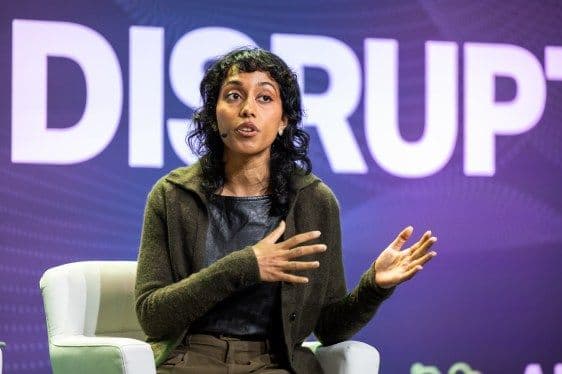
Open source models are becoming more mainstream as enterprises, governments and startups alike rely on the promise of lower costs, more control, and more flexibility. But as increasingly capable models become more freely available, how do companies capture value? And with Chinese open models gaining ground, can American players keep up? On this episode of TechCrunch’s Equity podcast, Rebecca Bellan caught up withIrene Solaiman, Chief Policy Officer and SVP of Strategy at Hugging Face, about what startups need to know before building on open models, from choosing the right tools and infrastructure to navigating the trade-offs shaping the future of open AI. Listen to the full episode to hear about: Subscribe to Equity onYouTube,Apple Podcasts,Overcast,Spotifyand all the casts. You also can follow Equity onXandThreads, at @EquityPod.
View

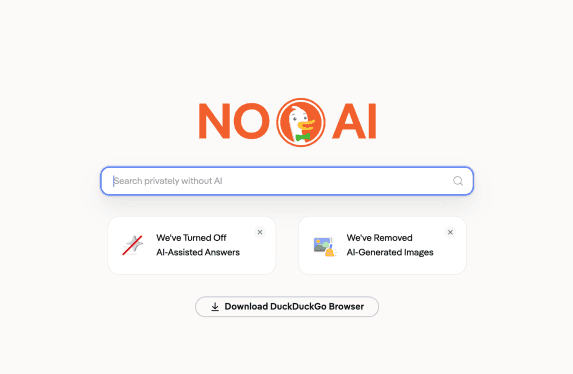
DuckDuckGois pitching itself to schools after Google created an opening for the alternative search engine. On Tuesday, Google told schools they couldturn off Gemini, but it said shutting off its other AI features wouldcost schools Google Search, as well. DuckDuckGo, a company that focuses on user privacy by limiting data collection, clearly sees this as a moment to make inroads in education, where Google has historically dominated. According to figures Google has published in previous years, there arearound 50 million Chromebooksin schools, used by students and educators, and its Google Classroom platform servesover 150 million usersglobally. On X, DuckDuckGo’s founder and CEO, Gabriel Weinberg, pointed to the company’sonline documentation, explaining how schools can switch their default search engine to DuckDuckGo’s service instead, adding, “get in touch for help.” Meanwhile, DuckDuckGo’s chief public affairs officer, Kamyl Bazbaz, issued a stronger statement,writing, “Forcing AI on school children: how a monopolist behaves when they think people are powerless. Prove Google wrong.” Forcing AI on school children: how a monopolist behaves when they think people are powerless.Prove Google wrong.https://t.co/Ta6ibmFdb9 In an email to TechCrunch, DuckDuckGo chastised Google for its decision, adding that Google could easily turn off Search’s AI features for schools if it wanted to. The company’s comments come as the American public is weighing how much AI they want to allow into their lives. As Tuesday night’s elections indicate, theydon’t want AI data centersbuilt in their towns. But using AI at work and school has become a common practice and requires a more nuanced discussion. Knowing that educators have struggled with AI, Google developed technology called “Guided Learning” that is meant to help kids learn by walking through problem-solving steps rather than just providing them with an answer. But educators are still asking for tools that let them remove AI from the learning process altogether. After the backlash on Tuesday, Googledefendedits decision, saying it was just responding to schools’ feedback. It said that Gemini, Gemini Notebook, and Search would be off by default, and schools could choose to enable them individually. We want to clarify what we announced today about our education services. Today’s announcements give schools more choice, not less. Here’s what we announced:– Gemini, Gemini Notebook, and Search will be OFF 🔴 by default. This is based on K-12 schools asking for more control… The problem, of course, is that Google Search now heavily uses AI, through AI Overviews and a conversational AI Mode that answers users’ queries. DuckDuckGo isn’t anti-AI, to be clear — it offers its own set of AI features, including a chat interface called Duck.ai and an AI search assistant. However, unlike Google, it provides options to disable these features in both its search and browser settings, the company says. It also offers a dedicated website,noai.duckduckgo.com, where AI-assisted answers, AI-generated images, and AI feature suggestions are all turned off. That flexibility may be driving demand for its services, as the companyreported earlier this yearthat its app installs were up 30% as users rejected being force-fed Google’s AI Search.

Loading the player… Open source models are becoming more mainstream as enterprises, governments and startups alike rely on the promise of lower costs, more control, and more flexibility. But as increasingly capable models become more freely available, how do companies capture value? And with Chinese open models gaining ground, can American players keep up? On this episode of TechCrunch’s Equity podcast, Rebecca Bellan caught up withIrene Solaiman, Chief Policy Officer and SVP of Strategy at Hugging Face, about what startups need to know before building on open models, from choosing the right tools and infrastructure to navigating the trade-offs shaping the future of open AI. Subscribe to Equity onYouTube,Apple Podcasts,Overcast,Spotifyand all the casts. You also can follow Equity onXandThreads, at @EquityPod.
View

Meta has acquiredConductor, an AI coding startup that allows users to spin up software projects by deploying multiple agents into parallel workspaces. The news wasoriginally reportedby Axios, and Conductorshared newsof its acquisition on its blog. “I have big news: Conductor is joining Meta,”wrotethe startup’s founder and CEO, Charlie Holtz, on Wednesday. “We have some big, crazy plans for the next interface,” he added, teasing that the company would have “something new” for customers to use by “early next year.” On X, Holtzalso notedthat he was looking forward to working with Alexandr Wang, Meta’s chief AI officer, and Nat Friedman, head of product at the company’s Superintelligence Labs. “They’ve been on an absolute tear, and I’m convinced MSL has the highest talent density of all the labs,” he added. Meta confirmed the acquisition to TechCrunch but wouldn’t comment further or provide additional details about the deal. Conductor, founded in 2024, only launched its core product just last summer. The company’s agentic teams, which can be deployed in the cloud, locally, or via a user’s phone, are designed to help software engineers work on separate, compartmentalized parts of a project in concert. The agents that the platform deploys aren’t developed in-house but come from major labs like Anthropic and OpenAI. Holtz said that, until early next year, Conductor’s core features would continue to work as they previously have. The exception is Conductor’s cloud service, which will shut down on November 20, after which the company will begin deleting user cloud data. Meta, which previouslylagged behindin AI services, has spent the last several months trying to catch up. In August, the companylaunched Muse Code, its own coding agent. Meanwhile, the company’s recently launched Muse agents are seeing significant adoption, with the companyrecently reportingthat the service had surpassed 10 million users. The company has also made a number of AI-related acquisitions over the past year,including Moltbook, the viral agent platform that made headlines.
View

OpenAI’s chief global affairs officer Chris Lehane thinks the 2028 presidential election could be a defining moment for AI. And he wants politicians to start developing policies that address Americans’ concerns about the technology, rather than simply paying lip service to anti-AI sentiment and thebacklash against data centers. In anew essay, Lehane compares AI’s potential to reshape the economy to President Franklin D. Roosevelt’s New Deal, the 1930s set of federal programs and reforms enacted after industrialization and the Great Depression shattered the old economic order. He observes that Americans today feel similarly anxious about losing control over their economic futures and urges politicians to find a “compelling third path” that allows people to share in AI’s benefits. He lays out five policy priorities, spanning worker protections and education to AI safety and data center development. The essay comes on the heels of a stunning Democratic victory in the midterm elections, in which Democrats flipped control of Congress amid widespread voter frustration over the cost of living. Kate Brennan, who leads AI and corporate power policy at the AI Now Institute, told TechCrunch that Lehane’s rhetoric marks a notable shift fromOpenAI’s policy agenda last year,which focused on accelerating AI development, reducing regulatory barriers, and expanding infrastructure. Unsurprisingly, many of Lehane’s proposals would encourage wider AI adoption and support the infrastructure expansion companies like OpenAI need to grow. The original New Deal established protections for workers and placed constraints on corporate power. It’s less clear how Lehane’s vision would hold AI companies accountable for the economic disruption their technology could create. “Invoking a New Deal metaphor is to invoke state capacity to actually benefit the public,” Brennan said. “This is written by a private company that is trying to advocate for policies for its own benefit. It is ahistorical at best and harmful at worst.” While AI wasn’t a dominant issue in the midterms, opposition to data centers emerged as a major bipartisan concern in several races in the midterms. And Lehane may be right that AI will become a bigger part of the conversation over the next two years. Affordability is already shaping up as a key issue for the 2028 election as Americans grapple with inflation, tariffs, and the rising cost of living. AI could become an increasingly large part of that conversation as voters stress about data centers hiking up electricity bills, AI replacing their jobs, and technology’s economic gains flowing only to a handful of wealthy companies. Lehane acknowledges many of these concerns, but he offers few concrete proposals to prevent AI’s gains from becoming concentrated. Instead, he largely pitches AI as a path to greater prosperity for Americans willing to embrace it. Take his proposals for the tax code. He suggests incentives for workers to learn AI skills, easier capital access for entrepreneurs, and new approaches to employee ownership and profit-sharing. Those are not the same as binding requirements that would ensure workers share in AI-generated wealth or that companies pay the costs of displacing workers. “I was struck by how much of this policy is for a future…that is already predicated on mass AI adoption and AI benefiting society, which we have yet to see,” Brennan said. “All of it is predicated on benefiting from AI’s upside.” Brennan said it would make more sense to see things like a revised corporate tax rate or tax incentives for hiring human beings rather than automating jobs, as well as ways to keep companies from amassing outsize market power. Lehane’s emphasis on expanding AI’s economic opportunities, rather than limiting potential harms, extends to data centers. He notes concerns about data centers while emphasizing the construction jobs and local tax revenue they could generate. He then warns that politicians who support a data center moratorium could jeopardize America’s lead over China, going so far as to compare that stance to the 2002 vote to authorize the Iraq war. Lehane also makes child safety and education central to his proposed agenda, stressing the importance of age-appropriate protections andsafeguards around AI companionsfor minors. He also warns against keepingAI out of classrooms, arguing that doing so could lead to inequality between wealthy students and “children in rural communities.” But the argument takes for granted that AI improves learning, a claim that remains unproven and one critics say deserves more examination than more funding or individualized attention from human teachers. Lehane also calls forenforceable AI safety standards,independent evaluations, public oversight, and the ability to restrict AI systems or use a kill switch to shut them down — thoughrecent studies showthat OpenAI and other AI labs haven’t published comprehensive plans for what they would do if a model escaped human control. Brennan called these stances “disingenuous,” pointing to OpenAI’s history of opposing legislation designed to impose such measures. In 2024, for example, OpenAIopposedCalifornia’s AI safety bill, SB 1047, which would have mandated catastrophic risk evaluations and shutdown capabilities. Last year, OpenAI alsosought to limit state regulation, arguing that states could undermine American innovation. The company has more recently shifted some of those positions, backing several state safety laws and saying it would be open to independentevaluators embeddedin the company. Lehane also argues that people should maintain control over consequential decisions made using AI, rather than handing off judgment entirely to machines.But that raises the question of what human control really looks like in a society where humans are increasingly being required to use AI in education, work, healthcare, and government. Throughout his essay, Lehane frames AI as a technology that could give Americans back their sense of agency and economic opportunity. But he ties average Americans’ “middle class” success to participation in an economy increasingly shaped by companies like OpenAI. Whether his policies will meaningfully redistribute power or subtly entrench it is less clear. TechCrunch reached out to OpenAI for more specifics on Lehane’s proposals and the company’s stances, but it did not respond by the time of publication.

Very few people are using personal AI agents to order Ubers, apparently. On the transportation giant’sthird-quarter earningscall on Wednesday, the company said that only four rides were ordered through an AI agent during its busiest week in October: the week of Halloween. While more people used an AI agent to order food through its delivery service, Uber Eats, the volume was still fairly small compared to the overall number of trips. Uber’s chief financial officer, Balaji Krishnamurthy,toldWall Street analysts on the call that the company handled around 320 million trips and orders across Uber and Uber Eats during the week of Halloween, but only 500 Uber Eats orders were placed by an AI agent. “It is very, very early and very limited traction that we are seeing so far,” said CEO Dara Khosrowshahi, referring to the low number of orders placed by AI agents. “Listen, we hope that there will be more traction.” The surprisingly low numbers of AI-initiated transactions come amid growing hype for a new wave of AI agents that don’t just answer questions but also handle tasks on users’ behalf. There’s been an explosion of personal AI startups, including one of the buzziest, Instinct, which was founded last year and raised its most recent round of funding at a$10 billion valuation.Meta’s Muse also became the No. 1 app in Apple’s U.S. App Store last month, topping 10 million users,per Meta’s own reporting. The company said many were using it to shop and transact with businesses. OpenAI, Anthropic, Google, and SpaceXAI (Grok) are also now offering their own AI agents, as arenumerous smaller startups. Still, early numbers from public companies indicate the agentic web still has a long way to go. DoorDash, for instance, said last week on its earnings call that it hasonly received a few hundred ordersfrom AI agents so far, as most customers are still placing orders through the DoorDash app. Uber is seeing the same behavior, it seems. Khosrowshahi pointed out that the average time to book a ride is only 50 seconds in the company’s app, and re-ordering a favorite food only takes 90 seconds. That suggests an AI agent isn’t necessarily saving anyone time. Despite the low number of AI-driven transactions, Khosrowshahi seemed bullish on the idea of agents in general. “We think that is another opportunity to reach our platform. We think it will be a net positive in terms of demand on the ecosystem,” he said. Right now, there are around eight major AI assistants on the market, Khosrowshahi noted, and he expects that number to grow to more than 10 in time. “Every single AI system company is talking to us,” he added.

Nothing, the smartphone startup behind the distinctiveNothing Phone, is working on an AI product, but what it is remains unclear. On Wednesday, CEO Carl Peiposted on Xthat the company’s first “AI-native product” ships in December. “It’s a tool, but one built with the personality and care that have come to define a Nothing product. It has no new screen, and it couldn’t have been an app,” Pei wrote. Pei has teased an AI-first devicefor some timeand the companyhas also saidthat it plans to release a pair of AI-linked smart glasses, as well as earbuds with AI integrations. Pei’s description adds up to a screenless non-app that uses AI? He also calls it a “productivity tool.” Adding further mystique to the announcement, Pei seems to downplay any link to AI wearables. “The whole industry is hunting for its iPhone moment: the pendant, the pin, the glasses, the companion, some magical consumer device that makes AI part of everyone’s life,” Pei wrote. “I admire the boldness, but I read this moment differently.” No firm release date has been announced, but Nothing fans should know soon enough what the company has in store for them.
View

Political groups both supporting and opposing the AI industry spent millions of dollars trying to influence Tuesday’s midterm elections and shape the future of AI regulation. That spending produced mixed results, with some of the most heavily backed candidates losing their races. On the industry side, two AI-focused political action committees (PACs) that raised and spent money to influence the elections — American Mission and Building the Future — collectively spent $4.8 million to back South Carolina Senate candidate Darline Graham, who lost. American Mission is the Republican spending arm ofLeading the Future(LTF), a broader political group backed by OpenAI president Greg Brockman and the VC firm Andreessen Horowitz. American Mission also spent more than $500,000 apiece supporting Republican House candidates Aaron Flint in Montana and Laurie Buckhout in North Carolina, both of whom lost. LTF’s Democratic spending arm, Think Big, had better luck backing Florida Rep. Jared Moskowitz, who won reelection. Groups advocating for stronger AI safeguards also saw mixed results.Public First,which is backed by Anthropic, supported several Republicans who lost through its affiliated PAC but had more success backing Democratic candidates. It also contributed $3 million to a PAC supporting California state Sen. Scott Wiener, who was leading his race at the time of publication. Meanwhile,Guardrails Alliance, a group that has sought to make taking money from AI companies a political liability, spent more than $1 million apiece opposing two candidates who lost: California Rep. Jimmy Gomez and Montana’s Aaron Flint. It also spent $300,000 supporting Angela Gonzales-Torres, who defeated Gomez. It’s difficult to separate the impact of AI-related spending from the broader Democratic wave that swept Tuesday’s elections. Elon Musk, who reportedly poured half a billion dollars into supporting Republicans in the midterms, also sawmany of his candidates lose. Indeed, LTF also backed some candidates it believed were likely to win, only to see them lose to the Dems. For LTF, though, the general election wasn’t the main focus. The group told TechCrunch ahead of Election Day that it thinks primaries (the contests that choose each party’s nominee) are a more effective use of its money, because spending there can build name recognition and help candidates set up AI policy agendas. LTF spent $27.38 million in the primaries, including $8 million alone on opposing New York Assembly memberAlex Bores, who lost his bid for Congress back in June. When deciding whether it’s worth jumping into a general election race, LTF assesses how competitive the race is, whether it thinks spending could make a difference, and whether it should keep its powder dry for future elections. Charlie Blaettler, political director of Guardrails Alliance, had a different theory for why LTF spent comparatively little in the general election. “They don’t want their money to become an issue in these elections,” he said. He pointed to the Michigan Senate primary election, in which a pro-Israel lobbying group called AIPAC spent close to $30 million backing Democratic candidate Haley Stevens against Abdul El-Sayed. Stevens conceded the primary to El-Sayed, who went on to win the Senate seat. “AIPAC became the story in that race,” Blaettler said. “We know people hate AI billionaires. They hate the people running these companies. They’re very distrustful and disgusted by the political spending and lobbying that the tech industry does. If they spend in a competitive race, they would just become an enormous liability for their candidates.” The main fight among AIPACs, whether they are pro-industry or pro-regulation, is whether Congress should establish a national AI framework thatoverrides state laws, or whether states will maintain their own ability to impose safeguards. Neither side seems poised to back down. LTF, which favors a single national AI framework, told TechCrunch it plans to keep spending in the 2028 elections, while Guardrails Alliance says it wants to keep opposing candidates backed by the AI industry. Blaettler said that while LTF’s ads rarely touch on AI, instead focusing on popular issues for each candidate, Guardrail Alliance’s ads are specifically about who is taking money from the AI industry. “Our goal is to make AI money politically toxic,” Blaettler said.

The company will offer affected employees at least six months’ salary and consolidate more product teams in Sydney as part of an organisational restructuring.
View
View
View
View
View
View