🚀 Zaprep: Your Socials on Steroids. Start free — automate 1,000 DMs/month & turn engagement into leads. with 1,000 automated DMs/month.
Submit your Tool
PoweredByAI.app is an AI Tools Directory helping individuals, businesses, and creators discover the best AI tools for writing, coding, design, productivity, and more.
© 2026 , Product of011BQ. All rights reserved.

Anthropic has introduced Message Threads in public beta on the Claude Platform. The new feature is intended to reduce response latency in long-running AI agent sessions. It eliminates the need to resend the entire conversation history with every API request. With Message Threads, developers can share new messages and the ID of the previous response to get responses. Anthropic confirmed that the new feature is enabled by default for most Claude Code users.
View

Google is said to be testing a change to its Search interface. According to a report, the Mountain View-based tech giant appears to be making its AI Mode less prominent for some users on Search. The dedicated AI Mode button has reportedly been removed from the Search bar on the web. It is, however, believed to be part of a limited experiment, and the feature itself may remain accessible to other users.
View

OpenAI launched its new specialised AI tool for managing personal finances earlier this year. Dubbed ChatGPT Finances, the tool was recently made available for Free and Go users in select global markets, allowing them to connect their financial accounts. Since its release in May in preview, the Sam Altman-led AI giant has added multiple features to the AI-powered financial management tool. Now, the company has announced the integration of ChatGPT Voice into ChatGPT Finances. The latest addition allows users to have hands-free conversations with the chatbot, eliminating the need for users to write prompts. ChatGPT Voice also lets users “talk through questions”.
View

Google introduced the Guided Learning tool in Gemini in August last year. The company positions the tool as a “learning companion” that allows students and teachers to learn more about different topics. Students can present a problem to the AI chatbot in Guided Learning mode to get a detailed step-by-step solution, helping them with their homework. It is also capable of designing practice questions for pupils. Now, the Mountain View-based tech giant has announced that it is bringing the Guided Learning tool to two new services, including Google Search and Google Classroom. Further, the company is bringing greater control for schools over how their students use AI.
View

IndiaAI Mission was approved by the Union Cabinet in March 2024, under the aegis of the Ministry of Electronics and Information Technology (MeitY). The initiative was launched with the aim of “Making AI in India and Making AI Work for India”. Now, MeitY has launched three new indigenous AI models from two AI labs, namely Soket Labs Technology and Research and ZenteiQ AiTech Innovations. Soket AI claims that its AI model demonstrated “advanced capabilities” in math, coding, reasoning, and agentic use. Meanwhile, ZenteiQ says that its open-source large language models (LLMs) offer support for 10 Indian languages.
View

Nothing recently announced that it plans to launch twice the number of smartphones in 2027, after having a relatively slim product lineup this year. The last device the London-based tech firm launched was the Nothing Headphone (1) Pro, which was unveiled in select global markets in September. Now, the company has announced that it has one more product launch lined up for this year. Nothing's Chief Executive Officer revealed that the tech firm will soon launch its first AI-powered device. The executive has also teased the design of the device, while keeping the name and category behind the curtain.
View

Amid the numerous tech layoffs happening across the globe, comes news about Google that has reportedly extended its voluntary exit programme to more countries this year. While there are no confirmed details about how many employees have voluntarily signed up for it, it has now been reported that Google had expanded its voluntary buyout offers in June. The news comes shortly after software giant Microsoft offered voluntary exit buyouts to about 60,000 employees primarily in the US, UK, India and Canada. More recently, Canva trimmed down 22 percent of its workforce, which affects 1,271 employees across several countries.
View

OpenAI has rolled out Images 2.6 for ChatGPT and its API, adding GIF creation to its image generation tools. Users can now animate photos or create GIFs from text prompts, change playback speeds and edit individual frames. The update also lets them save images of people, pets and characters to use as references later. Developers, meanwhile, get two new image generation models, along with SVG exports and more control over image edits.
View

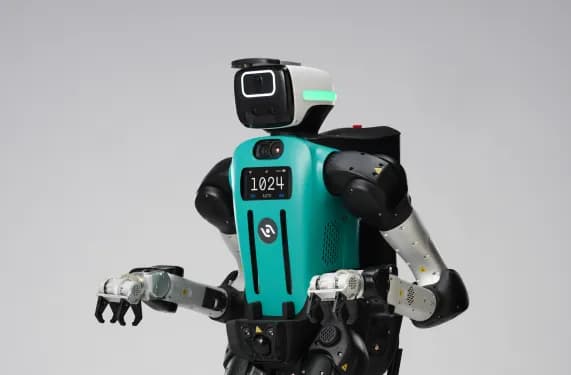
Almost a year ago to the day, Figure AI CEO Brett Adcockrespondedto some gentle social media taunting from rival robotics company Agility with a prediction: “You’ll be bankrupt in <12 months.” Instead, Agility is going public through a reverse merger that will see it become a publicly traded company and raise $465 million in new capital from retail investors and a tranche of private funding. The transaction will take place through a special purpose acquisition company, or SPAC. “You don’t see a lot of dancing robots or backflipping robots from Agility,” CEO Peggy Johnson told TechCrunch ahead of the company’s market debut. “We stuck to our strategy, which [are] these manual, very repetitive jobs, that it’s hard to find humans to do.” Agility predates the recent boom in physical AI investment. The company was spun out of Oregon State University in 2015 by a group of researchers who made headway in figuring out how to get a robot to walk safely on two legs. The company has focused on deploying a handful of its Digit robots in industrial settings with nine different customers, including Schaeffler, GXO, Toyota Motor Manufacturing Canada, and Mercado Libre. Digits are generally used to move heavy totes, including more than 100,000 of them at a GXO logistics facility. Compared to humanoid robots built by Figure, Tesla, 1X, or Boston Dynamics, Agility’s Digit can seem plodding, but the robot is actually doing real work, and earning money — albeit just $174,000 in the first six months of 2026, and mostly from related parties. The company lost $362 million in the same time period, which means the clock is ticking for it to successfully deploy its infusion of new capital. The good news is that Agility has $300 million in planned contracts from 30 customers for its new generation of robot, Digit 5. The new model can safely operate around humans, not just in an isolated work cell like its previous model (and indeed most humanoid robots). That deal was “one of the driving factors” behind the decision to take the company public, Johnson said, but could not yet reveal who the customers were or say if they are investors. To close the deals, Johnson said that Digit 5 will have to hit undisclosed targets along several metrics, including throughput, uptime, and accuracy of placement. The company has yet to show off the prototypes of Digit 5, but Johnson said they will be demonstrated at CES 2027 and will be widely available at the end of that year. Agility’s pitch is that a robot can save $100,000 a year for companies under a robot-as-a-service model and even more if the customer purchases the robot outright. Whether those unit economics work out in the end will depend on Digit 5’s capabilities, both in terms of task accuracy and how long it can work without pauses for recharging or maintenance. Johnson gave the example of a single person lifting a 50-pound object — an informal threshold some workplaces use to avoid injury. “Digit can do that over and over and over,” she said. “You don’t want to give a human that job. You want to give that to the robot.” Agility faces two key questions: How quickly can it find new customers for Digit 5, and how quickly can it improve on the robot’s capabilities? Prospective customers need to spend $500,000 for Agility to do an on-site proof of concept before a deployment is fully scaled up; there were four customers signed up in May 2026. And while Digit can pick up heavy loads and place them with 98% accuracy, it still — like most of today’s robots — lacks the ability to do complex manipulation tasks. It’s still not clear how quickly generative AI techniques will unlock the kind of dexterity that could allow robots to handle a wide variety of items. Training systems based on video and teleoperation data have not led to reliable general autonomy, though adapting the transformer architecture to different modalitiesappears promisingto physical AI researchers. “There’s no internet of physical data of robot movements, and that’s why you see so many people trying to simulate the data using a variety of things, and we use all of those techniques as well,” Johnson said. “They have their pros and cons, but we also have … 65,000 hours of real operational data from real customers in real facilities … that helps us accelerate the training of Digit.” Johnson said the capital raised in the SPAC transaction would meet the company’s current needs but wouldn’t project that it would be sufficient for the company to be self-sustaining. She wouldn’t share production targets for Digit 5, but the company has said its production facility could produce 10,000 of the robots annually. “What you’ll see from us going forward is continuing to listen to our customers, understanding what they need in these facilities,” she said. “We’re taking our cue from them because we’re building a business.” For all the open questions, Agility still finds itself further ahead of most humanoid builders by dint of simply putting its product in the field. “Let’s start with the bins and the totes, and then let’s do the picking and the kitting,” co-founder and chief robot officer Jonathan Hursttold TechCrunchat the opening of the company’s Fremont R&D facility this summer. “And then let’s like start working on cardboard, which is really hard, and loading and unloading tractor trailers and things like that. Okay, now we’re at 100 million robots, you know? A trillion-dollar company.” Correction: This story originally misidentified the CEO of Figure AI; the CEO is Brett Adcock.

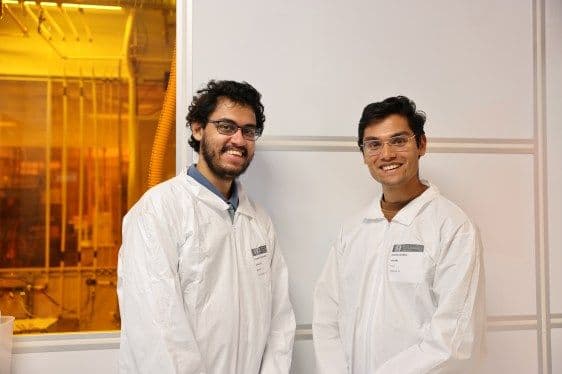
Discovered Materials, a months-old San Francisco startup using AI models tofind new substancesfor building advanced chips, announceda million-dollar challengefor AI models to solve five critical problems in materials science. While frontier AI models have solved a remarkable series of outstanding mathematics problems and made progress in the life sciences, they have yet to truly plumb the complex physics in advanced materials. “It’s more difficult to specify problems clearly in materials science because it’s not like math, where you have a very specific definition and can get to a yes or no,” said Advaith Sridhar, a co-founder of Discovered Materials, which was part of Y Combinator’s spring 2026 batch. “We came to this discussion [wondering], what are the grand challenges in this field? How do we know AI is making progress?” Though materials science doesn’t have an equivalent of the Millennium Prize Problems, Discovered Materials recruited an advisory group of academics at leading global universities to spell out five open problems. The company is offering a pool of prizes, worth $1 million in total, for solutions to the problems. “Across materials science, there are phenomena we observe but cannot explain,” Felipe Jornada, a Stanford professor who helped develop the challenges, said in a statement. “Explaining these phenomena would improve our understanding of physics, and the answers would directly shape how we build electronics, store energy, and manufacture the materials of the future.” Before announcing the challenges, Discovered Materials turned frontier lab models loose on them, giving AI agents internet access and other resources to work autonomously for days. The models spent several days on each problem without making much headway. Still, it’s easy to imagine OpenAI or Anthropic attempting to one-shot them with significantly more compute or a newer model. “It’s not particularly a concern to us whether we find it, or someone else finds it, or a professor finds it, or the frontier labs find it,” Sridhar said. “The reason we’re putting out these challenges is because we want them to serve as the goalposts. If you go and solve these challenges, we are deepening our understanding of materials and how things around us behave.” Tracking efforts to solve the problems will show “whether the models are climbing in this domain,” he added. The challenge also reflects the changing nature of scientific inquiry as AI proves capable of uncovering insights and techniques human researchers didn’t anticipate. With solutions apparently easier to find than ever, the questions become more important. “This is a new way of thinking about science, where we come up with the verification and the challenges first, and then we let somebody come up with the ideas that explain the problem,” Sridhar said. “Knowing what are the right questions to ask is not trivial and very difficult in this domain, so this is where the professors have really helped us shape what are the right questions we should be asking.” Discovered Materials’ main focus is developing new materials for use in semiconductors; the startup partners with chip giants on research projects while also funding its own scientific efforts. When the company announced its seed round in August, Sridhar told TechCrunch that he hoped the company would generate a useful material within a year. “Those timelines have accelerated a little bit,” he says today. “I’m more confident now that we will be able to find these industrially useful materials in a timeline shorter than a year.”

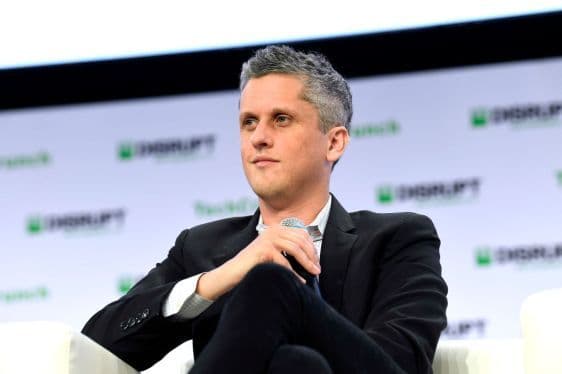
At its developer conference on Thursday, Box showed off a new feature that will build Nvidia’s Nemotron embedding system into the core of its product. Called Box Content Retrieval, the new feature allows agents to answer queries far more effectively by relying on the embedded metadata created by Nemotron. Box says the upshot for users is faster, more accurate, and less expensive queries. Nvidia’s VP of generative AI software, Kari Briski, told TechCrunch that she expects queries to be answered four times faster, with 20% fewer errors and 90% fewer tokens used. The system will be available to all of Box’s Enterprise Advance customers, rolling out early next year. “This dramatically boosts both the relevance of our search technology for agents,” Box CEO Aaron Levie said. “Instead of an agent having to kind of read through each document, we can send back chunks from the documents that are most relevant to the user’s query or whatever the task is that the agent is doing.” The feature is an implementation ofNvidia’s Nemotron Embedproject, which offers open-weight embedding models to improve automated retrieval systems. Major labs have often overlooked such models, which use LLMs to pre-process data so it can be better used by agents. The sector has been a focus for Nvidia’s open source model project, with its recent Nemotron release in July topping the RTEB benchmark, which measures retrieval quality. The system will be most useful when paired with active agents, Box says, giving the example of lawyers, who will ostensibly be able to find relevant clauses and precedents more easily under the new system. Because Nemotron’s embeddings go beyond simple keywords to map underlying concepts, a search tool can surface related legal themes even when different wording or language is used. While the Nemotron models are freely available, the system also relies heavily on Box’s pre-existing metadata and permission controls, which will make it challenging to recreate from scratch. “We’re probably packing in five different technologies into one simple API,” Levie told TechCrunch.
View

Hardware startupAinareleased a smart ring today that features a screen, a joystick, and a mic so that you can talk to your agents and take notes. The $399 ring has a speaker so you can take calls using it as well. The startup, which raised$5.5 million in July, is positioning the ring as a controller of sorts for both AI and non-AI apps. The company previously made Mirage, a three-key controller that let you invoke buttons based on the app on your Mac’s screen. For instance, if you were on a Google Meet call, you could map keys to camera on/off, mic mute/unmute, or to leave the meeting. Aina has baked in lessons from that device to create the new ring, which it’s simply calling “AI ring.” Using its mic, you can take notes, send a prompt to agents, set reminders, and dictate notes on your Mac using Wispr Flow or the startup’s own dictation engine. Now, there are already smart rings in the market that do similar things, like thePebble Index 01,Sandbar Stream,Oasis, andNatura, which is probably why Aina has added more controls and functionality to stand out. Its ring comes with a speaker so that you can take calls, and there is a screen, which lets you see notifications from your phone or which apps you are controlling. For navigation, there is a joystick, and it also supports gestures, so that it can trigger different actions based on what’s on your Mac or phone’s screen. The ring also lets you control music or even smart home devices like Apple TV. I have used the ring for a few days, and it feels like a smartwatch in a ring format, with more controls. I can get notifications and reply to them. It surfaces my meetings; I can call Uber if I want to get a ride home. It’s easier to use Apple TV’s remote itself, but the Aina ring proved useful the couple times I couldn’t find the remote. Granted, a lot of the software and features are still being fleshed out, so it’s hard to figure out where such a device ring might sit in my daily usage, but it is squarely aimed at folks who are surrounded by digital devices and AI applications. “Phones and laptop screens were designed for an age of browsing where you think about opening apps. For interacting with proactive agents, we need a better interface, and that is what we had in mind while designing Aina,” Apoorv Shankar, Aina’s founder, told TechCrunch over a call. Companies are trying to cater to programmers and AI enthusiasts with specialized hardware that could help them harness different agents. This includesOpenAI’s experimental keyboardand Rabbit trying toposition itself as a controller. The hope with such hardware is that enough people will have multiple agents running to invest in specific gadgets to keep tabs on them. Aina’s ring goes on preorder starting Thursday at early-bird pricing of $399, and the company plans to start shipping the device in January 2027. Once the early-bird period ends, the ring will cost $499.
View
View
View